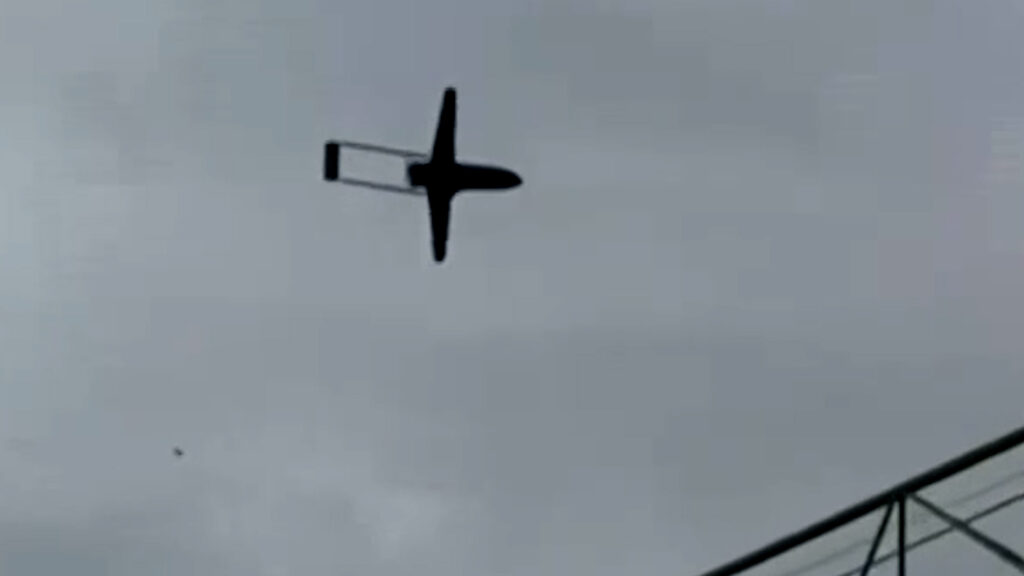
A significant incident was recently captured on footage, showing a Ukrainian drone detonating near Moscow. The drone hit a building that was still under construction, causing considerable concern given the location and the ongoing tensions. The video highlights the exact moment of impact, underscoring the capabilities of drone technology in modern conflict scenarios.
This event marks a notable escalation in the conflict, as drones allow for targeted strikes with a degree of precision and surprise that traditional artillery cannot easily match. The fact that the drone reached a site in Moscow, the heart of Russia, signifies a breach in what is generally considered a secure area and has raised questions about the effectiveness of local defenses against such aerial incursions.
Experts suggest that drones have become a critical asset for Ukraine, providing reconnaissance and offensive capabilities that can reach deep into hostile territory. This incident demonstrates not only their strategic value but also the risks they pose to urban infrastructure and civilian areas.
The building struck was reportedly still being constructed, which likely minimized casualties but did not reduce the symbolism and potential psychological impact of an attack so close to the Russian capital. Authorities are currently assessing the damage and investigating the incident to understand the full implications and to make necessary adjustments to security protocols.
This development comes amid broader geopolitical tensions that have seen a variety of military, economic, and political exchanges. Drones have become a new frontier in this conflict, reshaping how engagements occur and raising new challenges for peace and security.
The footage and resulting discussion highlight the increasing role of technology in warfare and the ways in which it can change traditional battlefields. As this situation evolves, it will be crucial to monitor both the strategic outcomes of such attacks and their humanitarian impact.
International observers and local officials alike are likely scrutinizing this event closely, with its implications resonating beyond the immediate military sphere, affecting diplomatic relations and regional stability.
As investigations continue, the priority remains on understanding how to prevent such incursions and protect civilian life while navigating the complex realities of modern warfare. The incident has sparked a renewed focus on drone defense technologies and strategies, as well as calls for increased dialogue to manage the risks associated with autonomous and remote-controlled weapons systems.
In summary, the detonation of a Ukrainian drone near Moscow, striking an under-construction building, is a stark reminder of the changing nature of conflict and the growing prominence of drones in military operations. This incident will likely influence both military planning and international diplomatic approaches moving forward.