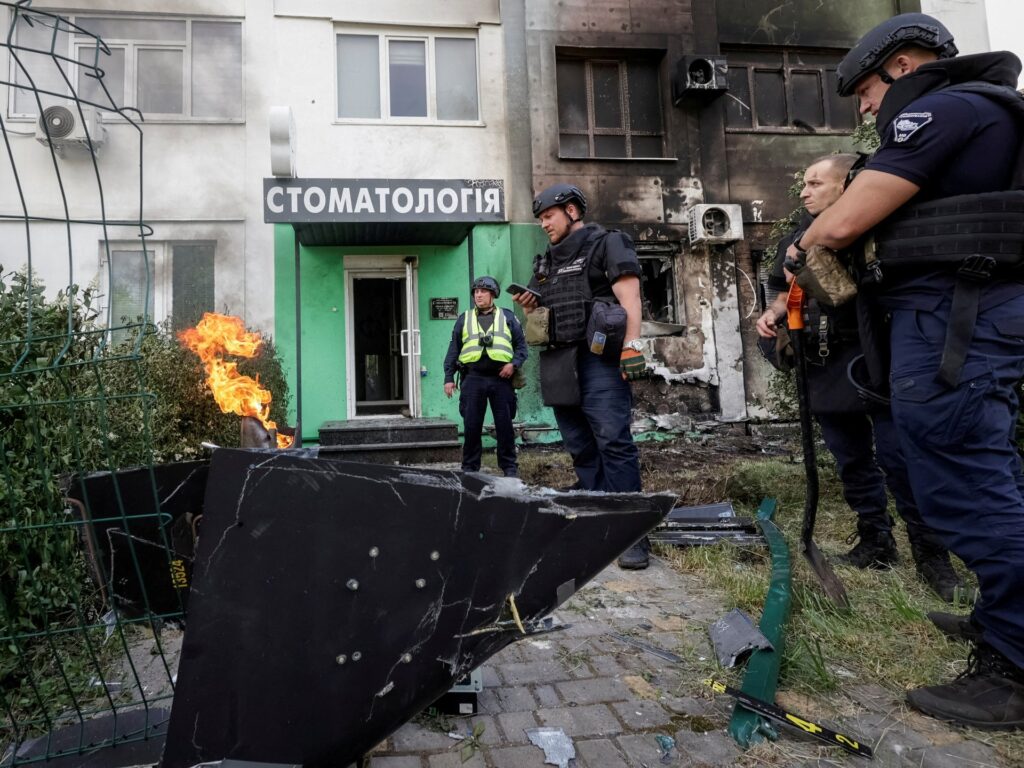
In a significant development on the ongoing conflict front, Ukraine has successfully reclaimed substantial territory as it intensifies its offensive operations against Russian logistics networks. This strategic advancement marks a pivotal moment in the conflict, demonstrating Ukraine’s growing capability to weaken Russian military operations through targeted attacks on supply lines.
Ukraine’s military officials have reported a marked increase in the scale and frequency of their assaults on Russian logistical chains, aiming to disrupt the movement of troops, armaments, and essential supplies to Russian forces engaged in frontline combat. These attacks are designed to impair the operational effectiveness of Russian units, creating supply shortages and complicating their tactical deployments.
The Ukrainian government describes this military approach as a “lockdown” strategy, which effectively encloses and stifles Russian logistical hubs, severely limiting their ability to sustain prolonged military engagement. This strategy involves coordinated strikes on depots, transportation routes, and communication nodes, thereby severing critical support structures.
Experts on the conflict highlight that the success of these operations has been instrumental in enabling Ukrainian forces to regain control over key territories previously held by Russian troops. The disruption to Russian supply lines has not only constrained Russian offensive capabilities but also facilitated Ukrainian counteroffensives, allowing for territorial recovery and improved battlefield positioning.
The impact of these intensified logistics attacks is evident in the shifting dynamics on the ground. Russian forces have reportedly encountered increased difficulties in resupplying frontline units, leading to operational delays and tactical vulnerabilities. This situation has compelled Russian commanders to reevaluate their deployment strategies and consider alternative supply routes, which are often less efficient and more vulnerable to interdiction.
International observers have noted that Ukraine’s success in this logistic warfare underlines the evolving nature of contemporary conflicts, where supply chain security becomes as crucial as frontline engagements. The ability to disrupt enemy logistics can decisively influence conflict outcomes, as seen in this case.
Furthermore, the resilience and adaptability of Ukrainian forces in implementing this strategy reflect improved intelligence gathering, precision targeting capabilities, and effective use of resources. These factors collectively enhance Ukraine’s capacity to sustain pressure on Russian forces and maintain momentum in reclaiming territories.
In summary, Ukraine’s focused efforts to double down on attacks against Russian logistics have yielded concrete results, permitting territorial gains and imposing significant operational challenges on Russian military forces. This approach exemplifies a sophisticated blend of tactical innovation and strategic foresight, potentially shaping the trajectory of the conflict in the near future.