A wave of protests erupted across Indonesia as students took to the streets to voice their discontent with current government policies amidst growing economic difficulties. The demonstrations, marked by passionate chants and placards, highlight the mounting frustrations of the younger generation facing financial uncertainty and policy decisions they deem harmful.
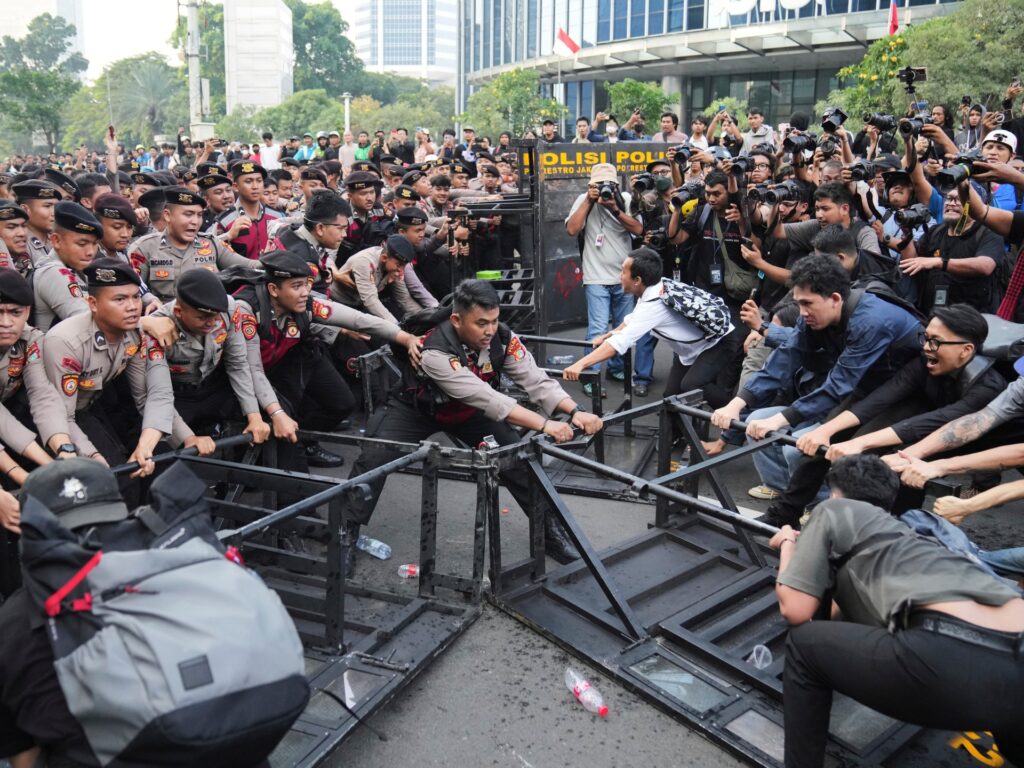
The unrest escalated when some groups of demonstrators attempted to breach police lines and metal barricades set up to control the crowds. This led to scuffles between protesters and law enforcement officers, who responded to maintain order and prevent the situation from spiraling out of control.
Students have been rallying against a variety of issues including rising living costs, unemployment rates, and what they consider inadequate government responses to the economic crisis. Many complained about the lack of job opportunities and affordable education, which they say undermine their future prospects.
The protests also targeted recent policy changes perceived as favoring business elites and neglecting the needs of the broader population. Students demanded greater accountability and transparency from government officials and called for reforms that would prioritize social welfare and economic equity.
Authorities have urged both sides to exercise restraint and seek dialogue to address the underlying grievances. The government acknowledged the economic strain faced by many citizens and promised to review some of the contested policies.
Despite the tensions, many observers see the student protests as an important democratic expression of public concern. Analysts suggest that the government’s ability to engage meaningfully with these protests could shape Indonesia’s socio-political landscape in the coming months.
As the situation develops, the spotlight remains on how Indonesia balances economic recovery efforts with the demand for social justice and fair governance from its youth. The outcome of these protests may significantly influence future policy directions and the country’s stability during this challenging period.