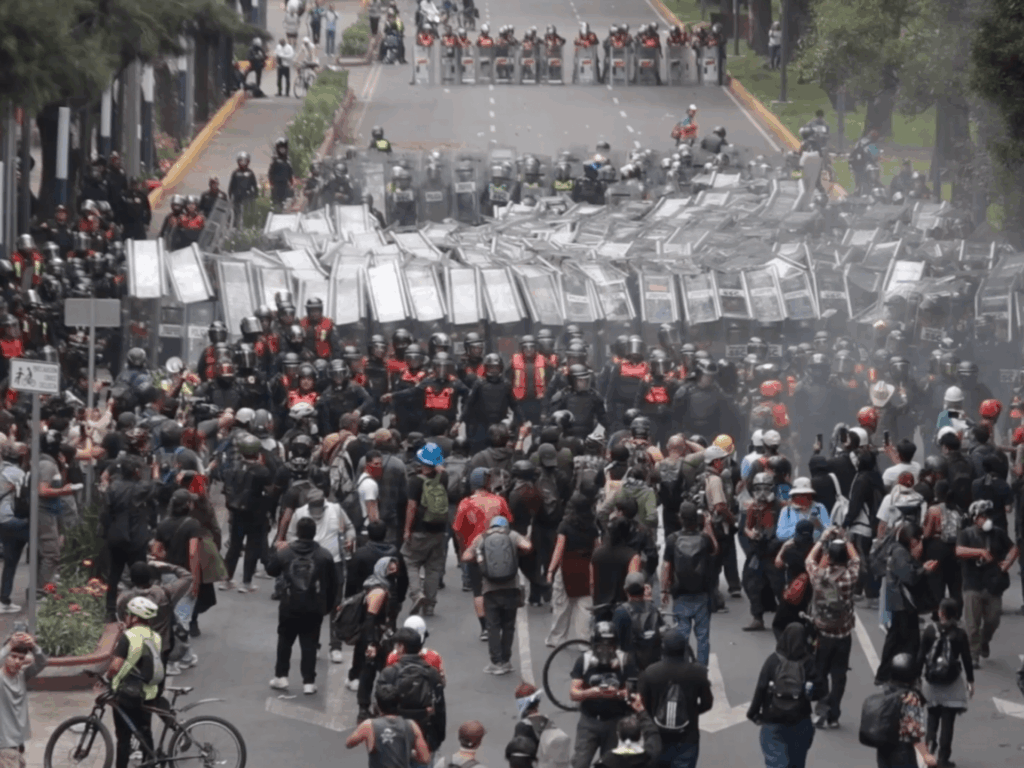
During the highly anticipated opening match of the FIFA World Cup, tensions flared outside Mexico City’s iconic Azteca Stadium as protesters clashed with police forces. The confrontation unfolded just before the kickoff, marking a stark contrast to the celebratory spirit expected for the global sporting event.
The protests were reportedly organized by groups critical of various social, economic, and political issues in Mexico, and they chose the World Cup’s inauguration to voice their grievances to both national and international audiences. The Azteca Stadium, a landmark venue with a storied history in the world of football, became the focal point for this unexpected outbreak of violence.
According to eyewitnesses, the clashes began when a group of protesters attempted to approach the stadium entrance. Law enforcement personnel had established barricades and were prepared to maintain order. What started as a tense standoff quickly escalated into physical confrontations, with police deploying crowd control measures.
The situation led to several injuries on both sides and multiple arrests, though exact numbers were not immediately available. Authorities urged protesters to remain peaceful and respect public safety as the event continued inside the stadium.
This incident underscores the complex social dynamics present in Mexico, where issues such as economic disparity, governmental policies, and human rights frequently spark public demonstrations. The timing of the protest at such a high-profile international event suggests the protesters aimed to maximize visibility for their cause.
Security measures for the World Cup opening were intensified following the clashes, with increased police presence and surveillance around the stadium area. Organizers expressed regret over the disturbances, emphasizing their commitment to a safe and enjoyable tournament for fans and players alike.
The World Cup, known for uniting people worldwide through sport, briefly found itself overshadowed by the local unrest. However, officials remain hopeful that the tournament will proceed smoothly and that the focus will soon return to the exciting competition on the pitch.
Observers note that large-scale events like the World Cup often serve as platforms for political expression, reflecting broader societal challenges. The Azteca Stadium incident may prompt dialogues on addressing underlying issues while balancing the enthusiasm for sporting celebrations.
As the tournament progresses, authorities continue to work towards ensuring security and monitoring for any further protests. The global community watches closely, hoping for peaceful festivities that celebrate football’s spirit and bring nations together.