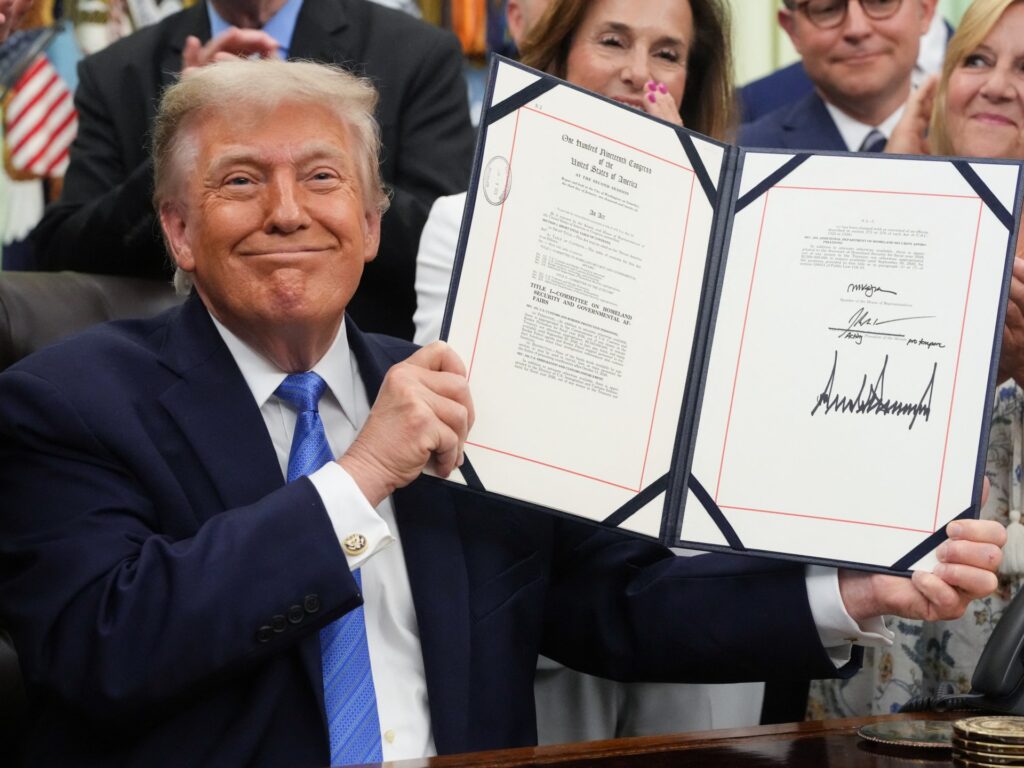
Following a tense standoff with Democrats, former President Donald Trump signed a massive $70 billion immigration enforcement bill into law. This legislation allocates extensive funding to U.S. Immigration and Customs Enforcement (ICE) and Customs and Border Protection (CBP), crucial agencies involved in the nation’s immigration enforcement operations.
The passage of this bill comes after intense negotiations and partisan disagreements, reflecting the deep divisions surrounding immigration policy in the United States. Democrats expressed strong reservations before the signing, cautioning that the bill lacked sufficient protections and oversight for immigrants, potentially enabling aggressive enforcement actions.
Immigrant advocacy groups have been vocal in their criticisms of the bill. They argue that the legislation provides too few guardrails to regulate ICE and CBP activities, especially at a time when the Trump administration is conducting a widespread campaign of mass deportations. These groups fear that the funding could embolden further aggressive enforcement and lead to increased detention and removal of undocumented immigrants without adequate accountability.
Supporters of the bill, including many Republicans and the administration, emphasize the need for enhanced funding to secure U.S. borders, curb illegal immigration, and strengthen enforcement capabilities. They claim the funding will help modernize facilities, expand technology for border surveillance, and increase personnel necessary to manage immigration effectively.
The bill’s substantial budget reflects a broader trend of prioritizing border security and immigration enforcement within the administration’s policy agenda. However, critics warn that without comprehensive reform and oversight measures, the heavy investment may result in human rights abuses and undermine the dignity and safety of immigrant communities.
Debate continues as policymakers and advocates grapple with balancing national security concerns, humanitarian considerations, and the rights of millions of immigrants living in the U.S. The new funding law marks a significant step in the administration’s approach but also raises pressing questions about the future direction of U.S. immigration policy amid ongoing political divisions and social tensions.