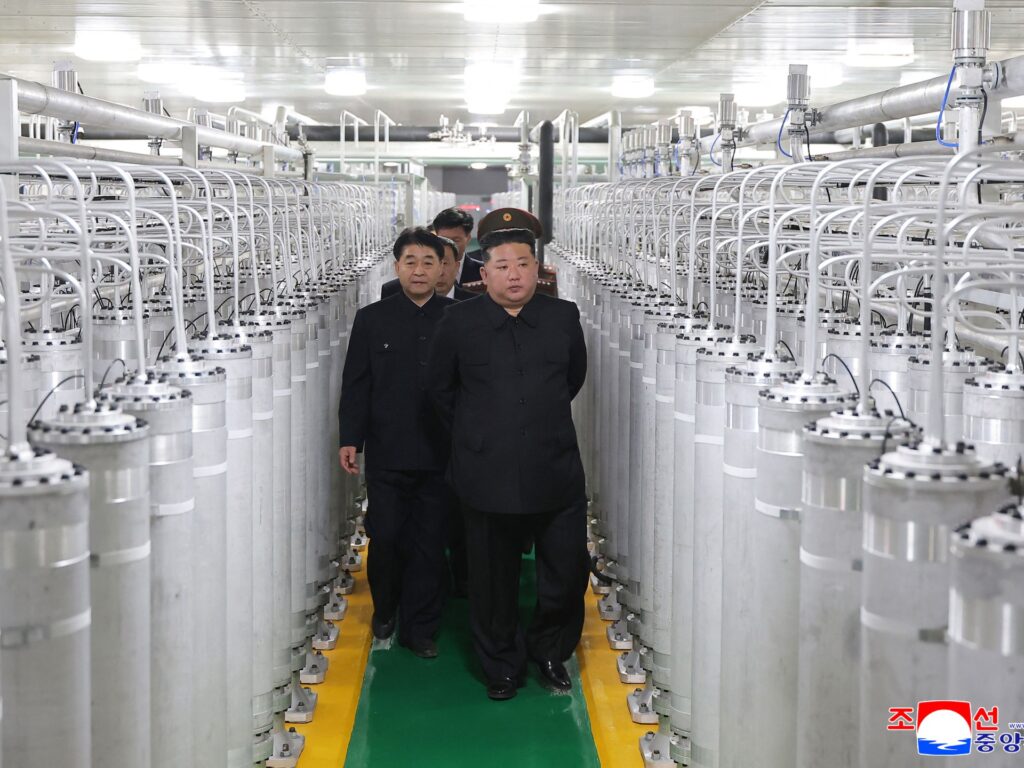
In a recent and alarming declaration, North Korean leader Kim Jong Un has called for an “exponential” expansion of the country’s nuclear arsenal. This move underscores Pyongyang’s intent to significantly bolster its strategic military capabilities amid ongoing security challenges. Kim emphasized that the expansion is necessary due to worsening security threats faced by the regime and the prolonged confrontations with what he described as the “most ferocious enemies.” This terminology is widely interpreted to refer primarily to the United States and its allies.
Kim’s directives highlight a strategic pivot towards intensifying North Korea’s nuclear development programs, which have been a core element of its defense policy for decades. The leader pointed to a dire security environment as justification, suggesting that the nuclear buildup is essential for the country’s survival and deterrence.
International observers and governments worldwide have expressed concern over this escalation, given the already tense geopolitical landscape on the Korean Peninsula. North Korea’s nuclear ambitions pose a direct challenge to regional stability and global non-proliferation efforts.
The call for exponential growth indicates a possible increase not just in the quantity but also in the sophistication and reach of North Korea’s nuclear weapons. Analysts predict this could involve advancements in missile technology and the development of more diverse warhead capabilities.
This development comes amid ongoing sanctions and diplomatic efforts aimed at curbing Pyongyang’s weapons programs. Despite multiple rounds of talks and negotiations, the North Korean leadership has remained steadfast in its pursuit of nuclear deterrence.
Kim’s statements may also be intended as a message to both domestic and international audiences, reinforcing his regime’s commitment to defense and sovereignty. It serves as a stark reminder of the challenges facing diplomatic resolutions to the nuclear issue.
The international community continues to grapple with how to respond effectively to North Korea’s nuclear ambitions. Economic sanctions, diplomatic isolation, and military preparedness remain key tools, but their effectiveness is under scrutiny.
As tensions persist, the risk of miscalculation or conflict escalates, underscoring the urgent need for renewed dialogue and confidence-building measures.
Kim Jong Un’s declaration invites a reassessment of security strategies, not only in Northeast Asia but globally. The expansion of North Korea’s nuclear arsenal will inevitably impact international security frameworks and non-proliferation treaties.
Going forward, monitoring North Korea’s nuclear capabilities and intentions will be crucial for policymakers and defense experts worldwide. The implications of such exponential growth extend beyond the Korean Peninsula, affecting global peace and stability.
In summary, Kim Jong Un’s call for exponential expansion of North Korea’s nuclear arsenal represents a significant escalation in the country’s military posture. It reflects deepening security concerns and a determination to maintain a formidable deterrent against perceived threats. This development poses substantial challenges to diplomatic efforts and regional security dynamics.