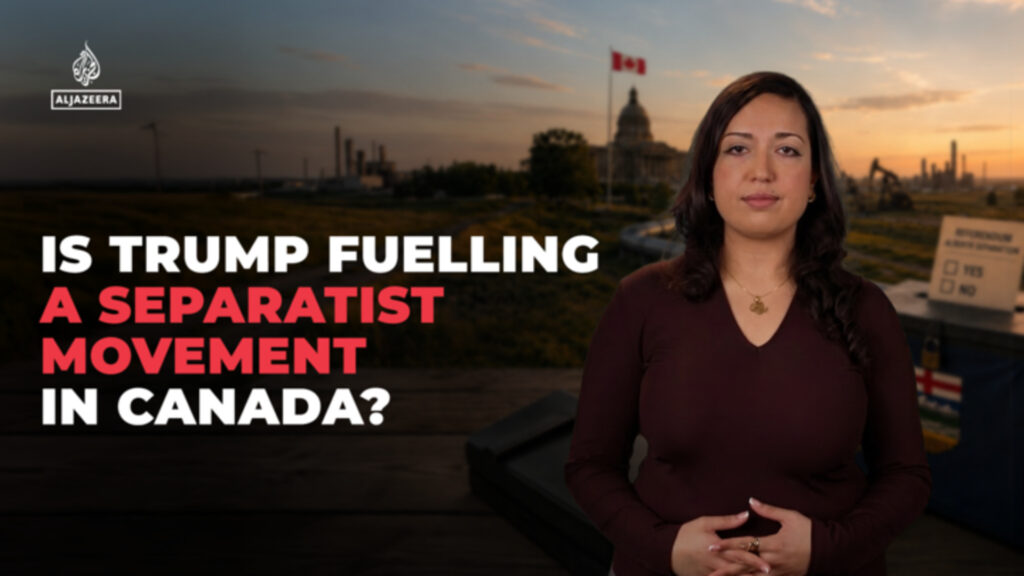
The question of whether Donald Trump’s government could be influencing Canada’s separatist movement, particularly in Alberta, has stirred debate amid the province’s decision to hold a referendum on potential separation from Canada. This movement has historical roots tied to regional grievances, including economic disparities and political representation, but the recent political landscape suggests external factors may be playing a role.
Alberta, traditionally seen as economically distinct from the rest of Canada due to its oil and gas resources, has long had factions advocating for more autonomy or outright independence. The upcoming referendum aims to gauge public support for independence, reflecting dissatisfaction with federal policies and perceived neglect.
Observers have noted that during Trump’s presidency, the United States adopted a more nationalist and protectionist stance, often challenging international norms and agreements. This rhetoric and policy direction could embolden separatist sentiments beyond U.S. borders, as similar nationalist ideologies find resonance in other regions.
Analysts point out that Trump’s direct or indirect support for Alberta’s separatists could include political encouragement, social media amplification, or economic incentives encouraging regional autonomy movements as a way to weaken a stable neighbor or gain leverage in bilateral relations.
Despite these theories, concrete evidence of direct involvement remains elusive. Canadian officials have expressed concern over potential U.S. interference in domestic affairs but have yet to substantiate claims of active manipulation.
The Trump administration’s America First agenda prioritized U.S. interests and often promoted divisive nationalism, which could theoretically inspire or validate separatist movements elsewhere. For Alberta, the motivation to separate is primarily guided by local concerns, such as dissatisfaction with federal energy policies and economic marginalization.
However, the global rise of nationalist and separatist sentiments creates an environment where such movements can gain momentum more readily, potentially influenced by international figures who advocate for similar causes.
The Alberta separatist referendum thus unfolds against a backdrop of shifting political ideologies. Some proponents argue U.S. support could bring economic benefits or strategic alliances, while opponents warn of the risks associated with fracturing Canada’s unity.
Canada’s response to these developments involves promoting national unity and engaging with disgruntled provinces to address their concerns, emphasizing the importance of dialogue over division.
In conclusion, while direct intervention by Trump’s government in Alberta’s separatist movement is not definitively proven, the ideological support and political environment fostered during his presidency may have indirectly influenced the rise in separatist sentiments. The referendum will test the resilience of Canadian federalism amid growing pressure from internal and external forces advocating division.