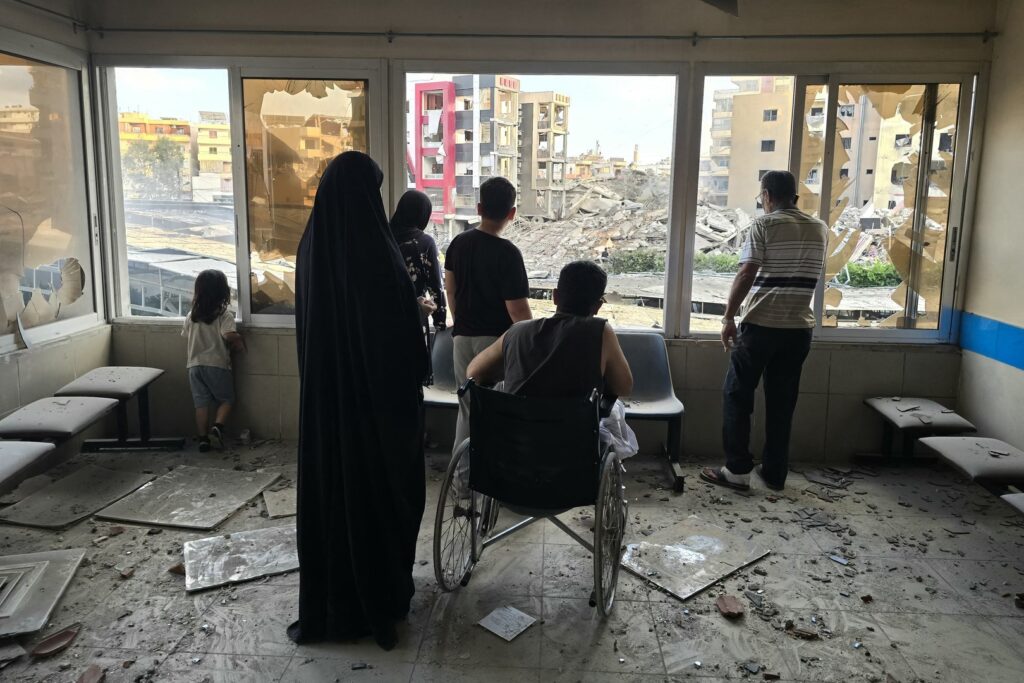
People look through damaged hospital windows at the site of an Israeli strike that hit near the hospital in the southern Lebanese city of Tyre on June 1, 2026. Lebanon said an Israeli strike hit near a hospital in the southern city of Tyre on June 1 as the health ministry shared footage showing heavy damage to the facility. The state-run National News Agency said a strike targeting an intersection near the Jabal Amel hospital "hit a building and the parking lot, resulting in a number of wounded". (Photo by KAWNAT HAJU / AFP)
In a significant diplomatic move, US President Donald Trump has announced efforts to end escalating hostilities in Lebanon, following heightened tensions in the region. President Trump claims a breakthrough after a direct conversation with the Israeli Prime Minister, focusing on halting the escalation toward Beirut.
The recent surge in conflict had raised concerns about a broader regional confrontation, with Israeli strikes near Lebanese territory contributing to an uneasy atmosphere. Lebanon, already grappling with internal challenges, faced increased pressure as military actions threatened civilian areas.
President Trump’s engagement marks a concerted effort by the United States to act as a mediator in the volatile situation. The White House emphasized the importance of de-escalation and called on all parties to exercise restraint.
In his conversation with the Israeli Prime Minister, President Trump conveyed the US commitment to peace and stability in the Middle East. The dialogue focused on preventing further military actions that could exacerbate the conflict and on promoting diplomatic channels to address grievances.
Observers note that this diplomatic outreach may signal a shift in the US approach to Middle Eastern conflicts, prioritizing negotiation over military intervention. The Israeli government has reportedly expressed willingness to engage in discussions to prevent further escalation.
Lebanese officials have yet to issue a formal response but are believed to be monitoring developments closely. Regional powers and international organizations have welcomed the move towards diplomacy, urging for continued dialogue to avoid a wider crisis.
This initiative underscores the critical role of diplomacy in resolving long-standing conflicts and highlights the urgency of preventing further violence in Lebanon and neighboring areas.
As the situation develops, global attention remains focused on efforts to secure a peaceful resolution and the potential impacts on regional stability. The success of this diplomatic breakthrough depends on sustained commitment from all parties involved to uphold ceasefires and engage in constructive dialogue.
The US administration continues to coordinate with allies and partners to support a peaceful path forward, emphasizing humanitarian considerations and the need to protect civilian populations amidst tensions.
In summary, President Trump’s attempt to broker peace between Israel and Lebanon represents a hopeful step towards reducing conflict and fostering stability in a historically volatile region. The coming days will be critical in assessing the effectiveness of these diplomatic efforts and ensuring that hostilities remain controlled and ultimately cease.