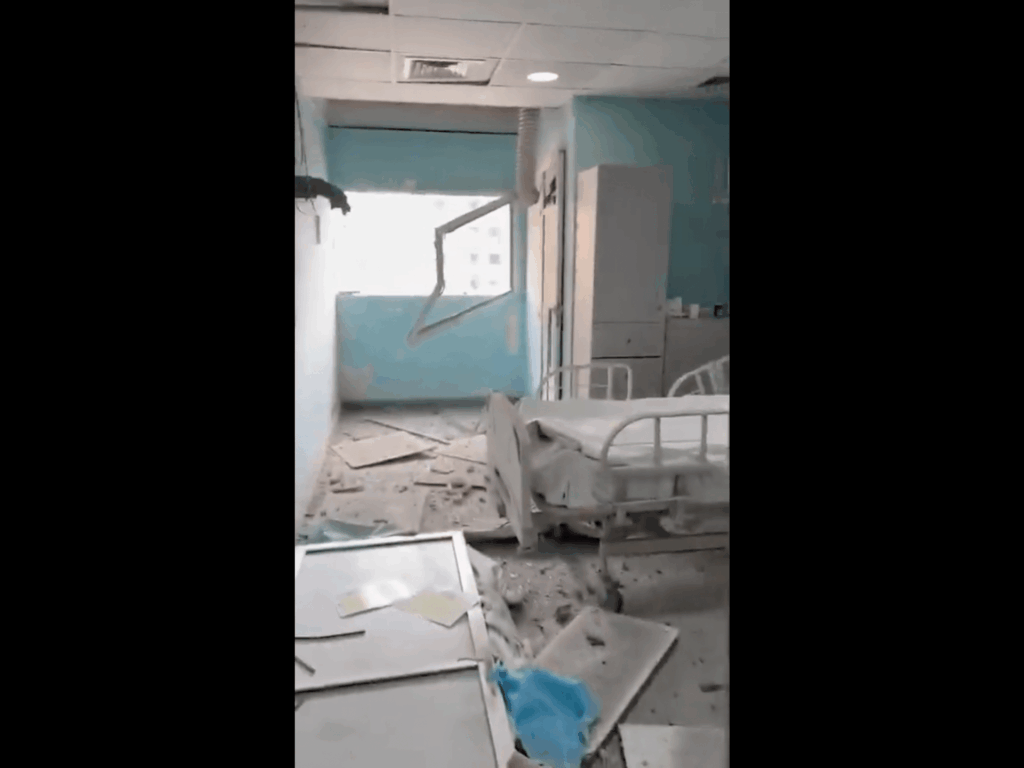
In a recent development that has raised significant concern among international observers and humanitarian organizations, an Israeli strike has caused substantial damage to a hospital in southern Lebanon. The attack targeted an area near the Jabal Amel Hospital located in the city of Tyre, leading to the destruction of several hospital wards and essential medical equipment.
The incident has sparked outrage and condemnation from various quarters due to the critical nature of healthcare facilities and the impact such attacks have on civilian populations. Jabal Amel Hospital, a key healthcare institution in the region, serves thousands of patients, providing essential medical services including emergency care, surgeries, and treatment for chronic conditions.
Details of the strike indicate that the damage has severely impaired the hospital’s ability to operate effectively. Wards that once housed patients were destroyed, and vital medical equipment required for life-saving procedures was rendered unusable. This damage restricts access to medical care for the local population, many of whom are already vulnerable due to ongoing regional conflicts.
Local authorities and hospital administration have appealed for immediate international humanitarian assistance to help restore the hospital’s functionality. They emphasize the urgent need for medical supplies, repair of infrastructure, and support for healthcare workers who continue to serve under challenging conditions.
The incident also raises wider questions about the protection of medical facilities in conflict zones. International humanitarian law mandates the safeguarding of hospitals and healthcare providers, recognizing their critical role in protecting human life. Attacks on such institutions not only endanger lives directly but also undermine public health systems and long-term recovery efforts.
The Israeli government has not yet issued an official statement regarding the strike on Jabal Amel Hospital. However, such actions often come amid broader military operations in the region, which have been sources of tension and periodic violence in recent years.
Human rights groups have called for an independent investigation into the incident to ensure accountability and prevent future attacks on medical facilities. They stress that healthcare centers must remain neutral and protected spaces where civilians can seek refuge and medical treatment without fear.
In the wake of the strike, humanitarian organizations are mobilizing to assess the extent of the damage and coordinate emergency response efforts. International donors and aid agencies are being urged to increase their support to Lebanon to help mitigate the impact of this attack on public health.
This event underscores the ongoing volatility in southern Lebanon and highlights the urgent need for diplomatic efforts aimed at securing lasting peace and stability in the region. The protection of hospitals, civilians, and essential services remains a critical challenge amid escalating conflicts.
As the situation develops, the international community continues to monitor the impact on civilian infrastructure and calls for adherence to international laws designed to protect human rights and ensure access to medical care in times of conflict.