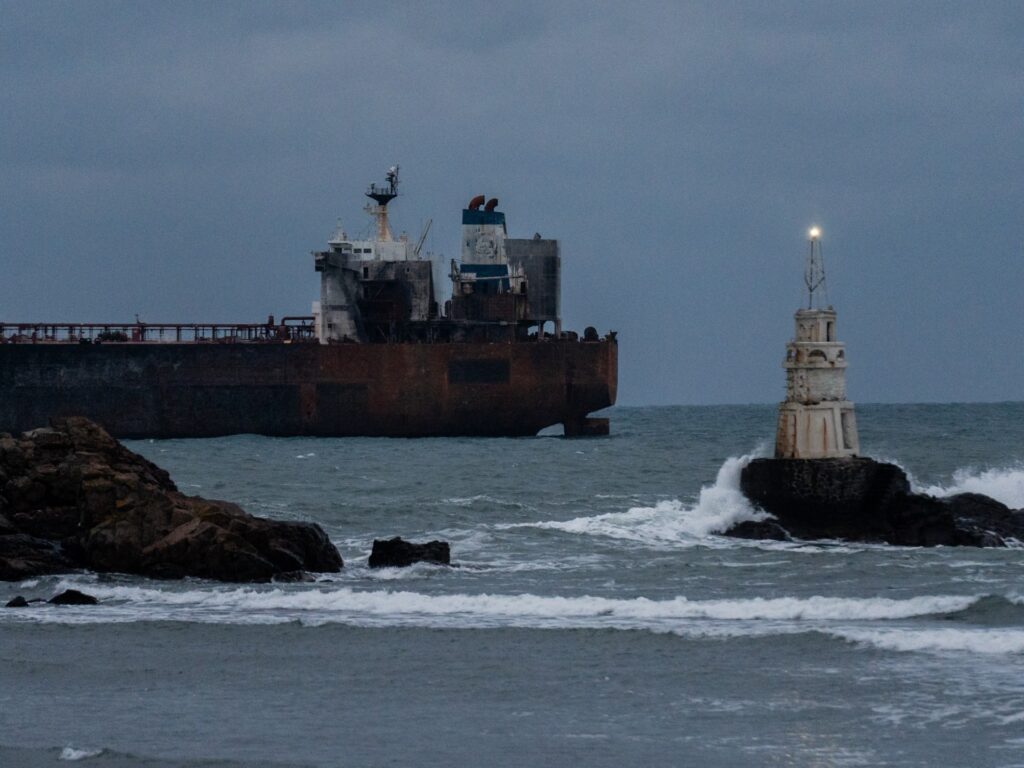
The French Navy, with support from the United Kingdom, recently intercepted a Russian oil tanker that was suspected of attempting to evade international sanctions. The tanker had departed from Murmansk, a significant port in Russia, and was under close surveillance due to concerns it was trying to bypass restrictions imposed on Russian oil exports.
The joint operation highlights the ongoing efforts by Western nations to enforce sanctions designed to limit Russia’s ability to finance its activities amid ongoing geopolitical tensions. France stated that the tanker was trying to ‘skirt international sanctions,’ indicating a deliberate attempt to circumvent regulatory measures.
This interdiction comes at a time when sanctions against Russia have become increasingly stringent, targeting key sectors including energy exports. Oil tankers play a critical role in the global supply chain, and controlling their movements is essential to the efficacy of the sanctions regime.
The UK’s backing of the French Navy’s operation underlines the collaborative nature of Western responses to ensuring compliance with international law and sanctions. Both countries have reiterated their commitment to holding accountable those who flout these measures.
The Russian oil tanker’s interception sent a strong message regarding the vigilance of Western naval forces in monitoring maritime activities that may undermine global sanctions. Such operations are complex and require extensive intelligence sharing and coordination among allied nations.
Efforts to prevent the illicit export of Russian oil are part of broader strategies to pressure Russia economically and politically. The enforcement of sanctions through naval interdiction plays a pivotal role in limiting Russia’s access to critical revenue streams.
This incident also underscores the challenges faced by maritime authorities in policing the vast oceans where sanctioned goods might be disguised, transferred, or rerouted to avoid detection. The cooperation between France and the UK exemplifies the growing joint security initiatives aimed at safeguarding international norms.
Further details about the tanker, including its name, the exact route taken, and any penalties or legal measures to be taken against the involved parties, have not yet been disclosed. However, this case is expected to act as a deterrent to others contemplating similar attempts.
In recent months, several attempts by Russian vessels to avoid sanctions have been documented, prompting escalated efforts by Western naval forces to monitor and intercept suspicious shipments. These measures are integral to the overall effectiveness of the sanctions regime.
The strategic importance of Murmansk as a starting point for these operations is notable due to its position as a key ice-free port for Russia in the Arctic region. The port facilitates access to international waters and is critical for Russia’s export capabilities.
This naval interdiction is part of a broader geopolitical context in which Western countries continue to uphold sanctions in response to the ongoing conflict involving Russia. The enforcement actions conducted at sea prevent clandestine trade activities that undermine international efforts.
In conclusion, the joint operation by the French Navy and the UK to intercept a Russian oil tanker sailing from Murmansk represents a significant enforcement action aimed at upholding international sanctions. It demonstrates the commitment of Western nations to ensuring compliance and maintaining the integrity of the sanctions regime in the challenging environment of global maritime security.