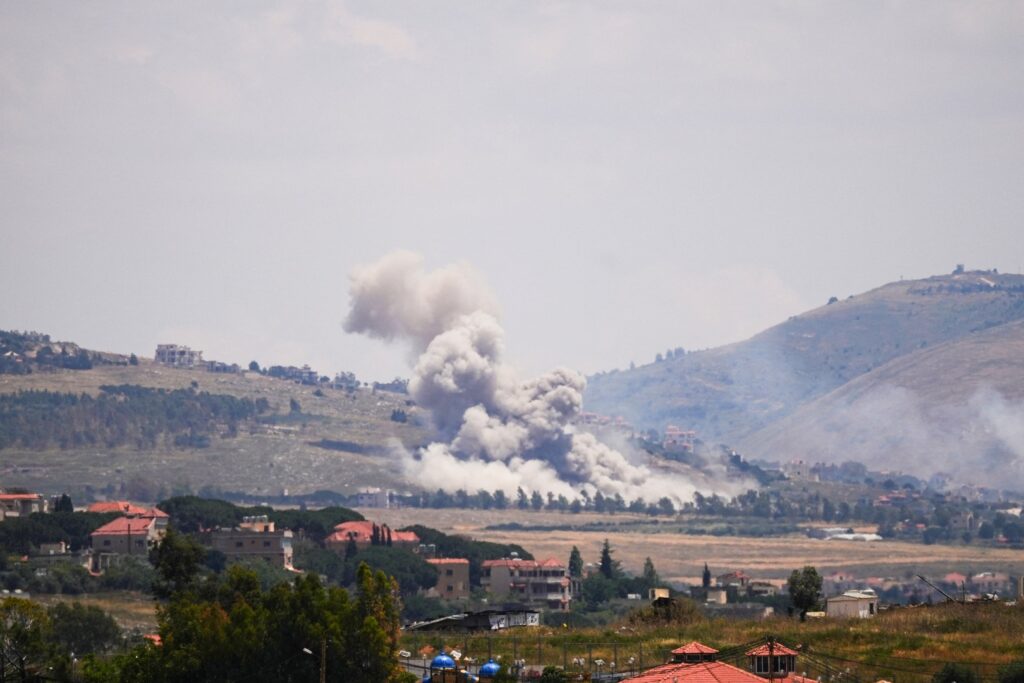
Smoke billows from southern Lebanon following an Israeli strike, as seen from Nabatieh, Lebanon, May 29, 2026. REUTERS/Stringer
Tensions in Lebanon have escalated significantly as Israeli forces deepen their military incursion by crossing the Litani River, marking a notable expansion of their ground invasion into Lebanese sovereign territory. This move has sparked widespread frustration and concern across Lebanon, as the incursion threatens national sovereignty and stability.
The Litani River, a key geographical and symbolic boundary in southern Lebanon, has historically served as a significant marker in conflicts and negotiations. The crossing by Israeli troops represents not only a strategic military advancement but also an intensification of the ongoing conflict in the region.
Lebanese officials and civilians alike have expressed outrage at this development, viewing it as a violation of Lebanon’s territorial integrity and an alarming escalation that could lead to further destabilization. The government has called for urgent international intervention, seeking support from global powers and regional organizations to halt the advance and restore peace.
The invasion has also aggravated the already fragile humanitarian situation in Lebanon. Displacement of civilians has increased as fighting intensifies, with numerous reports of casualties and damage to civilian infrastructure. Aid organizations have reported difficulties in accessing affected areas due to the advancing military operations.
On the Israeli side, military officials have justified the expansion of the ground invasion as necessary to counter perceived threats and ensure national security. They argue that controlling areas beyond the traditional conflict zones is crucial to dismantle hostile militant factions and prevent attacks on Israeli territory.
International reactions have been mixed, with some countries condemning the Israeli advance as disproportionate and urging restraint, while others emphasize Israel’s right to defend itself against ongoing cross-border threats. The United Nations has called for an immediate cessation of hostilities and renewed dialogue between the parties involved.
The expansion of the invasion poses serious risks of a wider regional conflict, with neighboring countries watching the developments anxiously. There are fears that continued military operations could ignite broader confrontations, drawing in additional forces and complicating an already volatile situation.
In the meantime, Lebanese communities continue to suffer, facing disruptions to daily life, economic hardships, and the ever-present danger of conflict spillover. Efforts to provide humanitarian relief and negotiate ceasefires are ongoing but face significant challenges amid the escalating military actions.
The situation remains fluid and highly volatile, with the potential for further escalation or, conversely, for diplomatic breakthroughs. The international community continues to monitor the developments closely, hopeful that a resolution can be achieved to end the bloodshed and restore stability to Lebanon and the wider region.