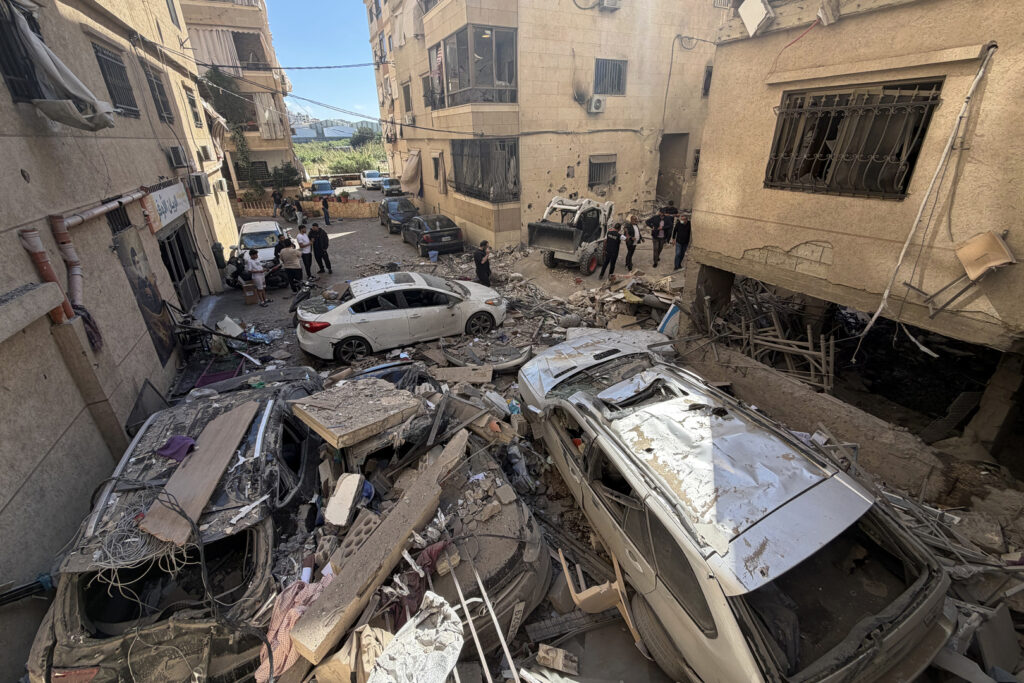
Rescue workers and local residents inspect the damage to a building following an Israeli air strike in the Choueifat area, south of Beirut on the outskirts of the capitals southern suburbs, on May 28, 2026. A Lebanese military source told AFP that an Israeli strike hit an apartment south of Beirut on May 28, shortly after Israel's military said it launched a strike on the capital. The Israeli military said it launched an airstrike on the Lebanese capital Beirut after earlier strikes on the country's south killed at least 12 people, including two children, and wounded 21 others. (Photo by Ibrahim AMRO / AFP)
In a startling development, smoke has been seen billowing over Beirut’s southern districts following a recent Israeli military strike. The footage captured by local residents reveals dense clouds of smoke rising above the city skyline, signaling the aftermath of the attack that targeted key areas of the Lebanese capital.
The Israeli strike marks an escalation in the ongoing hostilities in the region, with the Lebanese capital experiencing renewed tensions and violence. Observers and officials have expressed concern about the potential for further conflict and the impact on civilians living in the affected areas.
Details surrounding the precise targets of the strike remain limited, but initial reports suggest that military installations and strategic positions may have been the focus. The Lebanese authorities have condemned the attack, calling it a violation of sovereignty and international law.
Witnesses reported hearing several explosions in the southern part of Beirut, which led residents to seek shelter and assess damages. Emergency services have been deployed to manage any casualties and to control fires sparked by the bombardment.
This latest strike is part of a series of escalations between Israel and Lebanon, with both sides blaming each other for the rising tensions. The international community has urged both parties to return to dialogue and to exercise restraint to prevent a broader conflict.
Humanitarian organizations in Beirut have expressed deep concern about the safety of civilians amid the hostilities and have called for immediate measures to protect vulnerable populations.
The situation remains fluid, with ongoing developments expected as authorities assess the full extent of the damage and casualties. Analysts warn that continued military action in Beirut could destabilize the already fragile peace in the region.
As the smoke continues to rise over Beirut, the world watches anxiously, hoping for a swift de-escalation and a return to calm in the war-torn city.