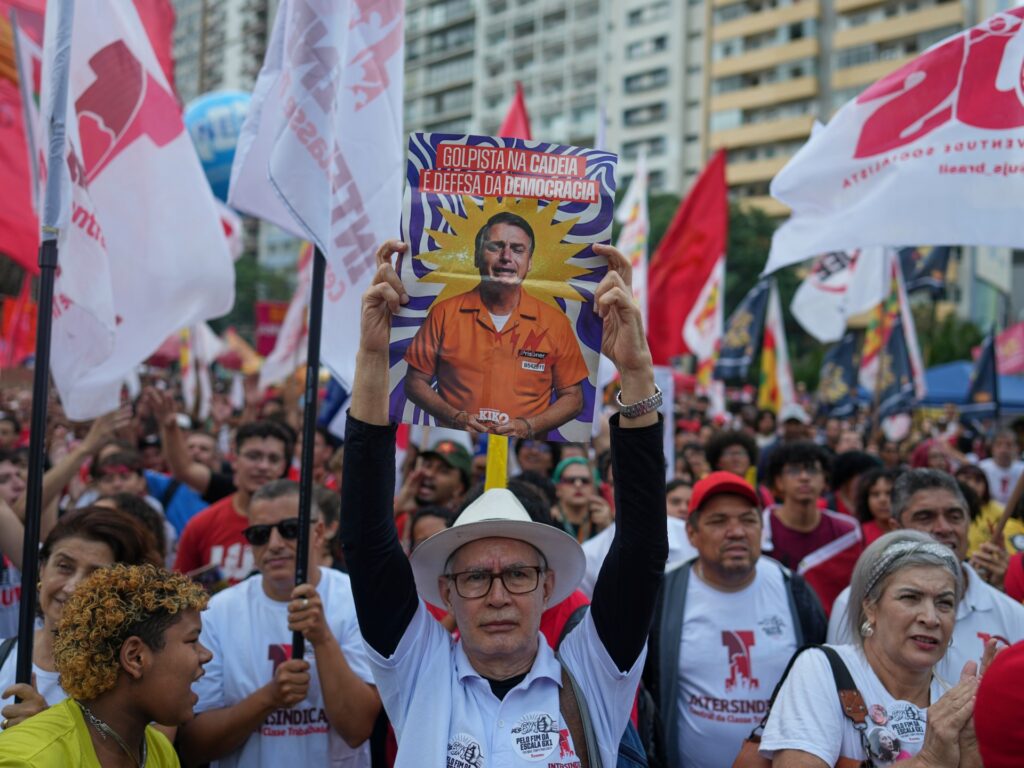
In a recent judicial decision, Brazilian Supreme Court Justice Alexandre de Moraes has suspended the application of a law that could potentially reduce the 27-year prison sentence handed down to former President Jair Bolsonaro. This suspension will remain in effect while the Supreme Court conducts a more comprehensive review of the law’s implications.
The law in question aimed to provide mechanisms for reducing long prison sentences, which could have directly impacted Bolsonaro’s sentence duration. Bolsonaro, a controversial figure in Brazilian politics, was sentenced to 27 years, a notably severe penalty reflecting the gravity of his charges.
Justice de Moraes’s suspension means that Bolsonaro will remain under the terms of his original sentence for the time being. The decision has sparked significant attention both within Brazil and internationally, highlighting the complexities and ongoing legal debates surrounding accountability for high-profile political figures.
Legal experts suggest that the suspension underscores the judiciary’s cautious approach in dealing with laws that could alter sentencing outcomes for major cases. It also signals the Supreme Court’s intent to ensure thorough consideration before permitting any changes that might reduce prison terms in politically sensitive cases.
The law’s suspension is pending a detailed evaluation by the court, which will assess the legal, social, and political ramifications of its application. This step is crucial in maintaining the balance of justice and ensuring that laws are applied fairly and consistently.
Brazil has been witnessing intense political and legal turbulence, with the judiciary playing a central role in navigating challenges related to governance and rule of law. This latest development reflects the judiciary’s active involvement in shaping the legal landscape and its commitment to due process.
As the Supreme Court reviews the law, there is widespread public interest in the outcome, given Bolsonaro’s significant influence and the broader implications for Brazil’s judicial and political environment.
The international community is also closely watching, as Brazil’s handling of such cases can have ramifications for global perceptions of its legal system and democratic integrity.
The suspension raises important questions about the balance between legal reform and accountability, especially when dealing with former leaders accused of serious offenses. It also highlights the critical role of judicial oversight in safeguarding justice.
While awaiting the court’s final decision, Bolsonaro’s supporters and opponents remain engaged in a heated debate over justice, legality, and the future political direction of Brazil.
In summary, Justice Alexandre de Moraes’s decision to bar the immediate use of the law to reduce Bolsonaro’s 27-year sentence is a pivotal moment in Brazil’s judicial proceedings. It demonstrates the court’s cautious stance and the complexities involved in applying legal reforms to high-profile cases, setting the stage for a significant judicial review and public discourse on law and justice in Brazil.