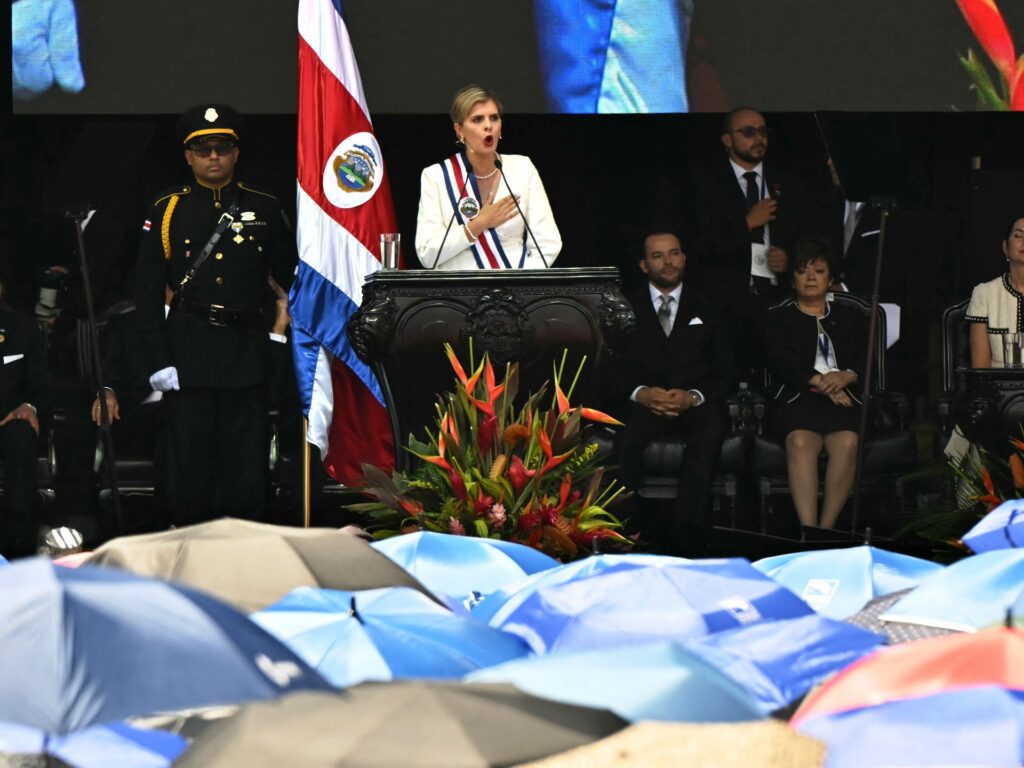
Laura Fernandez has been officially sworn in as the new president of Costa Rica, marking a significant moment in the nation’s political landscape. Fernandez, representing a right-wing party, assumes office at a crucial time with her party holding an absolute majority in the country’s legislature.
Her inauguration signals a potential shift in policy direction for Costa Rica, as her administration is expected to pursue a conservative agenda reflective of the party’s platform. This majority control within the legislative branch grants Fernandez considerable leverage to implement her policies without significant opposition.
Laura Fernandez’s rise to the presidency follows a highly contested electoral process, where her party’s messaging resonated strongly with voters seeking change. Key campaign promises included economic reform, stronger law enforcement, and a focus on traditional values.
Her term begins amidst several challenges facing Costa Rica, such as economic recovery post-pandemic, addressing crime rates, and navigating geopolitical issues in the region. Fernandez has expressed commitment to tackle these challenges head-on while fostering national unity.
Political analysts suggest that having the legislature aligned with the executive branch could streamline governance but also highlights the need for careful checks and balances to ensure democratic integrity.
International observers are watching closely to see how Fernandez’s leadership will influence Costa Rica’s foreign relations, particularly with neighboring countries and traditional allies.
In her inaugural speech, President Fernandez emphasized themes of national pride, economic opportunity, and social cohesion, calling on all Costa Ricans to support her administration’s vision.
As Laura Fernandez takes office, expectations are high for significant policy shifts and legislative activity, with citizens eager to see how her administration will address longstanding issues and shape the country’s future.