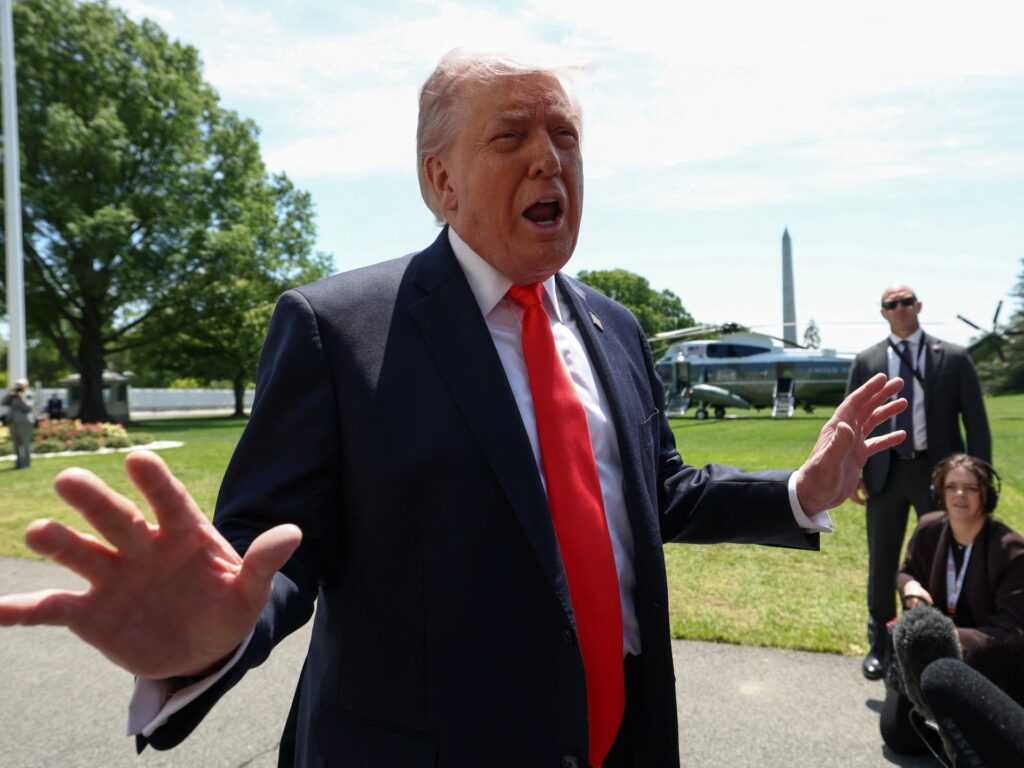
Former US President Donald Trump has publicly criticized the US Navy’s conduct amid the ongoing naval blockade of the Strait of Hormuz, describing their enforcement tactics as acting “like pirates.” The Strait of Hormuz, a strategic choke point through which a significant portion of the world’s oil passes, has become a focal point of heightened tensions between the US and Iran. The naval blockade, initiated to restrict Iran’s ability to transport oil and other goods, has sparked debate regarding its implications for international maritime law and regional stability.
Trump’s remarks suggest a controversial stance on the blockade, calling it “a very profitable business,” implying that the operations may be motivated by financial gain rather than purely national security concerns. His comments come at a time when the US Navy’s presence in the region is both a deterrent and a provocation, as Tehran has repeatedly condemned the blockade as an act of aggression.
The blockade aims to enforce sanctions and curb Iran’s alleged support for militant groups and its nuclear ambitions. However, the move has escalated tensions, contributing to sporadic naval confrontations and raising fears of a wider conflict. Critics of the blockade argue that it risks destabilizing global oil markets and endangering freedom of navigation, which is protected under international law.
Supporters contend that the blockade is a necessary measure to exert pressure on Iran, limiting its ability to finance activities deemed hostile by the United States and its allies. Naval operations in the Strait of Hormuz involve complex strategies, including the deployment of warships, surveillance aircraft, and coordination with regional partners.
Trump’s description of the Navy as “acting like pirates” reflects a broader skepticism about the military’s role and the strategic priorities guiding US foreign policy. This statement reignites the debate on whether economic interests overshadow ethical and legal considerations in executing such military blockades.
International reactions to Trump’s comments have been mixed. Some analysts warn that such rhetoric could undermine the perceived legitimacy of US naval operations and embolden adversaries. Others see it as a candid acknowledgment of the intertwining of military and economic objectives.
The Strait of Hormuz remains one of the most critical maritime passages globally, with roughly one-fifth of global petroleum passing through daily. Control and freedom of navigation in this narrow waterway are vital not just for regional players but also for the global economy.
With tensions continuing to simmer, diplomatic efforts to ease the situation have thus far been limited. The US administration faces the challenge of balancing sanctions enforcement with avoiding escalation into open conflict. Trump’s forthright criticism adds a new dimension to the discourse, potentially influencing both public opinion and policy formulation.
As the situation unfolds, stakeholders including international governments, maritime organizations, and energy markets are closely monitoring developments. The intersection of military action, geopolitical strategy, and economic interests in the Strait of Hormuz exemplifies the complexities of modern international relations.
In summary, Trump’s recent comments on the US Navy’s blockade at the Strait of Hormuz spotlight the contentious and multifaceted nature of the operation. His analogy of the Navy acting “like pirates” and the assertion of the blockade being “a very profitable business” challenge the integrity and motivations behind the US presence in the region. The unfolding events will likely continue to shape geopolitical dynamics and global energy security in the near future.