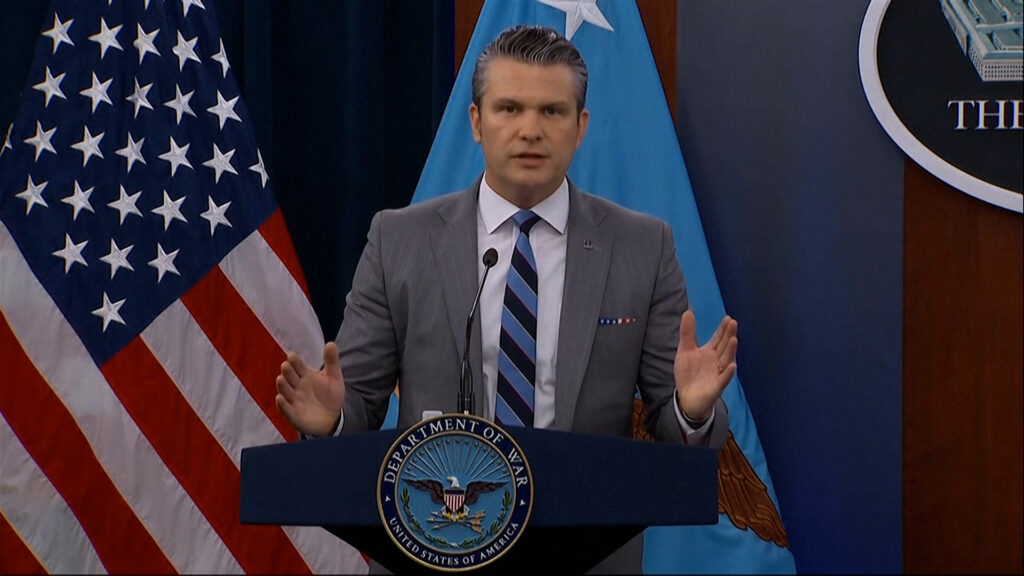
The US Navy has been given authorization to target Iranian fast boats operating in the strategic Strait of Hormuz, according to comments from Steve Hegseth, a political commentator. This move comes amidst ongoing tensions between the United States and Iran over maritime security and freedom of navigation in the critical waterway through which a significant portion of the world’s oil supply passes.
The Strait of Hormuz is a narrow passage between the Persian Gulf and the Gulf of Oman, serving as a vital transit route for global energy shipments. Iran has periodically used fast attack boats in this region to challenge or harass shipping traffic, particularly vessels from countries it considers adversaries.
President Donald Trump reportedly authorized the US Navy to adopt a more aggressive posture, enabling it to engage Iranian fast boats if they pose a threat to American vessels or allies navigating the strait. This decision reflects an escalation in the maritime military stance in the face of increasing provocations by Iran.
The authorization is intended to enhance the protection of international shipping lanes and deter Iranian actions perceived as hostile. Fast boats operated by Iran’s Revolutionary Guard and other maritime forces have been known to speed dangerously close to US ships, conduct maneuvers viewed as threatening, and sometimes deploy weapons or warnings.
US military officials have emphasized the need for freedom of navigation operations to ensure global trade flows remain undisrupted and to prevent any attempts by Iran to use its naval capabilities to exert pressure or limit passage through this critical corridor.
The international community has expressed concern over the volatility of the Strait of Hormuz, given the potential for conflict escalation that could disrupt energy markets worldwide. The US stance to proactively address threats from Iranian fast boats is part of a broader strategy to maintain security and stability in the Persian Gulf region.
This decision also serves as a signal to allies and regional partners of the United States’ commitment to safeguarding maritime interests and countering any aggressive actions by Iran.
While details of specific engagement rules have not been fully disclosed, the authorization means that US naval forces are prepared to respond to imminent threats posed by Iranian small boat tactics without awaiting higher command approval in real time.
Critics have warned that such authorizations could increase the risk of miscalculations or unintended clashes, potentially leading to wider escalations. Supporters argue that a firm deterrent approach is necessary to prevent Iran from testing US military resolve and destabilizing the region.
The situation remains dynamic, with ongoing diplomatic and military maneuvers influencing the operational environment in the Strait of Hormuz. The US Navy’s readiness to engage fast boats is a clear indication of heightened alertness given the strategic importance of this chokepoint.
Overall, the authorization marks a significant moment in US-Iran relations, particularly in terms of naval operations and maritime security, underscoring the increasingly complex and tense nature of interactions in one of the world’s most critical waterways.