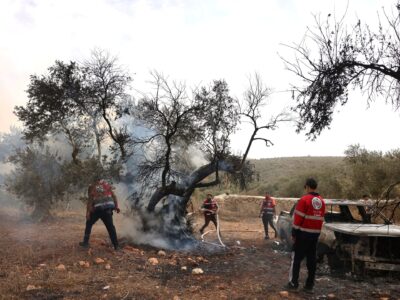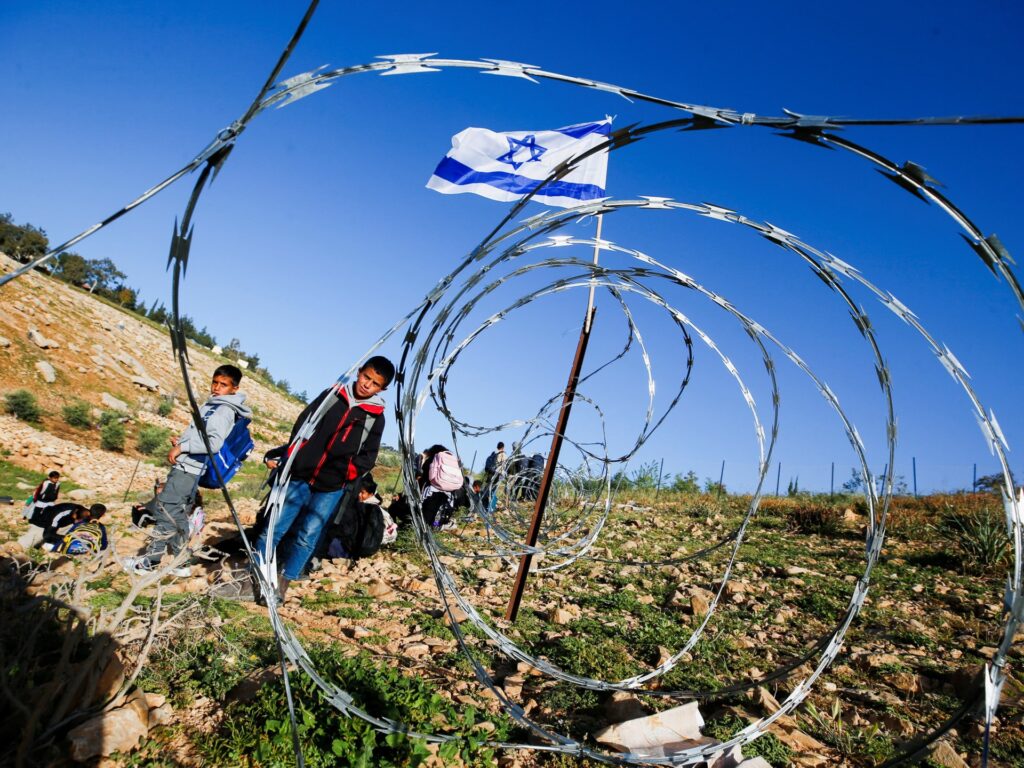
In the West Bank, tension continues to rise as Israeli settlers have been blocking Palestinian children from accessing their school near Umm al-Khair village. This disturbing development has sparked daily peaceful sit-ins by students, teachers, and families directly at the site of the obstruction, which is a fence installed by the settlers.
The affected children face numerous challenges as they try to navigate their education under these harsh conditions. The fence not only restricts physical access but also symbolizes the broader struggle over land and resources in the region. Palestinian families emphasize the importance of education and community resilience despite the daily obstacles posed by the settlers’ actions.
Every day, students and their teachers gather to stage peaceful protests, holding sit-ins at the fence to demand free access to schooling. The protests are a testament to the community’s commitment to securing their children’s right to education amidst conflict and occupation. The peaceful nature of the sit-ins highlights the desire for dialogue and resolution rather than escalation.
The situation has drawn attention from human rights advocates and international observers who condemn the deliberate roadblocks disabling the school attendance of Palestinian children. Schools are fundamental in ensuring stability, growth, and hope for future generations, and hindering access is viewed as a violation of basic human rights.
Seeking to shine light on the issue, local organizers continue to document the daily sit-ins and the settlers’ interference, calling for immediate intervention from relevant authorities and international organizations. They advocate for the removal of the fence and the establishment of safe, unobstructed routes for children to reach their school safely.
This blockade reflects the broader context of Palestinian hardship under occupation and settlement expansion policies. Efforts to create peaceful resolutions remain complex and ongoing, but the daily courage demonstrated by the children, educators, and families at Umm al-Khair stands as a powerful symbol of resistance and hope.
As the world watches, there is a pressing need for dialogue, increased protection of children’s rights, and a renewed commitment to ensuring that all children, regardless of their background, can access education without fear or obstructions. This incident serves as a critical reminder of the impact of the Israeli-Palestinian conflict on the most vulnerable and the urgent call for sustainable peace and justice in the region.