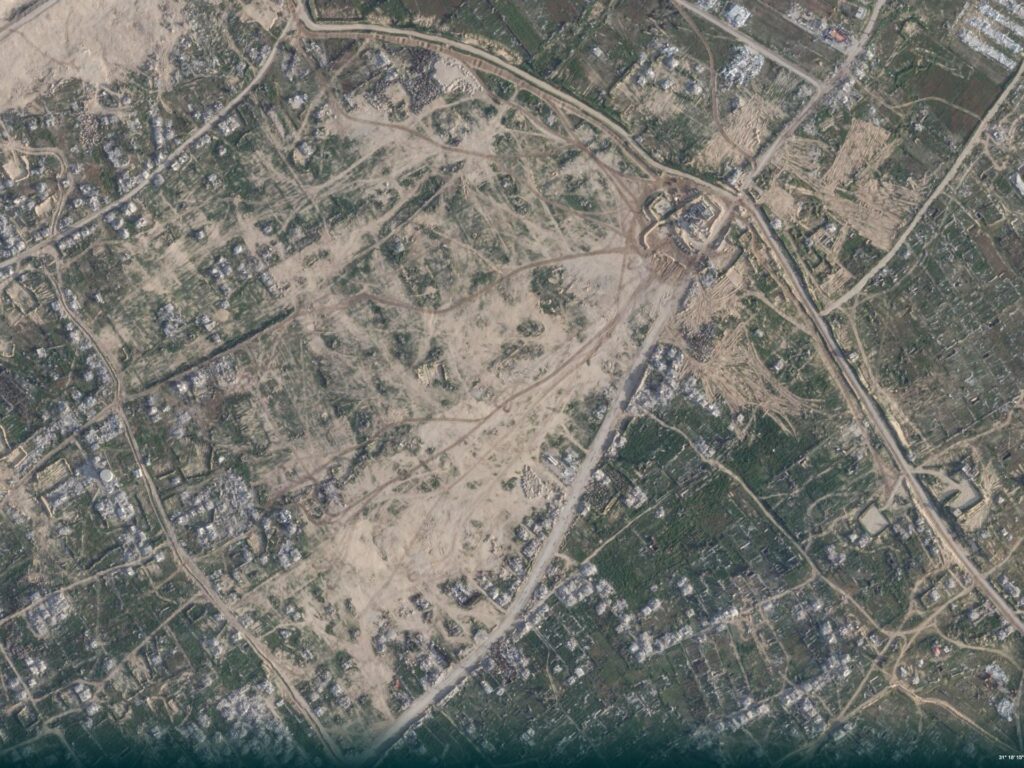
Recent satellite images have brought to light Israel’s ongoing expansion of military sites within Gaza. These developments involve constructing permanent military bases in areas that have historically been contentious, raising serious concerns amidst a backdrop of stalled reconstruction efforts supported by the United States.
Over the past months, satellite imagery analysts have observed new construction activities indicating that Israel is intensifying its military presence in Gaza. The expansion includes the development of fortified bases, potentially to establish greater control and security over the region.
This military expansion comes as US-backed plans for rebuilding Gaza face significant delays, leaving the territory’s infrastructure and humanitarian situation in a precarious state. The delay in reconstruction efforts is attributed to various political and logistical challenges, including security concerns and complex negotiations between involved parties.
The military fortifications appear to be strategically placed, possibly aimed at strengthening Israel’s defensive and operational capabilities in Gaza. These bases could serve multiple purposes, including surveillance, logistics, and rapid deployment of forces if necessary.
Local and international observers have expressed alarm over these developments, warning that increasing militarization may exacerbate tensions and hinder prospects for peace in the region. Human rights groups have also highlighted the impact on civilian populations, who continue to bear the brunt of the conflict with limited access to essential services.
This situation underscores the complicated nature of Gaza’s status, caught between efforts to rebuild and the realities of ongoing military operations. The expansion of military sites could further complicate diplomatic efforts aimed at achieving a lasting resolution.
The international community has called for renewed dialogue and a balanced approach that addresses both security concerns and humanitarian needs. Without progress on these fronts, Gaza may face prolonged instability and suffering.
As the situation evolves, satellite imagery will remain a critical tool for monitoring developments on the ground. These images provide transparency and an unfiltered view of activities that are often surrounded by political narratives.
In summary, the revelations of Israel expanding military installations in Gaza come at a sensitive time when reconstruction efforts have stalled, signaling a potential shift towards increased militarization rather than peacebuilding. This development highlights the urgent need for coordinated international action to address the complex challenges facing Gaza and its people.