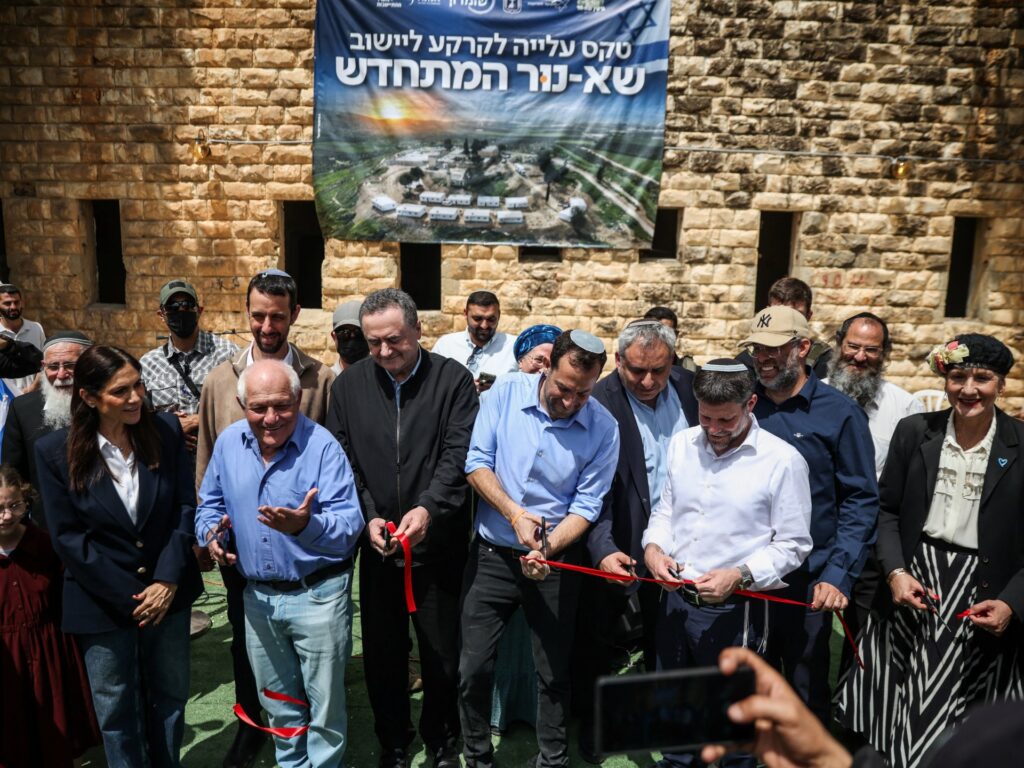
In a significant development related to the Israeli-Palestinian conflict, Israeli government ministers have publicly celebrated the decision to re-establish the Sa-Nur settlement in the West Bank. Sa-Nur is one of four former settlements in the area that have received official government approval for re-establishment, nearly two decades after the original settlers were evicted.
The re-establishment of these settlements marks a pivotal shift in Israeli policy towards the West Bank, an area that has been a focal point of contention between Israelis and Palestinians for many years. The Sa-Nur settlement, along with three others, represents a revival of communities that were previously dismantled in efforts to manage and stabilize the region.
Officials from the Israeli government expressed optimism about the move, highlighting the historical and strategic importance of the Sa-Nur settlement. They emphasized that restoring these settlements is part of a broader initiative to strengthen Israeli presence in the West Bank and to provide security and stability for Israeli citizens living in the area.
The original eviction of settlers from Sa-Nur occurred approximately twenty years ago, as part of wider disengagement plans that aimed to reduce tensions in the region. However, with changes in political leadership and shifting priorities, there has been renewed momentum towards resettlement.
Supporters of the re-establishment argue that these settlements are crucial for Israel’s national security and cultural heritage. They contend that reclaiming Sa-Nur and similar sites helps reinforce the connection between the Israeli people and historical land.
Critics, however, warn that expanding settlements in the West Bank could further inflame tensions with Palestinians and complicate peace negotiations. The international community remains divided on the issue, with many countries viewing settlement expansion as a hindrance to the two-state solution.
Despite the controversy, the Israeli cabinet has officially endorsed the plan, and initial steps towards rebuilding Sa-Nur have begun. Infrastructure development is underway, with plans to provide housing, schools, and community facilities to accommodate returning settlers.
Local Israeli leaders have welcomed the announcement, viewing it as a revival of community life that was disrupted two decades ago. They are hopeful that Sa-Nur will once again become a vibrant settlement contributing to the cultural and economic vitality of the region.
The re-establishment of Sa-Nur also comes at a time of changing dynamics in regional politics. Israel is navigating complex relationships with neighboring countries, and the move is seen by some analysts as a statement of sovereignty and determination.
While the future of Sa-Nur and the other settlements remains uncertain amid ongoing diplomatic efforts, the Israeli government’s commitment to these initiatives signals a new chapter in the West Bank settlement saga. Observers will be closely monitoring how this development impacts broader peace talks and the prospects for stability in the region.