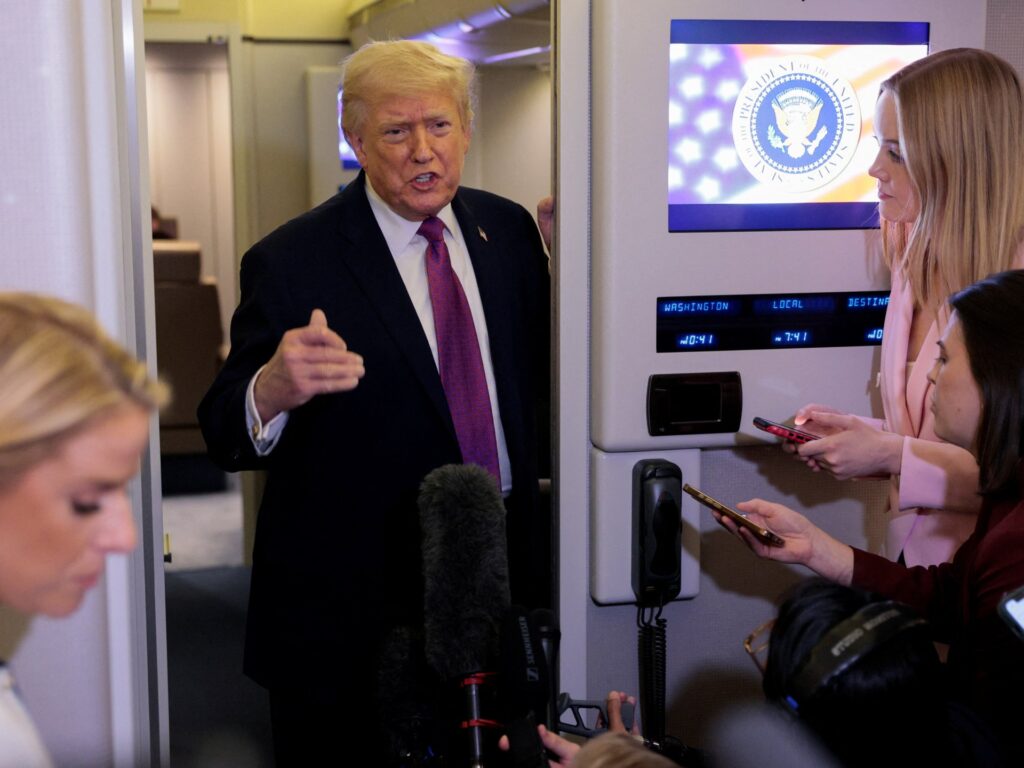
In a stark and alarming statement, US President Donald Trump declared that the United States might resume bombing operations if a deal with Iran is not reached. This indicates a potential shift in US policy towards Iran, reflecting heightened tensions and the possibility of escalating military actions should diplomatic efforts fail.
President Trump’s remarks come amid ongoing negotiations and discussions aimed at controlling Iran’s nuclear ambitions and stabilizing relations between the two countries. The US administration has emphasized the importance of reaching an agreement that ensures Iran’s nuclear program remains peaceful and that regional security is maintained.
The warning to “start dropping bombs again” signals that the US is prepared to take more aggressive measures if diplomacy does not yield tangible results. This situation has raised concerns among international observers and allies, who fear that renewed conflict could destabilize the already volatile Middle East region.
Diplomats and international leaders have urged both sides to continue dialogue and avoid actions that could lead to military confrontation. A breakdown in talks could lead to severe consequences not only for Iran and the US but also for global security and economic stability, particularly in relation to oil markets.
This announcement has garnered mixed reactions within the United States and across the world. Some analysts view the strong stance as a necessary deterrent to prevent Iran from advancing its nuclear capabilities. Others warn that such rhetoric could undermine diplomatic efforts and increase the risk of armed conflict.
The context of President Trump’s comments includes a backdrop of previous sanctions imposed on Iran, efforts to dismantle parts of prior nuclear agreements, and a series of military and diplomatic maneuvers by both nations. Throughout his administration, Trump has maintained a hardline approach towards Iran, advocating for maximum pressure to force compliance.
Iran’s government has repeatedly stated its willingness to negotiate but has also warned it will defend its sovereignty and interests fiercely. The international community remains hopeful that dialogue will prevail and that a peaceful resolution can be reached to avoid the catastrophic consequences of war.
As the situation develops, all eyes will be on ongoing negotiations and the responses from both Tehran and Washington. The world waits to see if diplomatic engagement can avert the threat of renewed bombing campaigns and foster a lasting agreement that ensures peace and stability in the region.