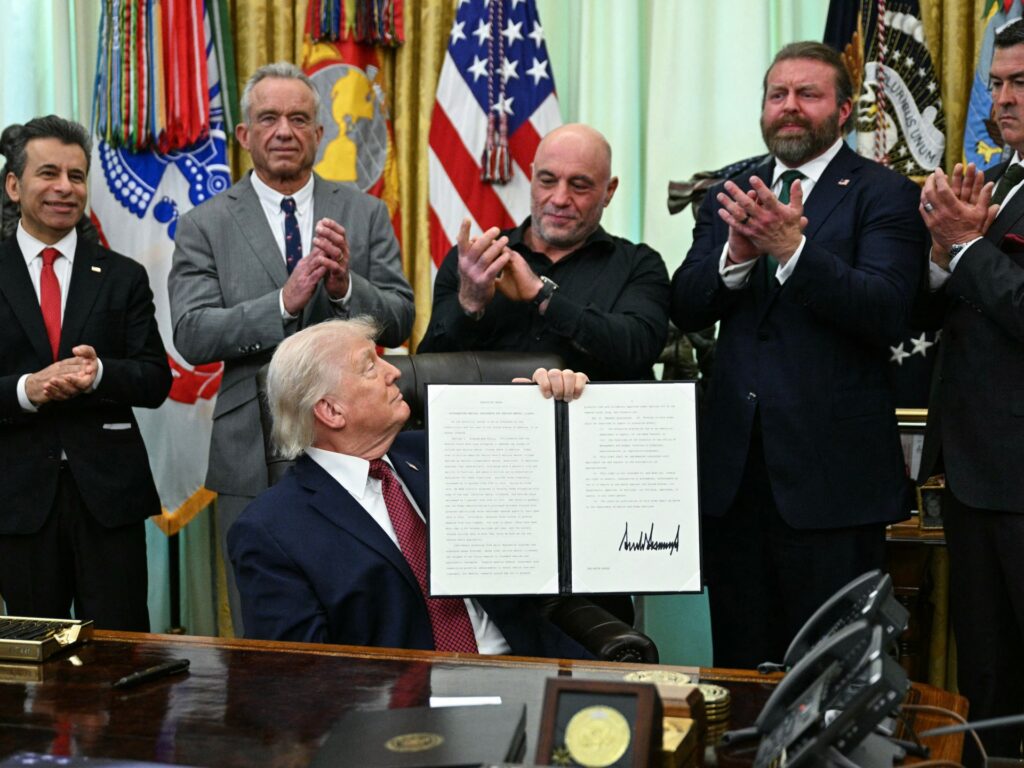
In a groundbreaking move that has captured national attention, former President Donald Trump, accompanied by popular podcast host Joe Rogan, has signed an executive order aimed at accelerating the federal review process of psychedelic substances. This unprecedented collaboration highlights a significant shift in the approach to drug policy and mental health treatment in the United States.
The executive order directs federal agencies to relax existing restrictions on various psychedelics, notably including ibogaine, a powerful psychoactive compound derived from the root bark of the African iboga plant. Historically, psychedelics have been subject to stringent federal controls, limiting research and potential medical applications. However, recent scientific studies suggest that these substances could offer breakthrough therapies for a variety of mental health issues, including depression, PTSD, and addiction.
Joe Rogan, known for his advocacy on psychedelic decriminalization and mental health awareness, was present at the signing, lending his support and voice to the initiative. Rogan has frequently discussed the benefits of psychedelics on his widely followed podcast, emphasizing their potential to revolutionize mental healthcare and provide alternative treatments to traditional pharmaceuticals.
The executive order calls for a comprehensive review and reconsideration of psychedelic classifications under the Controlled Substances Act, urging federal agencies to expedite the scientific evaluation process. It encourages partnerships with research institutions and the implementation of pilot programs to explore psychedelic-based treatments in controlled, clinical settings.
Supporters contend that this policy change could unleash a wave of innovation in mental health treatment, offering hope to millions struggling with conditions that have been historically resistant to conventional therapies. Critics, however, urge caution due to the unknown long-term effects and the potential for misuse.
The order also specifically mentions ibogaine, which has shown promise in treating opioid addiction by reducing withdrawal symptoms and cravings. While ibogaine remains largely unapproved for clinical use in the U.S., this directive may accelerate research and regulatory pathways to harness its therapeutic potentials.
Healthcare professionals, researchers, and advocacy groups widely welcome the order as a step forward in scientifically grounded drug policy reform. They emphasize the importance of rigorous trials and safety protocols to ensure that any medical applications of psychedelics are responsibly developed.
This development marks a notable departure from traditional drug enforcement policies and aligns with a growing international trend toward recognizing the medicinal value of psychedelics. Countries like Canada, the Netherlands, and parts of South America have already begun integrating psychedelic-assisted therapy into conventional care frameworks.
As the federal government moves forward with this initiative, the eyes of the world will be watching. The collaboration between Trump and Rogan, two influential figures from different spheres, underscores the changing cultural and political landscape surrounding psychedelics.
In summary, the signing of this order represents a pivotal moment in U.S. drug policy, potentially ushering in a new era of mental health treatment options. It challenges longstanding stigmas and opens the door for more comprehensive scientific inquiry into substances that were once taboo.
The next steps include federal agencies setting timelines for review processes, initiating partnerships with medical research bodies, and developing pilot programs that could set standards for psychedelic therapy. Public response has been mixed but largely optimistic, with many seeing it as a hopeful progression toward addressing the mental health crisis.
As research progresses, careful monitoring and regulation will be crucial to maximize benefits and minimize risks, ensuring that psychedelic therapies are accessible, safe, and effective for those in need.