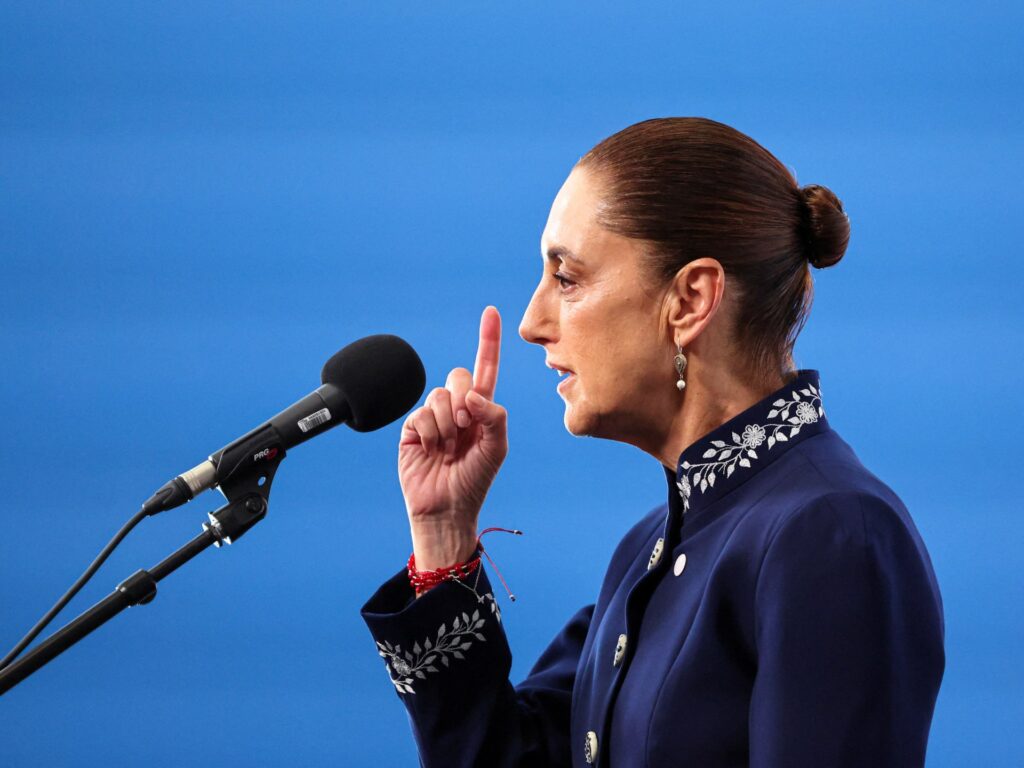
In a significant stride towards combating organized crime, Mexican authorities have apprehended Janos Balla, a 48-year-old suspected Hungarian drug trafficker, in the Caribbean state of Quintana Roo. This arrest comes as part of a broader initiative led by President Claudia Sheinbaum to intensify efforts against drug cartels and organized crime throughout the nation.
Janos Balla, who was considered a fugitive before his capture, has been linked to various drug trafficking operations that allegedly extended into Mexico, making his detention a considerable blow to international narcotics smuggling networks. Authorities have indicated that Balla was operating covertly within Mexico, utilizing the strategic location of Quintana Roo, known for its extensive coastline and tourist appeal, to facilitate illicit activities.
President Claudia Sheinbaum has made it a priority since taking office to enhance law enforcement capabilities, focusing on dismantling drug cartels that have historically plagued Mexico. Her administration has launched a series of actions aimed at increasing arrests of cartel figures, disrupting their operations, and strengthening the judicial processes against organized crime.
The arrest of Balla is viewed as a testament to the enhanced coordination between Mexican federal forces and international agencies, reflecting a successful multilateral approach to tackling drug trafficking. It underscores the commitment of Mexican authorities to dismantle theFinancial and operational structures that sustain these criminal organizations.
Quintana Roo, a state popular with tourists for its beaches and Mayan archaeological sites, has seen varying degrees of cartel activity, which has occasionally spilled over into public areas, raising concerns about security for both residents and visitors alike. The capture of Balla is expected to have a positive impact on the security situation in the region, potentially deterring similar illicit activities.
Further investigations are underway, with Mexican law enforcement agencies working to uncover and dismantle the trafficking networks linked to Balla. Authorities have not released detailed information about specific charges or the possible connections Balla might have with other international or domestic criminal entities.
In the broader context, Mexico’s fight against drug trafficking is part of a long-standing and complex struggle involving numerous facets of society, governance, and international cooperation. The Sheinbaum administration’s focus on concrete actions such as targeted arrests, judicial reforms, and international collaboration reflects a strategic approach aimed at creating lasting solutions.
Experts believe that continued pressure on cartel operations, combined with social and economic programs to reduce vulnerability to criminal influence, could enhance the effectiveness of these efforts. The public and international community have responded to the arrest with cautious optimism, recognizing the challenges ahead but hopeful that such actions will bring measurable improvements.
As investigations proceed, Mexican officials have expressed their resolve to maintain momentum in this crackdown, signaling that the arrest of Janos Balla is one of many steps to reclaim safety and security in the country. The case serves as a reminder of the ongoing necessity to address drug trafficking and organized crime with persistence and coordinated efforts across borders.