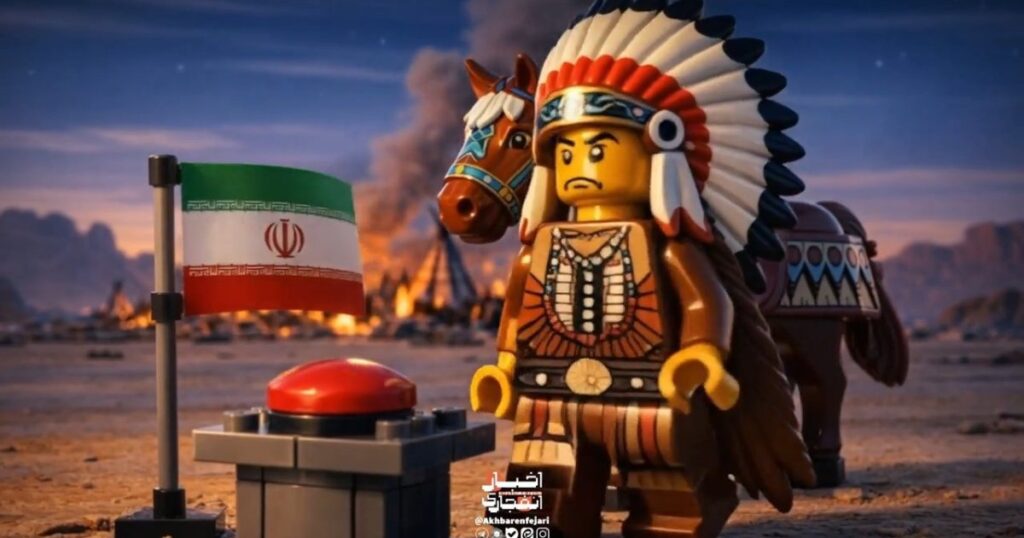
In the multifaceted world of global politics and media warfare, Iran has found an unlikely but powerful tool to challenge narratives coming from the United States — Lego animations. These videos, produced by Iranian creators, have not only gone viral but are also considered to have won significant ground in the narrative war against former US President Donald Trump. Analysts highlight that the secret behind the success of these clips lies in their remarkable combination of high-quality production, low-cost implementation, and keen political insight.
The Iranian Lego videos creatively depict political events and personalities, often satirizing Trump’s administration policies and decisions. Despite being made on modest budgets, the animations are impressively detailed and engaging, rivalling mainstream media productions. The charm and accessibility of these videos have captured the attention of a broad audience, including segments of the American public.
One of the key strengths of these Lego videos is their ability to tap into existing fissures within US politics. By addressing divisive issues such as immigration, racial tensions, and political polarization through humor and visual storytelling, they resonate deeply with viewers who may already feel disenfranchised or critical of Trump’s rhetoric.
The strategic use of Lego figures is also symbolic — a childhood toy turned into a weapon of cultural commentary, suggesting that even ‘simple’ tools can be powerful in media battles. This tactic enables the creators to soften complex political critiques without alienating audiences, making serious points more palatable.
Iranian media analysts note that these videos are part of a broader campaign to influence global perceptions and counteract negative portrayals in Western media. The Lego animations serve as an alternative narrative, one that humanizes Iranian perspectives and exposes the contradictions in the US political landscape under Trump.
Social media platforms have been instrumental in amplifying the reach of these clips. Viral sharing has ensured that the Iranian-produced content penetrates far beyond the Middle East, infiltrating the American digital space where it challenges mainstream US narratives.
Critics argue that such media strategies highlight the evolving nature of propaganda and information warfare, where creativity and cultural relevance become as crucial as resources. The Lego videos exemplify how narrative wars are increasingly fought on digital battlegrounds with innovative content forms.
In conclusion, Iran’s Lego videos demonstrate a sophisticated understanding of media influence and political messaging. By combining humor, quality animation, and poignant social critique, these animations have managed to shift perspectives and spark dialogue, emerging as a notable front in the contest over information in the Trump era.