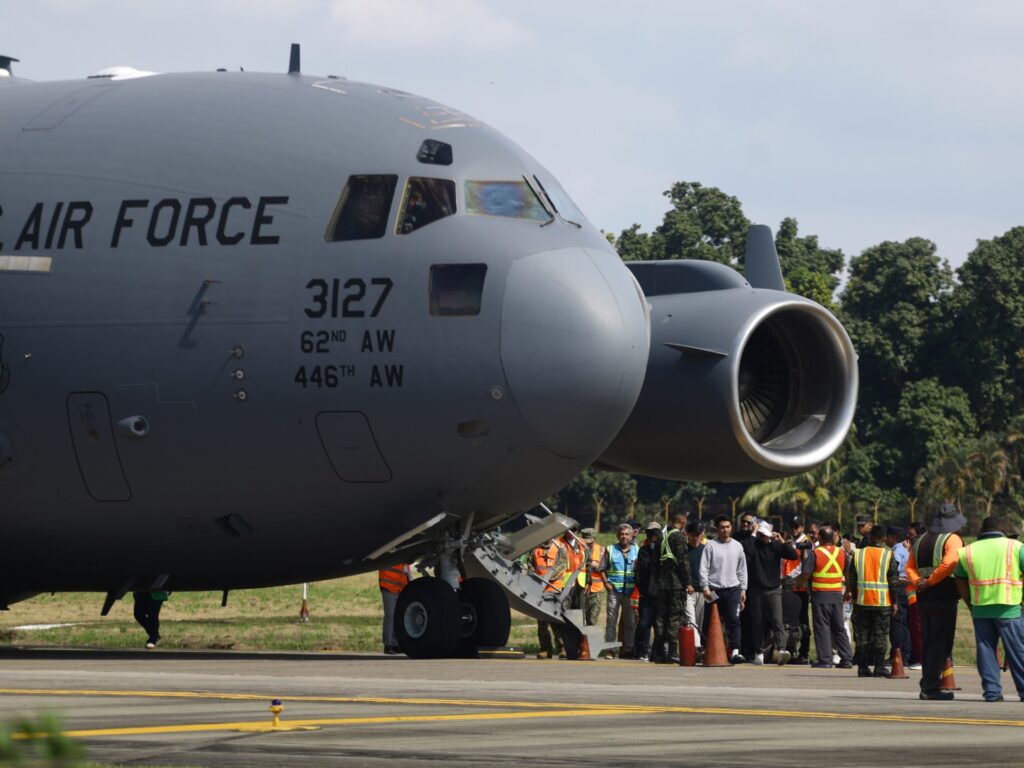
In an unprecedented move, fifteen individuals originating from South America have been deported from the United States and arrived in the Democratic Republic of Congo (DRC). This marks the first time that deportees from South America have been sent to the DRC, as part of a new agreement reached between the governments of Washington and Kinshasa.
The deportation operation signifies a novel collaboration between the two countries aimed at managing migration and potentially addressing mutual concerns related to immigration and security. While details about the identities of the deportees and the specific South American countries involved have not been fully disclosed, this event highlights a unique diplomatic and operational development.
Authorities from Washington and Kinshasa negotiated the deal, which reflects shifting dynamics in international migrant repatriation protocols. Normally, deportations involve direct repatriation to an individual’s country of origin; however, this deal appears to enable the transit or relocation of certain individuals through the DRC, a central African nation.
The impact on the deportees and their future remains a subject of interest and scrutiny. Human rights organizations and observers are likely to closely monitor the situation to ensure that deportation processes respect international laws and humanitarian standards.
This event underlines broader trends in global migration, where countries are increasingly exploring new partnerships and agreements to handle complex migration flows and related challenges. It also raises questions about the roles and responsibilities of third countries in immigration enforcement and repatriation processes.
Further updates are expected as the situation evolves, shedding light on the operational details of the agreement, the legal frameworks governing such deportations, and the experiences of the deportees themselves.
This historic transfer between the US and the DRC may foreshadow future collaborations or set precedents for how international deportations are managed across continents, particularly involving South America and Africa.
In conclusion, the arrival of the fifteen deportees from South America in the DRC represents a significant development in international migration diplomacy, highlighting cooperation between the US and African nations to handle complex migration issues in an increasingly interconnected world.