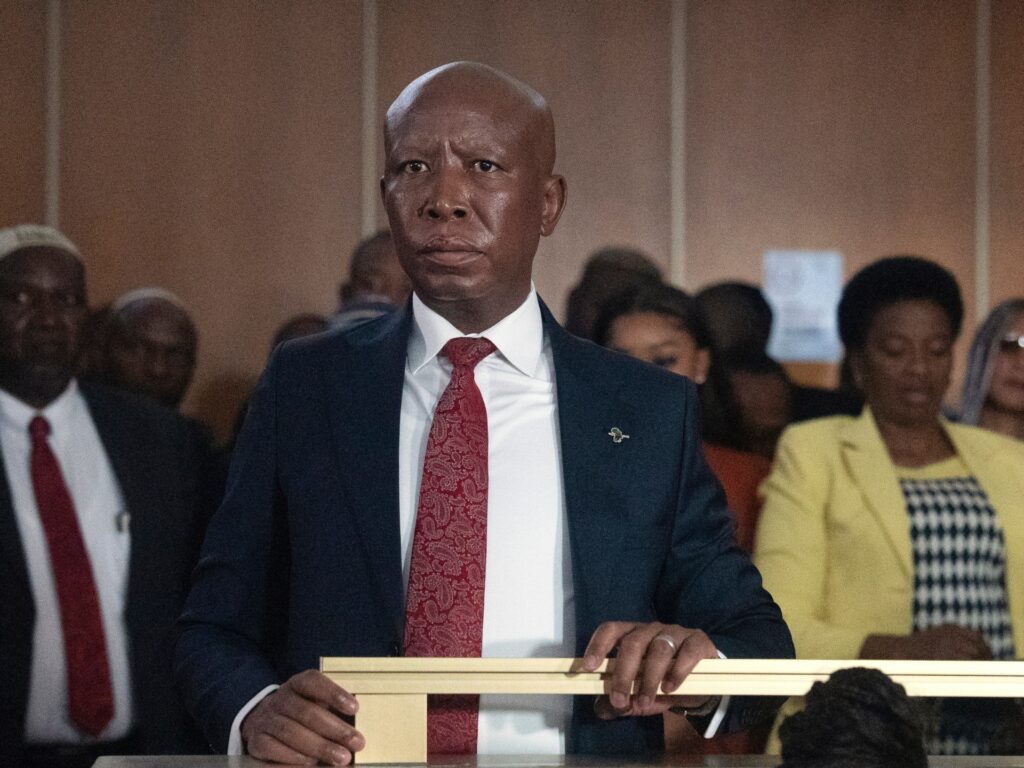
In a significant legal development, South African opposition leader Julius Malema has been sentenced to a five-year prison term after being found guilty of firing a gun. The case has garnered widespread attention due to Malema’s high-profile status as a political figure and leader of the Economic Freedom Fighters (EFF).
The magistrate responsible for the sentencing handed down the five-year term following the court’s deliberations on the incident involving Malema and the discharge of a firearm. This event has been a focal point for both legal and political analysts, reflecting tensions in South Africa’s political landscape.
Malema’s legal team has announced their intention to appeal the decision, signaling that the political figure will seek to challenge the ruling in a higher court. The appeal process is expected to draw considerable public and media attention, given Malema’s influence in South African politics.
Julius Malema has been known for his fiery rhetoric and commanding presence in South Africa’s opposition politics, making the sentencing a landmark moment in the nation’s judicial history. His supporters have expressed concerns over the implications of his imprisonment on political discourse and the activities of the EFF.
The circumstances surrounding the gun incident have been extensively debated, with the prosecution presenting evidence that led to the conviction, while the defense has maintained their client’s innocence or argued mitigating factors.
This sentencing highlights the ongoing challenges facing South Africa’s legal and political systems as they navigate issues of accountability, leadership, and the rule of law. The outcome of the anticipated appeal will likely have far-reaching effects on Malema’s political career and the broader political dynamics within the country.
Observers are closely monitoring how this case influences public opinion and the response from various political entities within South Africa. The government and opposition will be watching closely to gauge the impact on national stability and the upcoming electoral landscape.
As the appeal process unfolds, the legal community will scrutinize the arguments presented and the judiciary’s handling of the case, which may set a precedent for how similar cases involving political figures are managed in the future.
In summary, Julius Malema’s sentencing to five years in prison for firing a gun marks a pivotal moment in South African politics and law enforcement, underscoring the complex interplay between political leadership and judicial accountability.