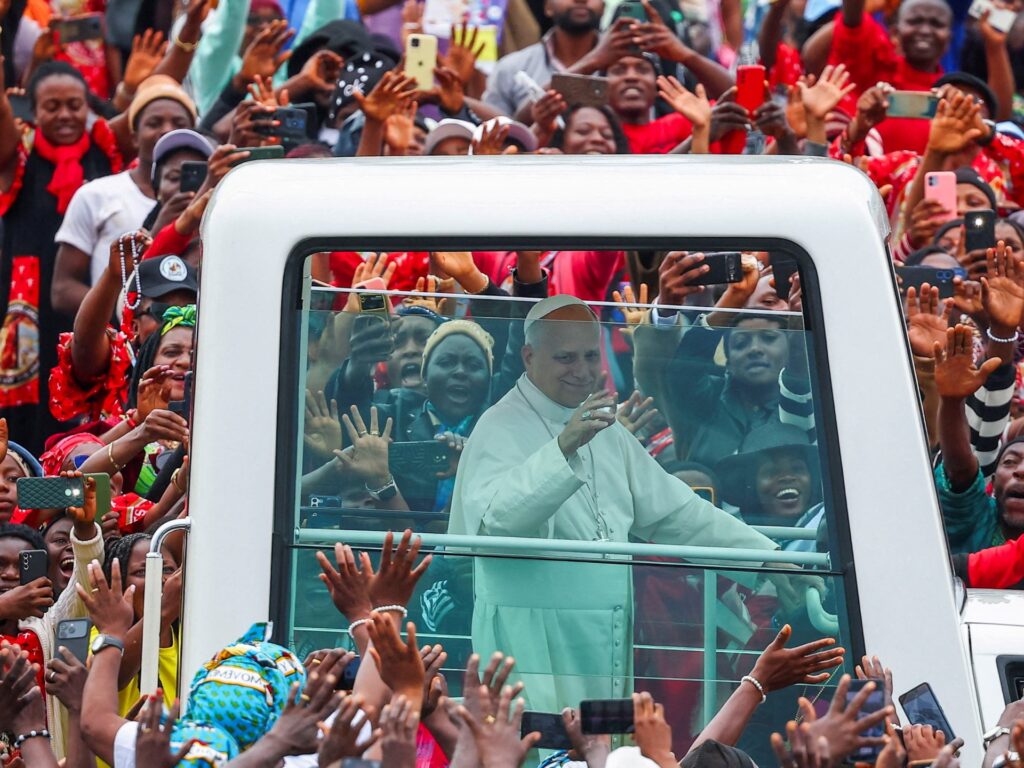
Pope Leo XIV made a significant visit to Bamenda, a city in the conflict-ridden northwest region of Cameroon, a zone marred by deadly fighting and ongoing unrest. The Pope’s visit was marked by a strong call for peace, reconciliation, and unity among the people affected by the violence.
The northwest region of Cameroon has been embroiled in prolonged conflict, with clashes and hostilities resulting in a severe humanitarian crisis. Communities in Bamenda and surrounding areas have experienced displacement, loss of lives, and widespread disruption to daily life.
During his stay, Pope Leo XIV met with local leaders, community members, and victims of the conflict, advocating for dialogue and peaceful resolution. He emphasized the importance of solidarity and understanding among all factions and urged them to seek harmony to rebuild their communities.
The Pope’s message resonated deeply within a region desperate for stability and hope. His presence brought global attention to the ongoing issues in Cameroon’s northwest, encouraging both local authorities and international stakeholders to prioritize peace efforts.
In his addresses, Pope Leo XIV highlighted that lasting peace could only be achieved through mutual respect, forgiveness, and cooperation. He also called for humanitarian assistance to be scaled up to support those displaced and affected by the violence.
The visit marked a pivotal moment for the region as the Pope’s spiritual authority and moral influence reinforced the urgent need for conflict resolution. Local response to the visit was overwhelmingly positive, with many viewing it as a beacon of hope amid the darkness of the ongoing crisis.
This visit underscores the critical role of the Catholic Church and religious leaders in peacebuilding efforts around the world. By visiting conflict zones and advocating for peace, figures like Pope Leo XIV demonstrate the power of compassion and faith in healing divided communities.
As Cameroon’s northwest continues to face challenges, the Pope’s call for peace serves as a reminder that dialogue and reconciliation remain essential pathways to ending violence and restoring normalcy for countless families affected by conflict.
The hope is that this historic visit will inspire sustained peace initiatives and stronger commitments from all parties involved, paving the way for a peaceful future in the troubled region.