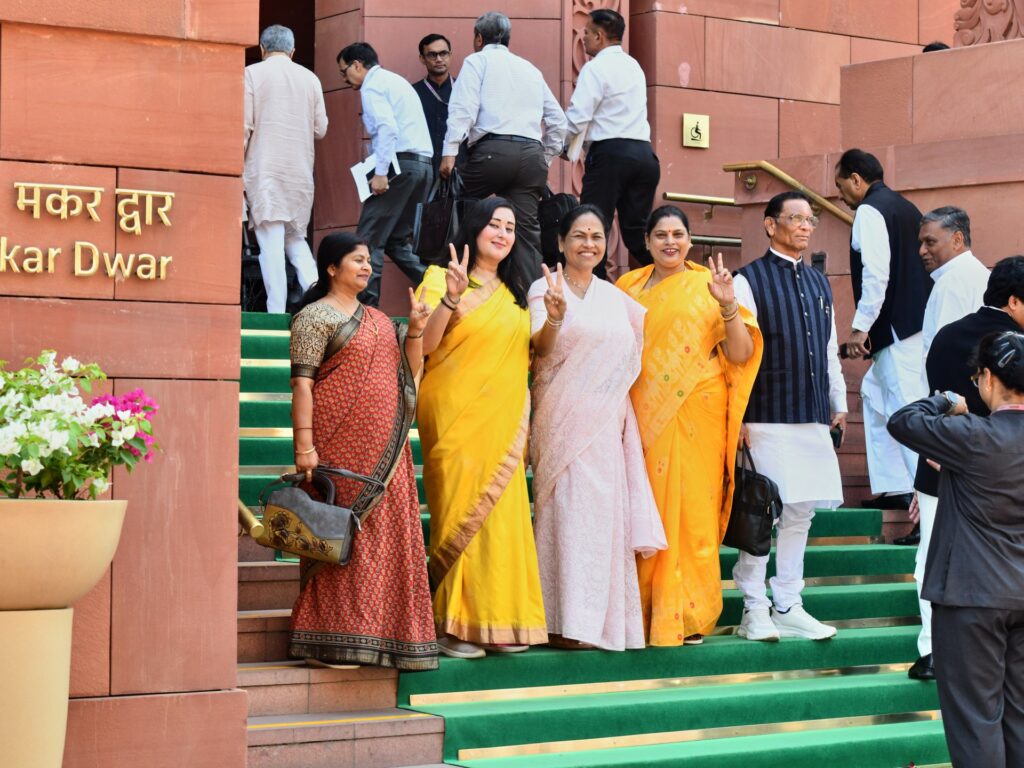
The Indian government is advancing plans to boost women’s representation in the Parliament by reserving 33 percent of the seats for women. This initiative is intricately linked to the process of delimitation, which involves redrawing the boundaries of parliamentary constituencies. The ruling Bharatiya Janata Party (BJP) has signaled that the implementation of the law mandating one-third of seats for women will coincide with the delimitation exercise.
Delimitation is undertaken periodically to ensure fair and equal representation based on the latest population data from the census. The BJP’s move aims to intertwine this legal reform with the electoral map restructuring, emphasizing that the reallocation of seats must reflect increased opportunities for women in the legislative process.
Women’s representation in Indian politics has historically been lower compared to men, sparking demands for a reservation policy. The bill, if implemented, could significantly enhance female participation in governance, promoting gender equality and diversifying political decision-making.
The party’s strategy suggests a comprehensive approach where the delimitation process is not only seen as administrative but also as a tool to encourage greater inclusivity. The integration of reservation with constituency redrawing may streamline the bureaucratic procedure and prepare the electoral system for smooth transition once the law takes effect.
Critics of the proposal argue that delaying the implementation of women’s reservation until delimitation could slow down the progress on gender parity. However, supporters view the move as a pragmatic step ensuring that constituency boundaries align with the new representation rules, avoiding legal and logistical complications.
This development comes amid ongoing discussions about electoral reforms in India, reflecting the government’s commitment to gender empowerment within the framework of parliamentary democracy. The successful application of this policy could serve as a model for other countries seeking to improve women’s political engagement.
The BJP’s emphasis on linking the women’s reservation to delimitation underscores a layered electoral reform agenda aimed at inclusive growth and balanced representation. This plan is expected to stimulate political participation among women, potentially encouraging more female candidates to contest elections.
As India approaches its next general elections, the implementation of this law and delimitation exercise are being watched closely by political analysts, women’s rights activists, and the general public. The outcome could reshape the composition of the Parliament and set new standards for democratic representation in the world’s largest democracy.
Overall, the plan to increase the number of seats reserved for women in Parliament by connecting it to delimitation signifies a major step forward in India’s journey towards gender equality in politics. This approach highlights the government’s intent to integrate legal reforms with electoral mechanics, ensuring a progressive and sustainable path for women’s empowerment in legislative governance.