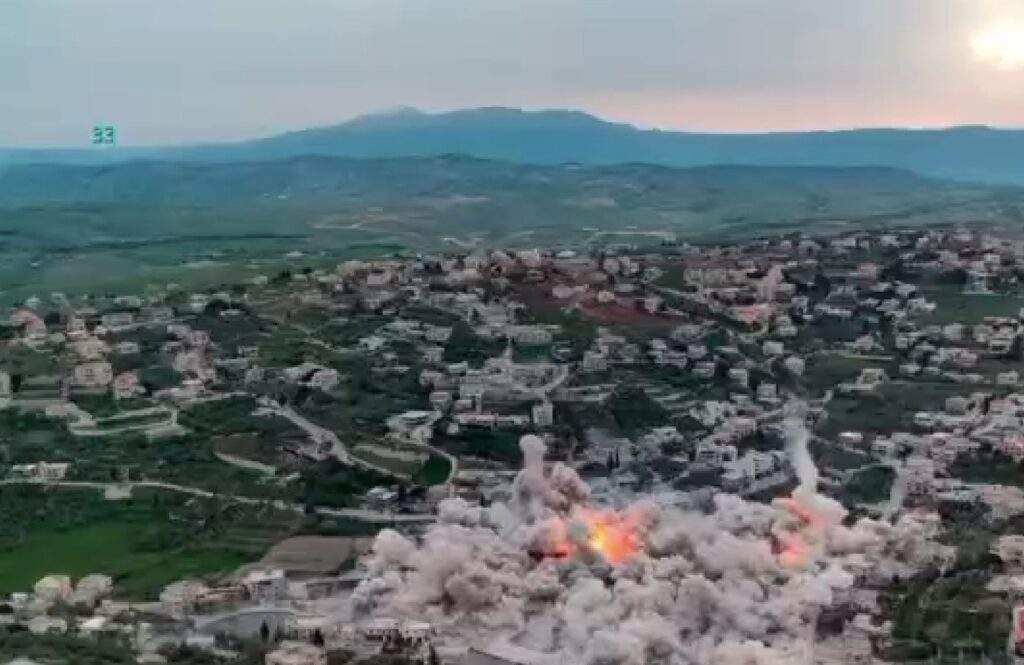
In a recent escalation of tensions in the Middle East, the Israeli army has conducted airstrikes targeting buildings in southern Lebanon, specifically in the Bint Jbeil district. This region, situated near the Israeli-Lebanese border, has historically been a flashpoint in the complex and often volatile relations between the two countries.
The bombings have resulted in significant damage to residential structures, and the immediate effects on the civilian population are a cause for international concern. The Israeli military reports that these strikes were part of operations targeting militant activities, although details about the specific targets or any militant casualties have not been fully disclosed.
Bint Jbeil holds strategic importance due to its location and has frequently been involved in previous conflicts and exchanges of fire between Israeli forces and Lebanese groups. The area is known for being a stronghold of Hezbollah, a Lebanese Shiite militant and political organization, which Israel considers a terrorist group.
The attacks have sparked reactions from Lebanese officials and the international community, with calls for restraint and dialogue to prevent further escalation. The Lebanese government condemned the Israeli strikes, labeling them as violations of Lebanese sovereignty and international law.
Human rights organizations have also expressed concern over the impact on civilians, emphasizing the need for protection of non-combatants in conflict zones. The bombings have caused displacement of families and damage to infrastructure, complicating the humanitarian situation in the region.
This incident adds to the prolonged and complex history of Israeli-Lebanese relations marked by multiple wars, border skirmishes, and sporadic ceasefire agreements. The ongoing conflict reflects broader regional dynamics, involving various actors and interests.
Authorities in Lebanon have called for urgent diplomatic efforts to de-escalate tensions and resume peace talks. The United Nations and other international bodies have also urged both parties to exercise restraint and focus on peaceful resolution measures.
The situation remains fluid, with the possibility of further military actions in the coming days. Observers caution that without effective mediation and dialogue, such incidents can lead to wider conflicts with severe regional implications.
As of now, investigations into the extent of damage and casualties are underway, with emergency response teams working to assist affected civilians. The global community watches closely, hoping for a reduction in hostilities and a move towards lasting peace in this historically tumultuous area.