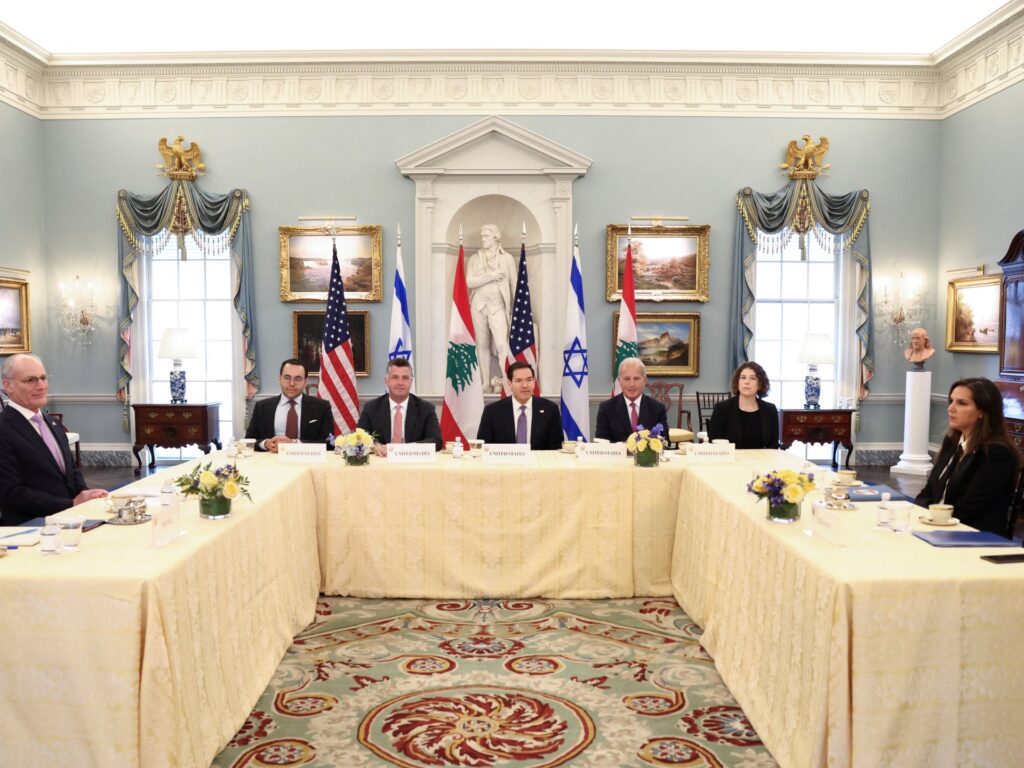
In a groundbreaking development amidst escalating tensions in the Middle East, Israel and Lebanon held their first direct talks in Washington, DC. This rare diplomatic engagement comes as the region grapples with the ripple effects of Iran’s growing influence and ongoing conflicts.
The talks, facilitated by the United States, mark a significant milestone given the historically strained relations between the two countries. Lebanon and Israel have technically been in a state of war since Israel’s establishment in 1948, with no formal diplomatic relations and frequent conflicts, especially concerning the Hezbollah militant group supported by Iran.
U.S. officials emphasized that while these discussions are a positive step, they represent the beginning of a long and complex dialogue rather than an immediate resolution. More time and sustained efforts will be necessary to address the underlying issues fuelin the regional discord.
The meeting in Washington was reportedly focused on security concerns, border disputes, and the potential for reducing hostilities. Both sides expressed cautious optimism, highlighting the importance of dialogue as a tool for peace and stability.
Experts view the talks as a strategic move by the United States to prevent the Middle East from spiraling further into conflict, especially with Iran’s active role in the region. The U.S. hopes that direct communication can help manage tensions and possibly pave the way for more comprehensive peace agreements in the future.
This dialogue also comes in the context of recent clashes in Syria and heightened military activities in the Lebanon-Israel border area. The presence of Iranian-backed Hezbollah fighters near the border has been a persistent source of tension, prompting security concerns in Israel.
Lebanese officials underscored the importance of maintaining sovereign rights and the need for mutual respect in any agreements reached. Meanwhile, Israeli representatives reiterated their commitment to the security of their nation and the prevention of attacks originating from Lebanese territory.
The talks ended with no immediate agreements but set the framework for continued communication. The U.S. remains committed to facilitating these discussions and encouraging both parties to work towards lasting peace.
Analysts suggest that while the path to peace remains fraught with challenges, the mere fact that Israel and Lebanon have begun direct talks is a promising development in a region often marked by hostility and conflict.
The international community has broadly welcomed the dialogue, viewing it as a critical step forward. Many hope it could serve as a catalyst for broader regional stability and reduce the influence of Iran’s military ambitions in the area.
As these talks progress, attention will turn to how each country navigates its internal political landscapes and addresses the demands of their respective populations, many of whom remain deeply divided on issues related to the conflict.
For now, the world watches closely, hopeful that this unprecedented engagement in Washington might eventually contribute to a lasting peace and pave the way for a new chapter in Middle Eastern diplomacy.