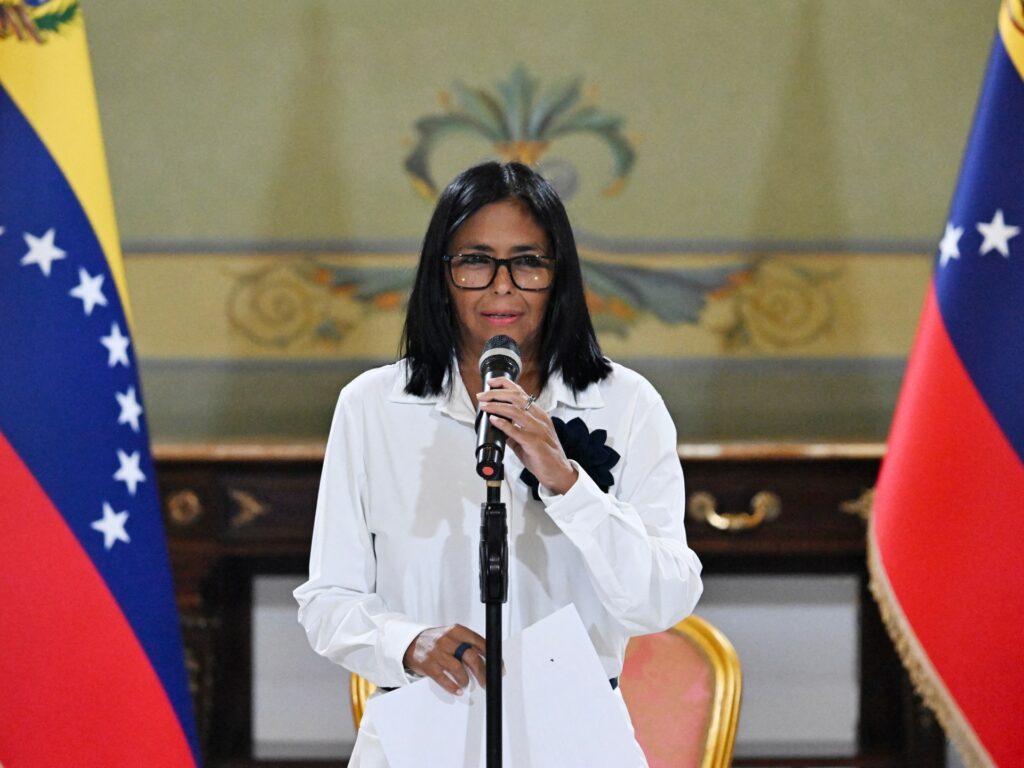
In the midst of a cautious easing of tensions between the United States and Venezuela, Venezuelan Vice President Delcy Rodriguez has publicly advocated for a complete lifting of sanctions on Venezuela. Despite recent limited relief measures, Rodriguez insists these have not been sufficient to stabilize the country’s volatile economy.
Rodriguez’s statement comes at a time when diplomatic efforts appear to be paving the way for potential normalization of relations between Caracas and Washington. The Venezuelan economy, long battered by sanctions primarily imposed by the US, continues to face significant hardships including inflation, scarcity of basic goods, and an exodus of skilled professionals.
The sanctions, which target Venezuela’s oil sector and government officials, have severely impacted the nation’s ability to generate revenue and maintain public services. In response to these economic pressures, the Venezuelan government has repeatedly called on the international community to reconsider the sanctions policy.
In recent months, there have been signs of diplomatic detente. The US has offered limited sanctions relief, allowing for some canned food and medical supplies to enter Venezuela, and easing restrictions on certain financial transactions. However, Rodriguez argues that these concessions fall short of what is needed for real economic recovery.
“We need a Venezuela free of sanctions,” Rodriguez stated in a recent address. She emphasized that comprehensive sanctions removal is essential for restoring economic stability and improving the livelihoods of Venezuelan citizens.
Experts caution that while sanctions contribute significantly to Venezuela’s economic woes, domestic policies and governance also play critical roles. Nonetheless, the potential for further relaxation of US sanctions is a hopeful development that could encourage dialogue and cooperation.
The calls from Rodriguez underscore the ongoing tensions between external pressures and internal challenges facing Venezuela. As the US administration reviews its foreign policy towards the region, the coming months could see important shifts that impact both nations.
The situation remains fluid, with international observers watching closely how these diplomatic exchanges evolve and whether they will lead to substantive policy changes.
For many Venezuelans, the ideal outcome would be lasting peace and prosperity, a goal that hinges on both international engagement and effective governance within Venezuela. The push for a sanctions-free Venezuela highlights the critical need for collaborative solutions to a complex crisis that affects millions.