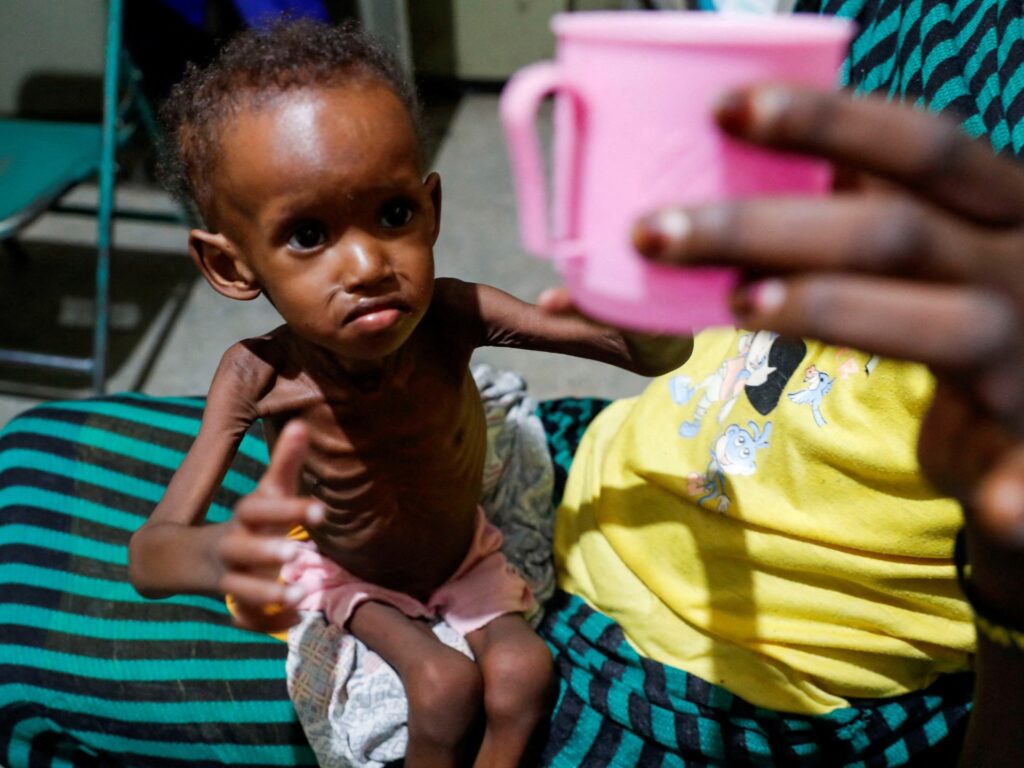
As conflict continues to devastate Sudan, millions of people in the hardest-hit regions are struggling to survive on literally one meal a day, according to humanitarian organizations operating in the area. The dire situation is most acute in North Darfur and South Kordofan states, where sustained violence, displacement, and disruption of food supplies have led to extreme food insecurity.
Non-governmental organizations (NGOs) report that many families have resorted to desperate measures just to find nourishment. In some cases, people are eating leaves from trees and shrubs and even consuming animal feed typically meant for livestock to stave off starvation. This alarming shift in diet underscores the severity of the crisis.
The conflict in Sudan has severely damaged agricultural production and local markets, making it nearly impossible for populations in affected areas to access adequate food. Roads are often blocked or unsafe due to fighting, hampering the delivery of aid and commercial goods. As a result, prices for basic staples have soared beyond the reach of many families.
Humanitarian groups have sounded urgent alarms about the worsening situation, calling for increased international support and immediate steps to secure humanitarian corridors. Food and medical aid are critical to help millions avoid famine and death.
This breakdown in food security is not only a direct consequence of violence but is exacerbated by the displacement of communities. As people are forced to flee their homes, they lose their livelihoods and access to agricultural land, pushing them even further into poverty and hunger.
Children are particularly vulnerable in this crisis. Malnutrition rates among young children in affected regions have spiked, raising the risk of long-term developmental problems and increased mortality.
The international community faces a pressing challenge to mobilize sufficient resources and diplomatic efforts to facilitate peace and allow humanitarian operations to reach those in dire need. Without rapid intervention, the situation is likely to worsen through the coming months, with catastrophic consequences for millions of Sudanese.
The crisis in Sudan serves as a tragic reminder of how conflict can devastate not only lives but also the very means of survival. Addressing the root causes of the conflict and stabilizing the region is essential for restoring food security and rebuilding affected communities.
Meanwhile, NGOs continue to provide what assistance they can, distributing food aid and advocating for more comprehensive support to prevent a full-scale humanitarian disaster. The fight to save millions from hunger in Sudan remains urgent and ongoing.