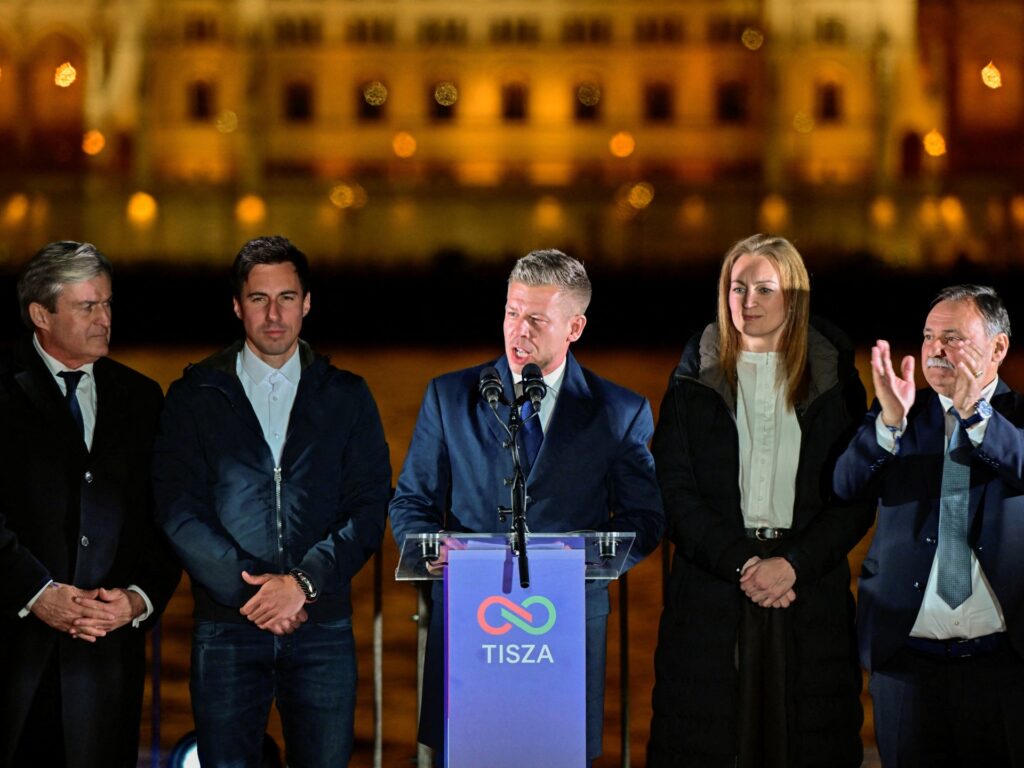
In a historic political upheaval, Peter Magyar has emerged victorious in the recent Hungary parliamentary elections, effectively ending Viktor Orban’s 16-year tenure as the country’s dominant political figure. Magyar’s centre-right Tisza party secured a commanding two-thirds majority in the Hungarian parliament, a victory that grants the party significant legislative power, including the ability to amend the constitution.
The election results mark a dramatic shift in Hungary’s political landscape, signaling a move away from Orban’s long-standing governance characterized by his nationalist and conservative policies. Viktor Orban, who has been the Prime Minister since 2010, was known for his controversial reforms and tight control over media and judiciary, which drew both domestic support and international criticism.
Peter Magyar’s Tisza party capitalized on growing public dissatisfaction with Orban’s administration, promising a new direction focused on transparency, democratic reforms, and stronger ties with the European Union. The party’s manifesto emphasized social justice, anti-corruption measures, and economic development through innovation and increased foreign investment.
Analysts suggest that the two-thirds parliamentary majority is a powerful mandate for Magyar’s party, enabling them not only to govern but also to reshape Hungary’s constitutional framework. This could lead to significant legal and social reforms as the new government seeks to dismantle some of Orban’s entrenched policies.
The election campaign was marked by vigorous debates, with Magyar appealing to both moderate conservatives and centrist voters who previously felt marginalized. The victory of the Tisza party also reflects a broader trend in European politics, where many countries are witnessing shifts away from populist leadership towards more centrist or moderate conservative governance.
Despite the victory, Magyar has pledged to govern inclusively and maintain political stability, recognizing the challenges ahead in uniting a diverse electorate. His administration is expected to prioritize rebuilding trust in institutions and enhancing Hungary’s relationship with the EU, which had been strained under Orban’s rule.
International reactions to the election outcome have been largely positive, with EU leaders welcoming Hungary’s new direction. There is cautious optimism that Magyar’s government will restore democratic norms and contribute constructively to European integration.
As Hungary embarks on this new chapter, the political landscape is set for significant change. The Tisza party’s ability to deliver on its promises and manage constitutional reforms will be closely watched by both domestic observers and the international community.
In conclusion, Peter Magyar’s triumph represents a pivotal moment in Hungarian politics, ending a 16-year era dominated by Viktor Orban and setting the stage for potential transformative reforms in Hungary’s governance and its role on the European stage.