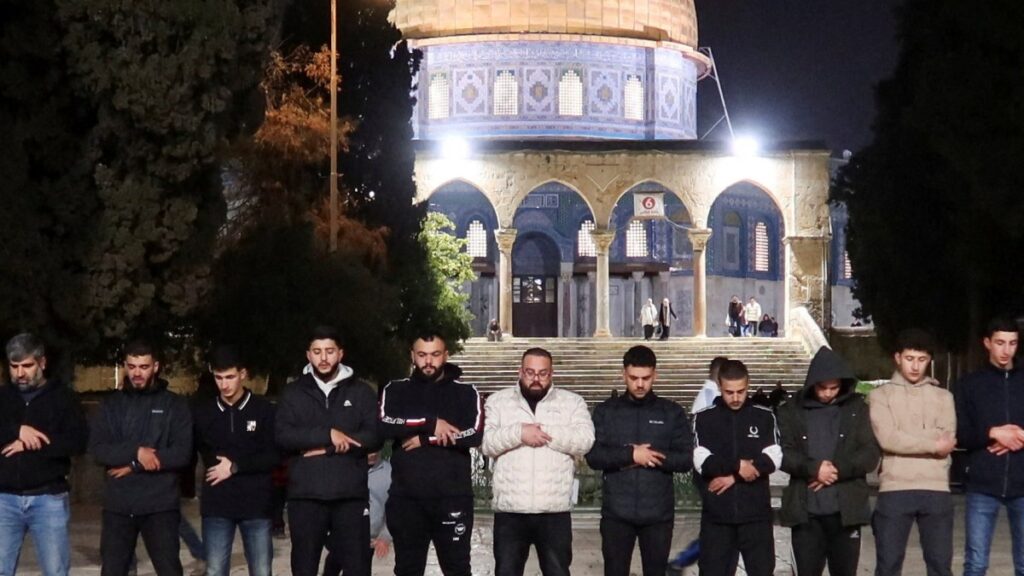
After a 40-day ban imposed by Israel, around 3,000 Palestinians gathered to perform morning prayers at the Al-Aqsa Mosque, one of the holiest sites in Islam. The ban had halted access to the mosque for Palestinians, causing widespread disappointment and tension in the region.
Al-Aqsa Mosque, located in East Jerusalem, holds profound religious significance for Muslims worldwide. The recent ban disrupted daily worship and heightened existing political and religious conflicts.
The lifting of the restrictions marked a moment of relief and celebration among Palestinians and Muslim worshippers who consider the mosque a vital place for prayer and reflection. Worshippers reportedly expressed gratitude and a renewed sense of community, as they reclaimed their right to peacefully access the site.
Security measures and crowd control were visibly increased to manage the large number of worshippers attending the reopening. Despite these precautions, the event passed without major incidents, signaling a possible thawing in tensions at the holy site.
The ban had been met with international criticism and concerns about access to religious sites amid ongoing Israeli-Palestinian conflicts. Human rights groups urged respect for freedom of worship and called for dialogue to prevent future restrictions.
The morning prayers saw a diverse mix of attendees, including families, elders, and youth, all united in their devotion and aspiration for peace. The gathering underscored the mosque’s role not just as a place of worship but also as a symbol of resilience for Palestinians.
This event is viewed by many as a crucial step in the ongoing struggle for religious and civil rights amidst broader geopolitical disputes. Analysts suggest continued efforts are necessary to maintain open access to religious sites as a foundation for peace and coexistence.
Following the prayers, community leaders encouraged calm and dialogue. They emphasized the importance of safeguarding the mosque’s sanctity and ensuring it remains open to all faithful without interruption.
With restrictions now lifted, pilgrims from various Palestinian territories and beyond are expected to visit Al-Aqsa more freely, reaffirming its significance as a central hub of faith and heritage in the Middle East.
The reopening of Al-Aqsa Mosque after the 40-day ban has reignited hopes for mutual respect and understanding in a region often marred by conflict. The community’s ability to come together in prayer is seen as a powerful testament to the enduring spirit and unity of the Palestinian people.
As the situation continues to evolve, stakeholders are urged to prioritize peaceful coexistence and respect for religious freedoms to foster long-term stability around one of Islam’s most revered sites.