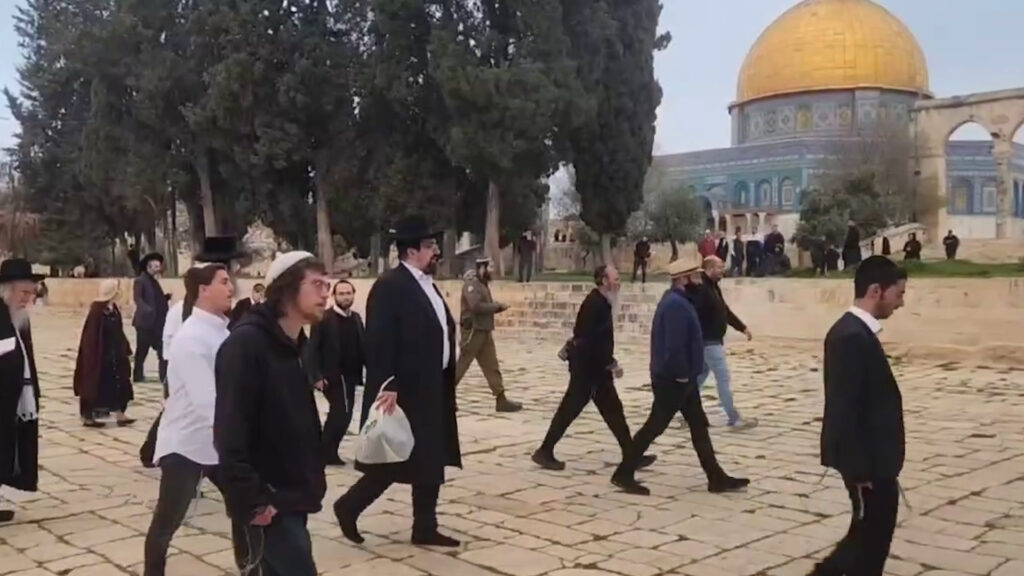
The Al-Aqsa Mosque compound, one of the most sensitive and revered religious sites in Jerusalem, recently witnessed a significant and controversial event. After its reopening, a group of Israeli settlers entered the compound, sparking tensions and raising concerns across the region. The Al-Aqsa Mosque compound, also known as Haram al-Sharif to Muslims and Temple Mount to Jews, holds immense religious significance for both Muslims and Jews. It is a site where the two faiths’ deep-seated historical and spiritual connections often converge and, unfortunately, sometimes conflict.
The reopening of the site was seen as a moment of renewed access and religious expression, but the presence and actions of Israeli settlers storming the compound have triggered alarm among Palestinians and the broader Muslim community. This action was perceived not only as a provocative assertion of claims but also as a challenge to the status quo arrangements that govern the site.
Tensions around the Al-Aqsa Mosque compound have frequently flared due to the site’s profound symbolic importance and the overlapping religious and political claims to Jerusalem. The storming incident has been condemned by various Palestinian groups, religious leaders, and international observers who see such actions as detrimental to efforts aiming for peaceful coexistence and stability in the region.
The Israeli settlers’ entrance to the compound came after a period during which the site was closed, escalating anxieties about potential changes to the delicate governance and control mechanisms in place. Israeli police reportedly accompanied the settlers, which adds another layer of complexity and concern over the use of force and the nature of law enforcement in such a highly charged environment.
Local authorities and international bodies have called for restraint and respect for the sanctity of the compound to prevent further escalations. The incident underscores the ongoing complexities surrounding Jerusalem’s holy sites and the broader Israeli-Palestinian conflict. It highlights the fragility of the situation and the need for dialogue and mutual respect to safeguard religious freedoms and maintain peace.
As the situation develops, there will be close attention to how both Israeli and Palestinian leaderships respond, as well as the role of international diplomacy in mitigating tensions. The Al-Aqsa compound remains a focal point for contestation, faith, and identity in one of the world’s most enduring and challenging conflicts.