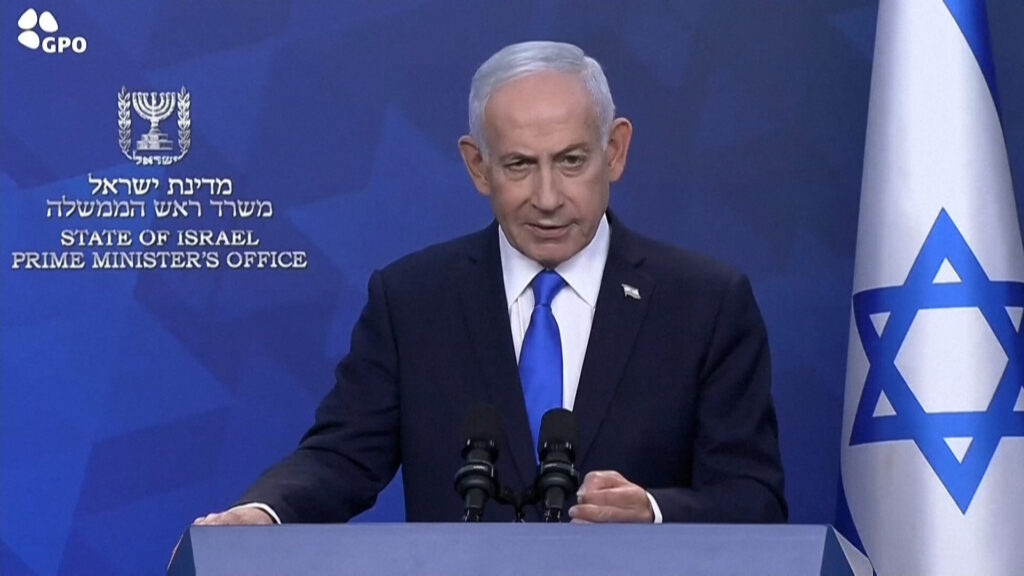
In a significant development following the recent ceasefire agreement between the United States and Iran, Israeli Prime Minister Benjamin Netanyahu has clarified that the ceasefire will not extend to Hezbollah. This statement marks Netanyahu’s first public remarks after the ceasefire was announced.
Netanyahu emphasized that while the ceasefire agreement aims to ease tensions between the U.S. and Iran, it explicitly excludes Hezbollah, the Lebanon-based militant group allied with Iran. According to Netanyahu, this distinction is crucial to maintain Israeli security interests and to prevent the emboldening of Hezbollah, which Israel views as a major regional threat.
The ceasefire deal came amid rising regional tensions and international concerns over escalating conflicts in the Middle East. While the agreement between the U.S. and Iran seeks to restore calm and open pathways for diplomacy, it does not alter Israel’s stance towards Hezbollah operations, which continue to be seen as aggressive and destabilizing in the region.
Netanyahu warned that any attempts by Hezbollah to leverage the ceasefire to increase their military capabilities or conduct hostile actions against Israel would be met with force. His remarks underline Israel’s commitment to countering threats from non-state actors even amidst broader diplomatic engagements.
This announcement has significant implications for regional geopolitics, as it underscores the complex dynamics in Middle East peace efforts. The U.S.-Iran ceasefire represents a hopeful moment for reducing direct conflict between major state actors, but Netanyahu’s clarification highlights ongoing challenges with non-state militant groups like Hezbollah.
Experts note that maintaining separate agendas for state and non-state actors could be a strategic approach to gradually stabilize the region. However, they also caution that these divisions might complicate comprehensive peace processes, requiring continuous vigilance and diplomatic finesse.
The Israeli government is expected to continue its security operations focused on Hezbollah, while supporting diplomatic measures that address the broader U.S.-Iran relationship. As the ceasefire holds, all eyes remain on how regional actors navigate the fine line between peace agreements and longstanding hostilities.
In summary, Netanyahu’s remarks reinforce Israel’s position that the ceasefire with Iran does not imply a relaxation of vigilance or action against Hezbollah, cementing the ongoing complexity of Middle Eastern diplomacy and security concerns.