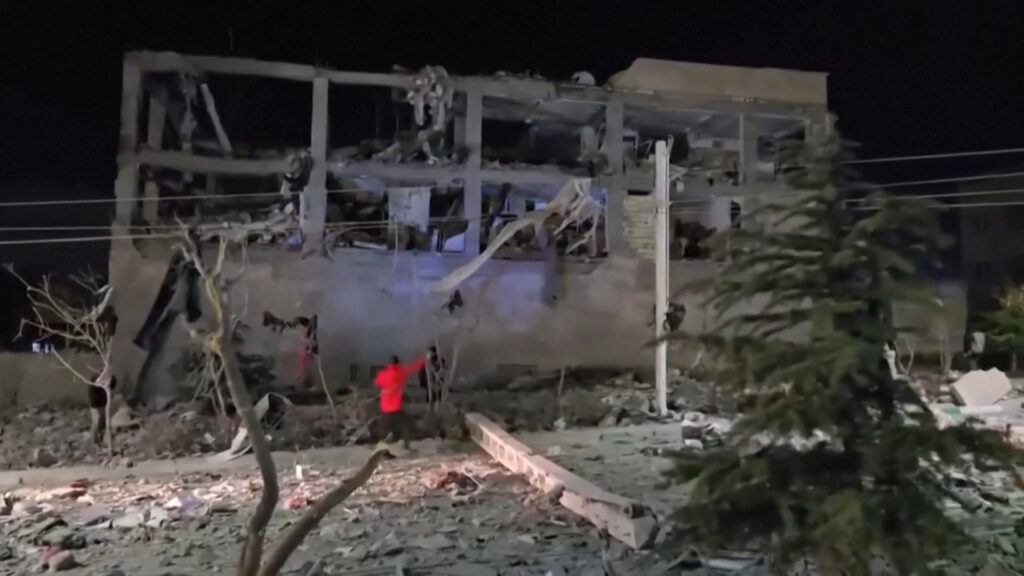
On April 7, a series of coordinated military strikes by US-Israeli forces targeted northern Iran, resulting in widespread destruction in Pardis. Video footage emerging from the region reveals extensive damage to multiple buildings, underscoring the severity of the attacks. The Israeli military has officially claimed responsibility for these bombings, marking a significant escalation in the ongoing regional tensions.
Pardis, located in northern Iran, has suffered significant structural damage following the strikes. The visuals show collapsed buildings, debris scattered across affected areas, and disrupted civilian infrastructure. This has raised concerns about the humanitarian impact and potential casualties resulting from the assault.
The strikes are part of a broader strategy aimed at undermining Iran’s military capabilities, as the country remains a focal point of geopolitical contention. The US and Israel have frequently expressed apprehension regarding Iran’s activities in the Middle East, often pointing to the need to curb its influence and military advancements.
Iran has yet to officially respond to these latest strikes, although previous attacks of similar nature have prompted strong condemnations and vows of retaliation. The regional security landscape remains volatile, with the potential for further conflicts if diplomatic solutions are not pursued.
Analysts suggest that these attacks could escalate tensions between Iran and its adversaries further, sparking a new phase of instability in the already complex geopolitical environment. The international community has called for restraint and dialogue to mitigate the risk of wider conflict.
This event highlights the ongoing struggle for power and influence in the Middle East, encapsulated by the US and Israel’s efforts to counter Iran’s regional activities. The destruction in Pardis serves as a stark reminder of the human cost and the fragile nature of peace in the region.
As investigations and assessments continue, humanitarian organizations are preparing to address the needs of those affected by the bombings. The global audience watches closely as the situation unfolds, hoping for a resolution that prioritizes peace and stability over conflict and destruction.