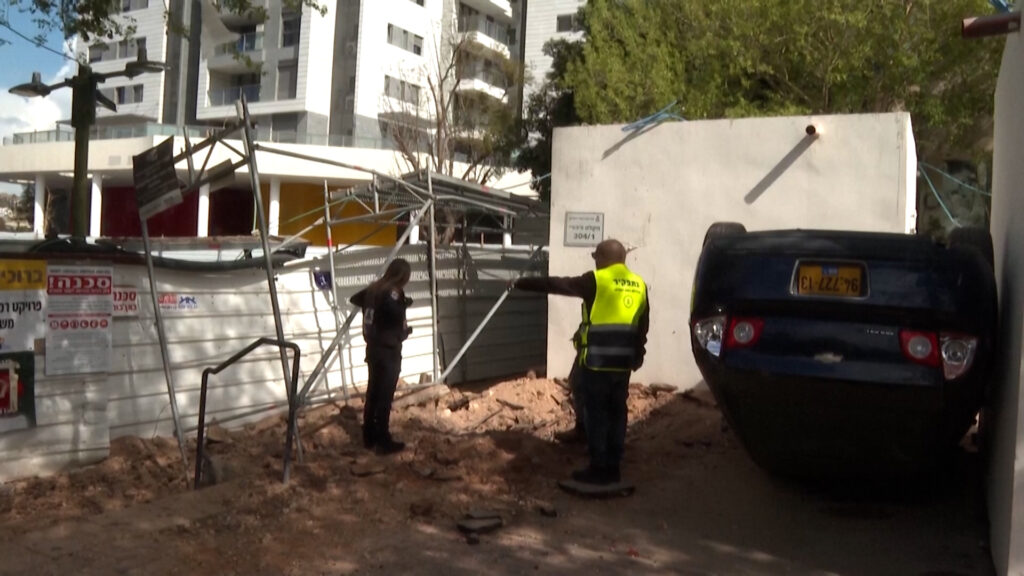
In a recent escalation of tensions in the Middle East, an Iranian missile strike targeted the city of Ramat Hasharon in Israel, causing noticeable damage to local infrastructure and vehicles. The attack, reportedly launched by Iranian forces, led to the destruction of sidewalks and at least one vehicle was overturned, as evidenced by video footage circulated online.
Ramat Hasharon, a city situated along Israel’s central coastal region, suffered from the aftermath of the missile impact, which disrupted the daily life of its residents. Emergency services quickly responded to the scene to assess the damage and provide assistance to those affected.
The incident marks a significant development in the volatile relations between Iran and Israel, two countries that have long had a fraught history characterized by conflict and retaliation. Iran’s missile barrage signals an intensification of hostilities which may raise alarm among the international community concerning regional security.
Videos showing the damage have sparked concern and outrage among locals and observers worldwide. The images depict broken sidewalks littered with debris and a vehicle turned onto its side, highlighting the force and precise impact of the missile strike.
Authorities in Israel condemned the attack, describing it as an act of aggression and a threat to the safety of civilians. Officials have vowed to take necessary actions to prevent further attacks and to safeguard their citizens. The Israeli government is reportedly reviewing and strengthening its defense systems in response to this attack.
International reactions to the missile strike have varied, with calls for restraint and dialogue to prevent further escalation. Many nations express concern over continued violence destabilizing the region and the potential for broader conflict.
The strike is part of an ongoing pattern of hostilities in the region, where missile attacks and counterstrikes are not uncommon. The broader geopolitical context involves various regional and global powers, each with vested interests in the outcome of these conflicts.
This incident underscores the fragile security situation in the Middle East and the urgent need for diplomatic efforts to de-escalate tensions. Both Iran and Israel face internal and external pressures that complicate direct negotiations, but the risk of further violence remains an immediate concern.
Residents of Ramat Hasharon are now focused on recovery and rebuilding after the attack, with community leaders calling for unity and resilience. Support services and local government agencies are coordinating relief efforts to assist those impacted by the missile strike.
The broader implications of the attack may influence future diplomatic and military strategies in the region, highlighting the importance of monitoring developments closely.
As the situation develops, the international community continues to watch for any signs of escalation or steps toward de-escalation in this high-tension scenario. The hopes for peace and stability remain a priority for most stakeholders involved.
This missile strike on Ramat Hasharon serves as a sobering reminder of the ongoing conflicts in the Middle East and the human and material costs they incur. Continued vigilance and concerted efforts toward conflict resolution are essential to prevent further harm and foster a more secure environment for all individuals in the region.