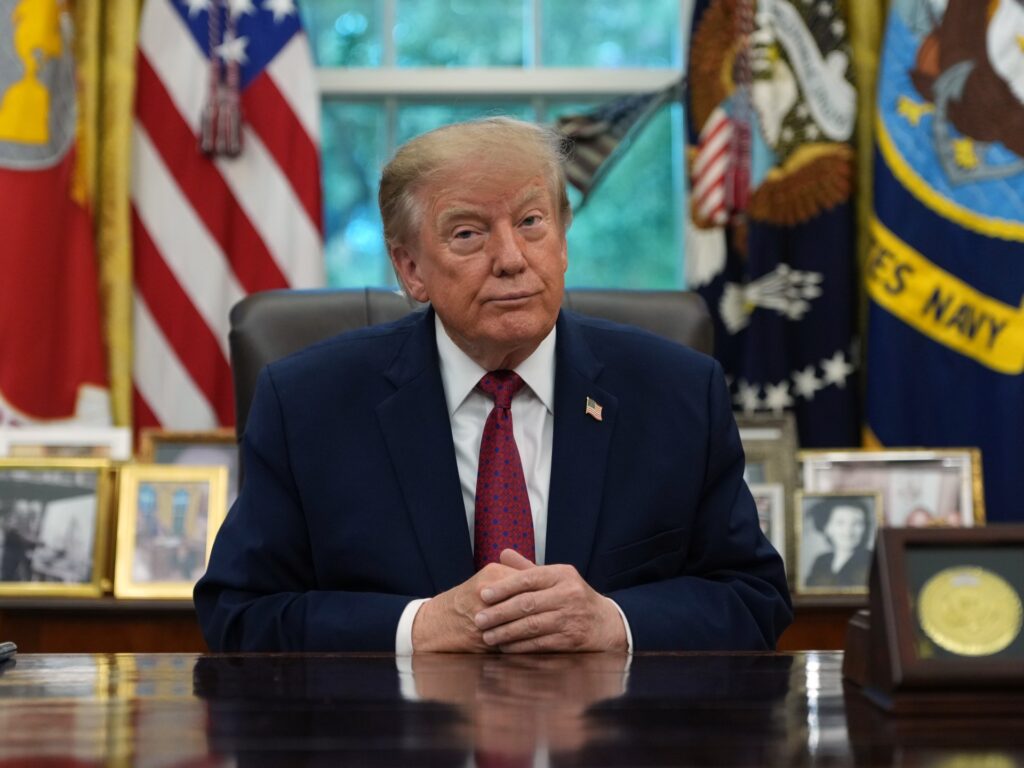
In the wake of the recent US midterm elections, former President Donald Trump has been sending mixed signals regarding potential military action against Iran’s nuclear sites. The political turmoil following the election defeat for Trump’s party has led to heightened speculation about possible retaliatory strikes, especially as tensions with Iran continue to escalate.
Iran has recently escalated its tactics by engaging in what analysts describe as ‘cognitive warfare’—a strategy that involves psychological operations and information manipulation intended to influence public opinion and political decision-making in adversary nations. This form of warfare aims to create confusion, mistrust, and a strategic advantage without direct military confrontation.
Trump’s rhetoric has been inconsistent, at times suggesting a willingness to take aggressive action to halt Iran’s nuclear program, while at other moments emphasizing diplomacy or restraint. This vacillation contributes to uncertainty within both domestic and international circles about the likelihood of an imminent strike.
Experts warn that a strike on Iran’s nuclear facilities could significantly destabilize the region and provoke retaliatory attacks, potentially drawing the United States into a protracted conflict. The complex geopolitical landscape, including alliances within the Middle East and global interests, makes any decision about military intervention fraught with ramifications.
The concept of ‘cognitive warfare’ also highlights the evolving nature of conflict, where information and perception are as powerful as conventional weapons. Iran’s engagement in this form of warfare suggests a sophisticated approach to undermining US resolve and complicating decision-making processes.
As the US administration navigates its response, the international community watches closely for signs of escalation or de-escalation. The mixed messages from Trump underscore the challenges faced in balancing domestic political considerations with global security priorities.
Ultimately, whether Trump or any US leader moves ahead with strikes against Iranian nuclear sites will depend on a complex interplay of military intelligence, diplomatic negotiations, and political calculations. The world remains on edge as this critical issue continues to unfold, with the potential consequences extending far beyond the immediate region.