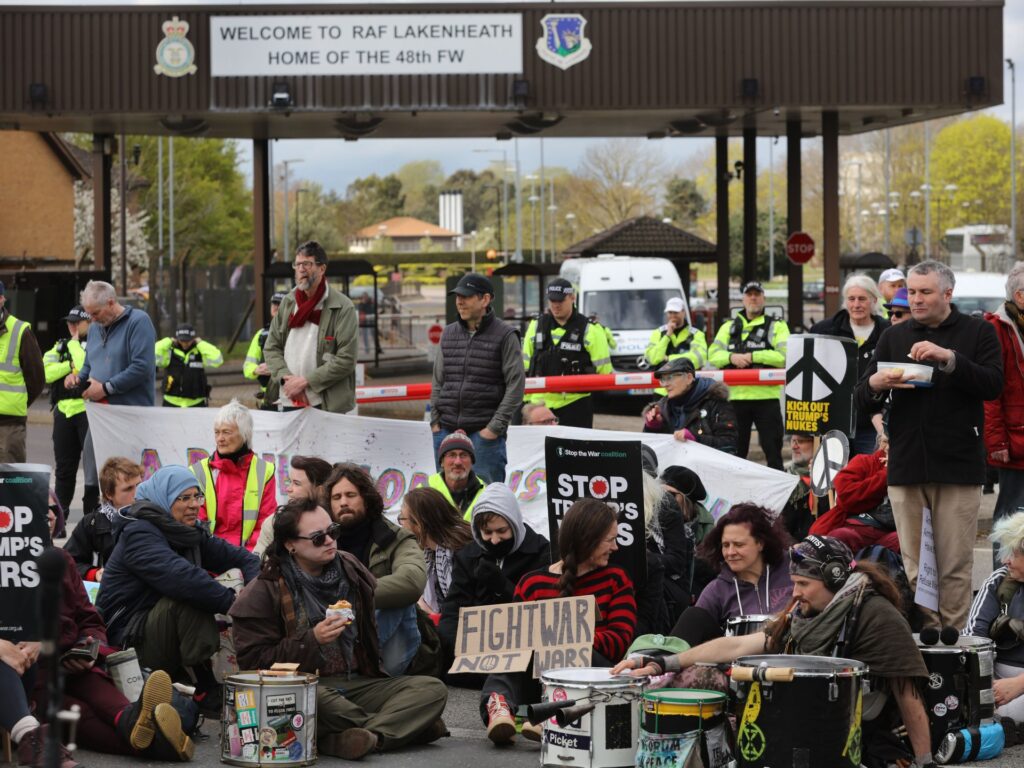
In a recent development in the UK, police have arrested seven protesters near a Royal Air Force (RAF) base that is reportedly used by the United States for military operations. The arrests occurred during a peaceful demonstration against the alleged use of the RAF base as a departure point for US aircraft involved in overseas missions.
The protesters gathered in the vicinity of the base to voice their opposition to the use of British military facilities for international operations, particularly those conducted by the US. Their concerns center on the sovereignty of British territory and the ethical implications of the military actions associated with the US aircraft.
According to sources, the demonstration was intended to raise awareness about the RAF base’s role in supporting US military logistics and operations, which some activists believe escalates global conflicts and undermines diplomatic efforts.
The police intervention aimed to maintain public order and ensure the security of the military installation. Authorities reported that the protesters were non-violent but were arrested for trespassing and obstructing access to the base.
This incident has sparked discussions among policymakers, military officials, and the public regarding the use of UK military bases by foreign powers. The dual-use of RAF facilities exemplifies the close military cooperation between the UK and the US, yet it also raises questions about transparency, accountability, and the long-term consequences of such partnerships.
Local community leaders have expressed mixed reactions, with some supporting the protesters’ right to free speech and peaceful assembly, while others emphasize the strategic importance of the RAF base for national security.
The US government has not officially commented on the arrests, but the incident underscores ongoing tensions surrounding the role of foreign military forces on British soil.
Legal experts note that the arrests highlight the delicate balance between protecting national security interests and upholding civil liberties. They suggest that future demonstrations at military sites need clear guidelines to avoid confrontations.
As investigations continue, the arrested protesters face potential legal proceedings. Advocacy groups are mobilizing to support them, citing the importance of upholding democratic freedoms.
This event is part of a broader global context where military bases and their uses often become focal points for activism and debate. The role of the RAF base in question, as a node in a larger network of US military logistics, remains a sensitive topic both nationally and internationally.
The police have reiterated their commitment to lawful conduct and respect for the rights of all individuals while ensuring that critical defense infrastructure remains secure.
In conclusion, the arrest of seven protesters near an RAF base used by the US highlights ongoing tensions around military cooperation, sovereignty, and civil rights. It brings to the forefront the need for continued dialogue and transparency between governments, military authorities, and the public to address concerns and foster mutual understanding.
As this story develops, further insights are expected from official channels and advocacy organizations invested in military ethics and civil liberties.