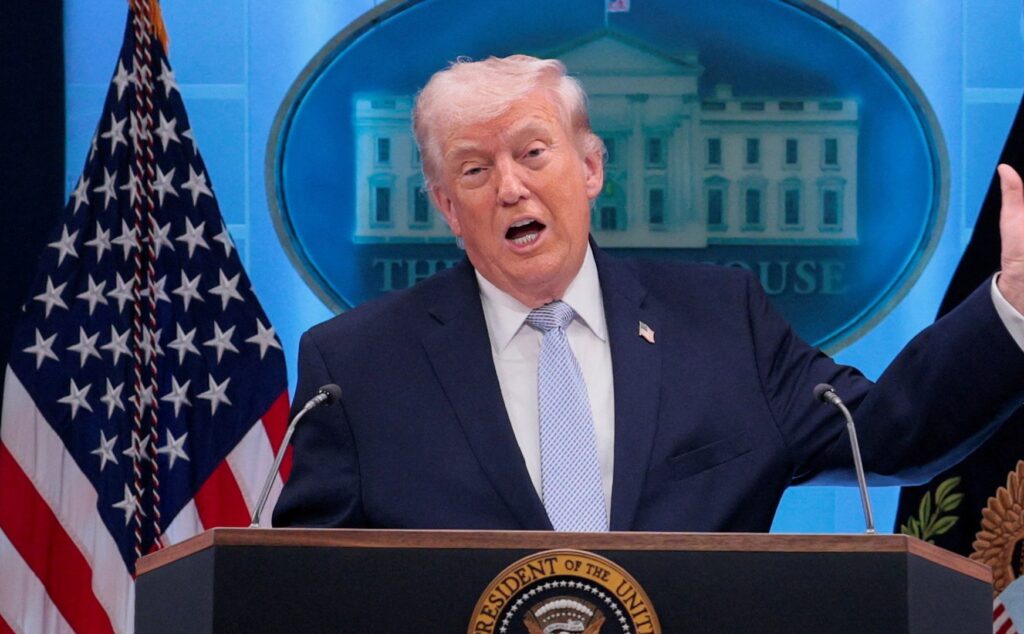
Former US President Donald Trump recently asserted that the United States has “numerous intercepts” of Iranian individuals pleading for continued bombing strikes. According to Trump, these intercepted communications reveal urgent requests from Iranians for the US to carry on with its military actions against Iran.
Trump’s statement adds a controversial dimension to the already tense situation between the two nations. The claim suggests that, contrary to popular belief, some factions in Iran may be seeking external military intervention to address internal conflicts or pressures.
While the exact nature and source of the intercepts were not detailed by Trump, the assertion has sparked widespread debate in political and media circles. Critics question the veracity of the claim and its implications for US foreign policy.
Iran has historically condemned US military actions and sanctions, emphasizing its sovereignty and condemning what it labels as aggressive interference. The possibility that some Iranians might appeal for American bombing is at odds with the official stance of Iran’s government, which continues to call for diplomatic resolutions.
The US has conducted various operations and imposed sanctions intended to pressure Iran over its nuclear program and regional activities. Trump’s comments suggest a potential shift or at least a narrative emphasizing that segments within Iran’s population desire more decisive US involvement.
This claim, if true, would challenge the conventional narrative of universal Iranian opposition to US military presence in the region. It might indicate internal dissent or desperation among certain groups within Iran.
Analysts urge caution, as military intercepts can be misinterpreted or selectively presented to support certain political agendas. Without independent verification, the impact of Trump’s remarks remains speculative.
The international community continues to monitor developments in US-Iran relations closely, with hopes for peaceful dialogue to prevent escalation. Trump’s latest claims contribute to the complex and often convoluted discourse surrounding Middle Eastern geopolitics and US foreign relations.
As tensions persist, it remains to be seen whether these alleged intercepts will influence US policy or diplomatic efforts aimed at stabilizing the region.