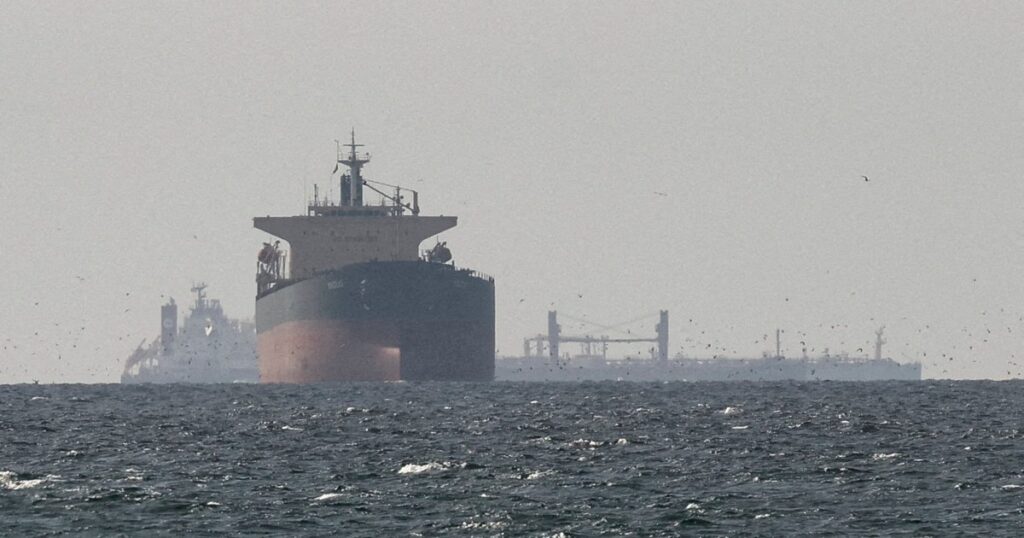
The strategic Strait of Hormuz, a vital oil transit chokepoint connecting the Persian Gulf with the Gulf of Oman and the Arabian Sea, has recently seen significant maritime activity involving vessels from Oman, France, and Japan. This movement comes amid heightened geopolitical tensions triggered by the ongoing US–Israel war on Iran.
Among the vessels, CMA CGM’s shipment has garnered notable attention as it marks the first time a French-owned ship has successfully navigated through the Strait of Hormuz since the conflict escalation began. CMA CGM, a global leader in container shipping based in France, effectively broke a maritime barrier, symbolizing resilience and the enduring importance of this trade route.
The Strait of Hormuz is one of the world’s most critical maritime passages, accounting for about a fifth of global oil trade. Its geopolitical sensitivity often escalates given the competing interests of regional powers and global stakeholders. Any disruption in transit through this waterway can have sweeping economic impacts, affecting global oil supplies and international maritime rules.
The transit of Omani, French, and Japanese vessels underscores ongoing international efforts to maintain the openness of this critical corridor despite the tensions. Oman, with its strategic geographical position, continues to play a vital role in ensuring maritime security and freedom of navigation in the region.
Japan, reliant on secure sea lanes for its energy imports, views stable access through the Strait as essential to its economic security. The presence of Japanese vessels is thus a reaffirmation of its commitment to international maritime cooperation and stability.
The involvement of French-owned CMA CGM vessel not only highlights the commercial stakes but also sends a diplomatic signal. It reinforces France’s interest in ensuring safe passage and freedom of navigation in this international waterway amid global security challenges. This transit could serve to encourage other nations and commercial entities to maintain their operations in the region despite the broader conflict.
This maritime activity also reflects broader regional dynamics involving the Gulf Cooperation Council (GCC) countries, Iran, and global powers, all maneuvering diplomatically and strategically in this hotspot.
Maritime experts emphasize the importance of continuing international naval presence and cooperation to prevent escalations and ensure the flow of commerce. The coordination among Oman, France, Japan, and potentially other nations forms part of a larger framework aimed at preserving peace and security in the Strait of Hormuz.
In conclusion, the passage of Omani, French, and Japanese vessels through the Strait of Hormuz amidst the ongoing US–Israel war on Iran symbolizes more than just maritime logistics. It highlights the enduring significance of the strait in global geopolitics, the resilience of international trade routes, and the critical need for collaborative security measures in one of the world’s most sensitive maritime domains.