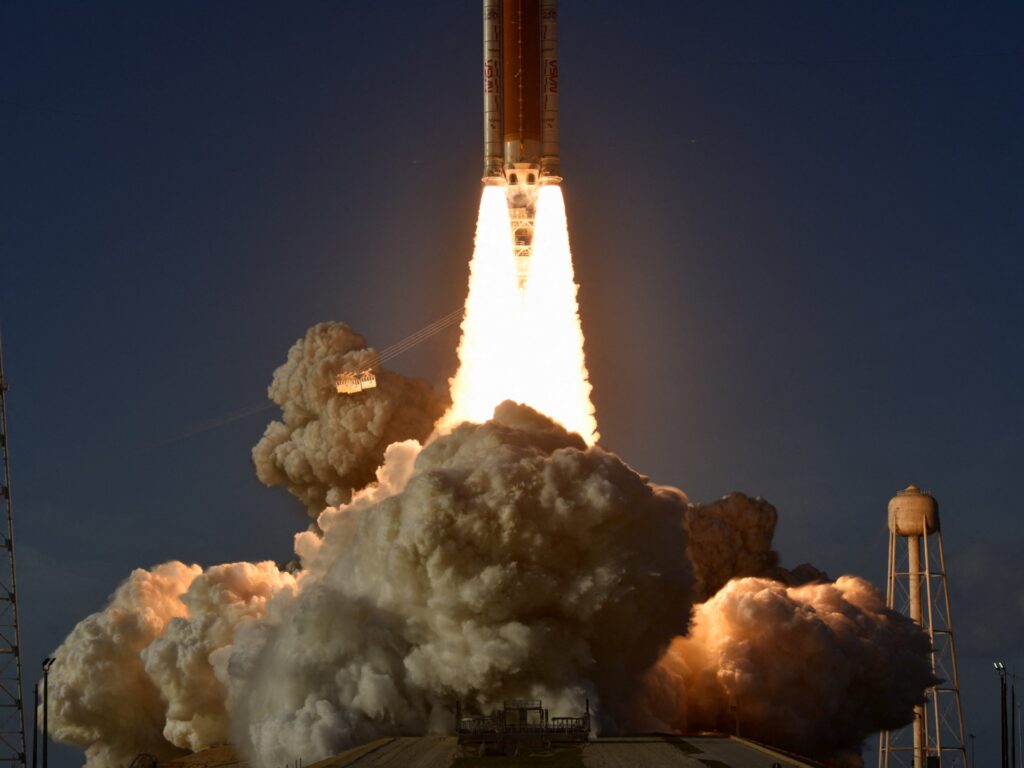
NASA’s Artemis II mission is set to embark on a historic journey to the moon, marking a significant milestone in human space exploration. The mission’s capsule is expected to reach the moon on about April 6, which will be the sixth day since launch. This timeline is meticulously planned to ensure optimal travel conditions and spacecraft performance.
The Artemis II mission follows the successful uncrewed Artemis I mission, aiming now to carry astronauts around the moon and safely back to Earth. The journey involves several critical phases, starting with launch from Earth on the Space Launch System (SLS) rocket, followed by transit through Earth’s orbit, and then the trajectory toward lunar orbit.
Taking roughly six days to reach lunar orbit, the crewed capsule will perform a series of maneuvers to enter and stabilize in orbit around the moon. This orbital phase is crucial for testing spacecraft systems in the deep space environment and preparing for future lunar surface missions.
After orbit insertion, the astronauts will conduct various scientific observations, system checks, and exploratory tasks designed to gather valuable data for NASA’s Artemis program. The crew will experience deep space conditions, which will provide insights into crew health, spacecraft durability, and mission logistics.
Once these objectives are achieved, the Artemis II capsule will initiate its return trajectory to Earth, completing a lunar flyby. The mission will culminate in a splashdown in the Pacific Ocean, where recovery teams will retrieve the crew and spacecraft.
This mission is a key step toward NASA’s goal of establishing a sustainable human presence on the moon as a precursor to Mars exploration. Artemis II not only demonstrates advanced space travel capabilities but also reinforces international partnerships and technological innovations for future missions.
In summary, Artemis II’s carefully planned six-day arrival to the moon followed by a critical orbital mission signifies an important leap forward in crewed lunar exploration. The outcomes will shape NASA’s next-generation space travel initiatives and inspire humanity’s quest to explore the cosmos.