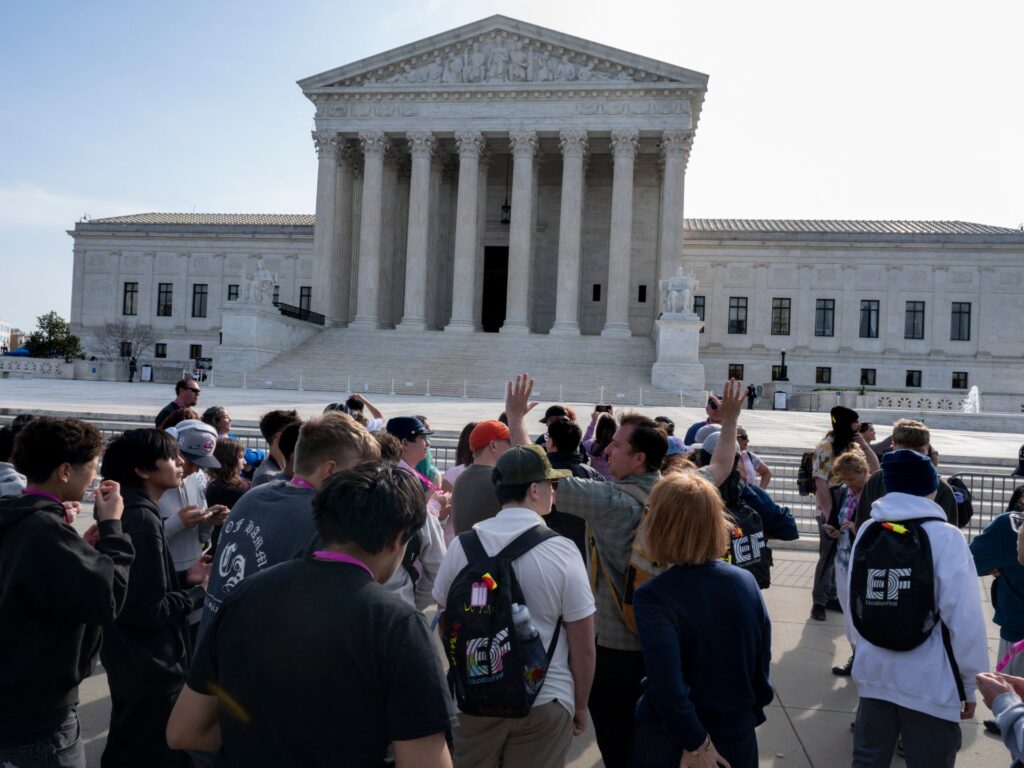
The United States Supreme Court is set to hear a significant case concerning the constitutional foundations of birthright citizenship. This case emerges as a direct challenge to a Trump-era executive order, igniting intense debate among legal experts, policymakers, and immigrant advocacy groups.
Birthright citizenship, enshrined in the 14th Amendment of the U.S. Constitution, guarantees that anyone born on U.S. soil automatically acquires citizenship, regardless of their parents’ immigration status. However, recent political shifts have pushed this long-standing principle into the spotlight, with arguments seeking to restrict automatic citizenship for children born to non-citizens.
The challenge to birthright citizenship before the Supreme Court represents a pivotal test of constitutional interpretation. Advocates for immigrant rights warn that any ruling limiting birthright citizenship could have devastating consequences for millions of families, potentially rendering many children stateless and disrupting lives across the nation.
Opponents argue that the executive order and the associated policies are necessary to uphold immigration laws and prevent exploitation of the citizenship system. They contend that the current interpretation of the 14th Amendment was never meant to grant citizenship universally to anyone born in the U.S.
The Supreme Court’s decision, expected in the coming months, will not only affect immigration policy but also set a precedent influencing the broader understanding of constitutional rights. Legal analysts predict a contentious and closely watched battle, with arguments touching on historical context, legislative intent, and profound social implications.
Meanwhile, immigrant communities and advocacy organizations are preparing for the potential fallout. Many fear increased discrimination, heightened uncertainty regarding legal status, and the erosion of protections for children born in the U.S. to immigrant parents.
The case underscores the ongoing complexity of America’s immigration debate, highlighting the intersection of law, politics, and human rights. As the nation awaits the ruling, the discourse intensifies around the core values of equality, justice, and the meaning of citizenship in 21st-century America.