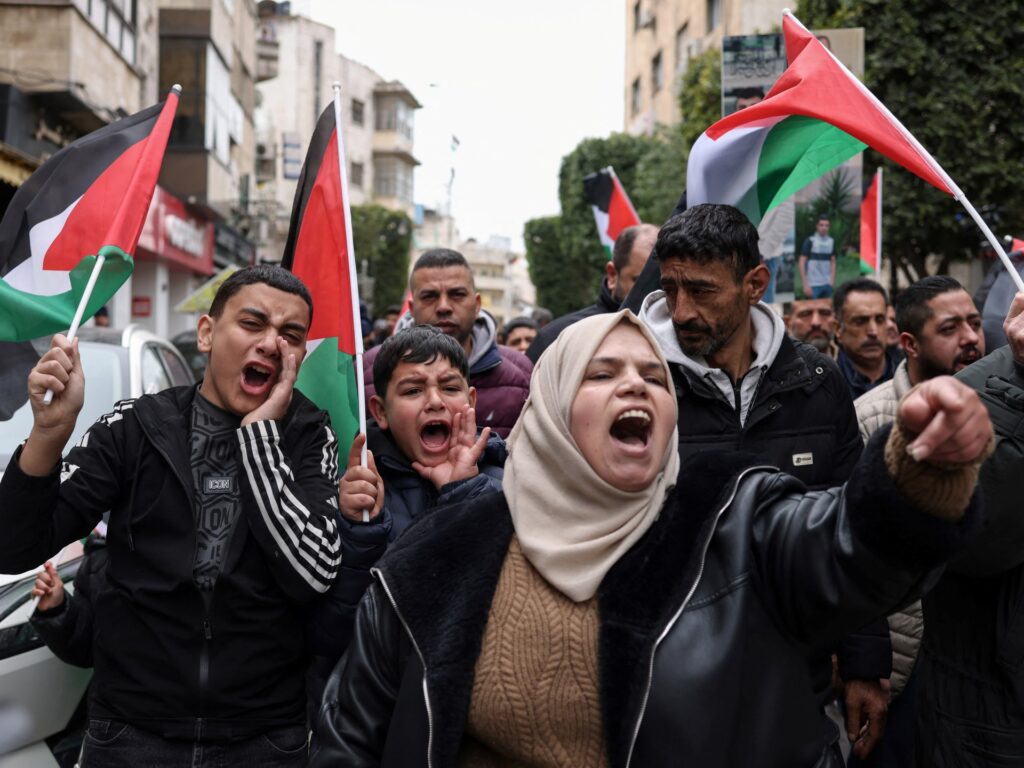
In a significant display of opposition, Palestinians in the West Bank have organized widespread protests and strikes against the controversial Israeli death penalty law. The Palestinian Authority President Mahmoud Abbas’s Fatah party played a central role in mobilizing the collective action, calling for a comprehensive strike as a form of protest.
The demonstrations come amid growing tensions and concerns over the implications of the death penalty legislation, which many Palestinians view as a harsh and unjust legal measure targeting Palestinian individuals.
The strike and protests have seen broad participation across the West Bank, with various sectors including businesses, educational institutions, and public services shutting down to express solidarity. The collective action underscores the depth of Palestinian resistance to policies perceived as discriminatory and oppressive.
Fatah’s call for the strike highlights the party’s commitment to opposing Israeli policies that they argue undermine Palestinian rights and freedoms. At the same time, the movement has drawn attention from international observers concerned about human rights and the rule of law in the region.
Palestinians participating in the protests have voiced fears that the death penalty law could be used disproportionately against them, increasing the risks of unjust executions and fueling further conflict.
The Israeli government has yet to issue a detailed response to the protests, but the demonstrations signify mounting unrest and a critical juncture in Israeli-Palestinian relations.
Overall, the strike and protests reflect the ongoing struggle for Palestinian rights and justice amid a highly charged political atmosphere. The events in the West Bank serve as a reminder of the persistent volatility and the urgent need for dialogue and resolution in the region.