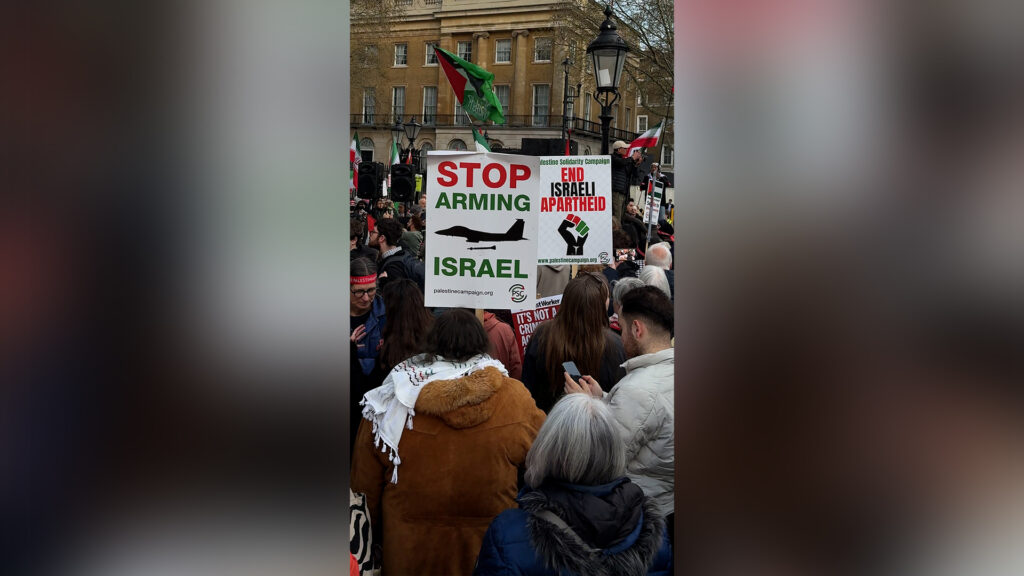
In recent demonstrations, protesters have voiced their outrage against what they call “a law of death that only applies to Palestinians.” The focus of their protests was the controversial implementation of a death penalty law by Israel specifically targeting Palestinians. Protesters are demanding more than just verbal condemnation from UK Prime Minister Keir Starmer; they want concrete action to be taken.
The law in question has sparked international criticism and concern among human rights groups, which argue that it represents a discriminatory and severe measure disproportionately affecting Palestinians. According to activists, this death penalty law is not only harsh but also emblematic of systemic injustice within the region.
During the protests, demonstrators carried banners and chanted slogans urging the UK government to leverage its political influence and diplomatic relations to pressure Israel into repealing the law. They assert that mere condemnation without accompanying policy measures or sanctions is insufficient.
Keir Starmer, as leader of the UK government, faces growing calls from civil society and political activists to take a stand beyond statements, to include actions such as sanctioning Israeli officials, supporting international investigations, or working through the United Nations to challenge the law’s legality.
The situation reflects ongoing tensions in the Israeli-Palestinian conflict, where legal measures and military actions frequently intersect with human rights concerns. The implementation of the death penalty specifically aimed at Palestinians has raised fears of escalating violence and further marginalization of Palestinian communities.
Human rights organizations highlight that the death penalty, in general, remains a highly contentious issue worldwide, with many countries moving toward abolition. The fact that it is being considered or applied in this regional context adds layers of complexity and urgency.
Protesters underscore that international attention and intervention are crucial to prevent what they describe as state-sanctioned death policies, which could set dangerous precedents. They call on the UK and other global powers to uphold principles of justice, equality, and human rights.
As pressure mounts, the UK government’s response will be closely watched by the international community, Palestinian advocates, and human rights defenders. The demand for decisive action against Israel’s death penalty law represents a broader call for accountability and protection of Palestinian lives in a conflict that has lasted decades.
Ultimately, the protesters’ message is clear: condemning injustice is not enough; political leaders must act decisively to challenge laws that perpetuate death and inequality. The situation remains a potent reminder of the ongoing struggles faced by Palestinians and the critical role international diplomacy plays in seeking resolutions and safeguarding human rights.