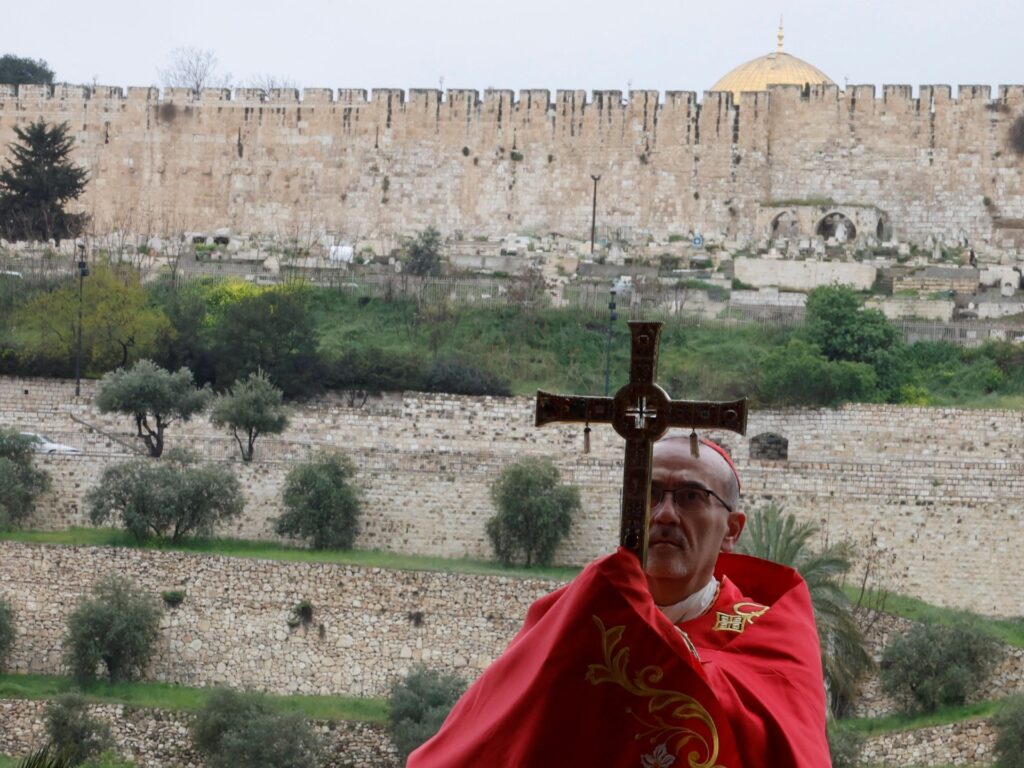
In a move that has drawn widespread attention and concern, Israeli police prevented a Catholic cardinal from entering the Church of the Holy Sepulchre in Jerusalem on Palm Sunday. This incident comes amid heightened tensions in the region following the United States and Israel’s joint military actions against Iran.
The Church of the Holy Sepulchre, a site revered by Christians worldwide as the place of Jesus Christ’s crucifixion and resurrection, is a focal point of religious pilgrimage, especially during significant Christian observances like Palm Sunday.
Israeli authorities have cited safety concerns as the reason for closing several holy sites in Jerusalem, including the Holy Sepulchre, after launching coordinated operations with the US targeting Iran. These security measures have sparked debate and criticism from religious communities and international observers who fear the restrictions infringe upon religious freedoms and the rights of pilgrims.
The Catholic cardinal’s prevented entry has been interpreted by many as emblematic of the growing challenges faced by religious leaders and worshippers in accessing sacred sites amid geopolitical conflicts and security crackdowns.
Palestinian and Christian leaders have expressed dismay over the closures, calling for respect for the sanctity and accessibility of holy places for people of all faiths. They emphasize that religious sites should remain neutral ground, free from the repercussions of political and military hostilities.
The Israeli government maintains that the closures and security checks are necessary to prevent potential violence and ensure the safety of both civilians and worshippers in Jerusalem, a city sacred to Jews, Christians, and Muslims alike.
This development adds another layer to the already complex situation in Jerusalem, where religious sensitivities often intersect with political struggles. The incident underscores the ongoing tension between ensuring security and preserving the rights of religious communities in a volatile region.
International humanitarian and religious organizations have called for dialogue and restraint, urging the parties involved to prioritize peaceful coexistence and the protection of sacred sites.
As the situation evolves, the question remains whether a balanced approach can be found that safeguards all Jerusalem’s holy places while acknowledging the security imperatives faced by Israeli authorities.
This latest episode serves as a stark reminder of how the conflict in the Middle East continues to affect not only political boundaries but also the spiritual landscape cherished by millions worldwide.