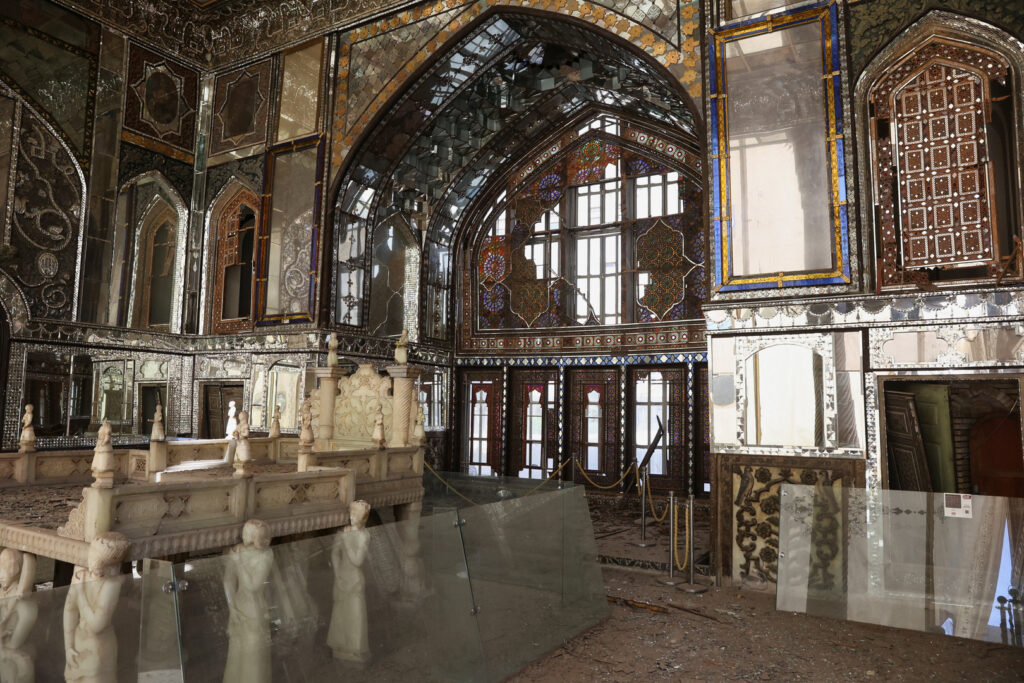
Debris at the historical monument Golestan Palace after it was damaged in an Israeli and U.S. strike, amid the U.S.-Israeli conflict with Iran, in Tehran, Iran, March 3, 2026. Majid Asgaripour/WANA (West Asia News Agency) via REUTERS ATTENTION EDITORS - THIS PICTURE WAS PROVIDED BY A THIRD PARTY.
Al Jazeera recently conducted an on-site visit to Tehran’s Golestan Palace, a historic site recognized by UNESCO for its cultural significance. The palace, renowned for its exquisite Persian architecture and historical heritage, has reportedly suffered damage amid the ongoing conflicts in the region.
Iranian authorities have attributed the damage to strikes executed by US-Israeli forces, highlighting the continued impact of geopolitical tensions on cultural landmarks. Established during the Qajar era, Golestan Palace represents centuries of Iranian art, history, and architecture, featuring intricate tile work, mirrored halls, and extensive gardens.
The reports of damage have raised concerns globally about the protection of world heritage sites in conflict zones. Golestan Palace, with its status as a UNESCO World Heritage Site, underscores the need for international efforts to safeguard such invaluable monuments.
During the Al Jazeera visit, footage revealed structural harm to some sections of the palace complex, including portions of the iconic halls and decorative facades. Iranian officials emphasized the palace’s significance not only as a national symbol but also as a treasure of humanity’s shared cultural legacy.
The consequences of the strikes extend beyond immediate physical damage; experts worry about the long-term effects on conservation efforts and the potential loss of irreplaceable historical artifacts. Restoration plans have been proposed, but ongoing instability poses challenges to timely preservation work.
Cultural experts and diplomats have called for increased international dialogue to prevent further destruction of heritage sites in conflict areas. The damage to Golestan Palace serves as a stark reminder of the collateral harm of war on cultural patrimony.
Al Jazeera’s report aims to shed light on the urgent need to protect such landmarks, urging the global community to strengthen measures that prevent cultural erosion during hostilities. As tensions persist, the plight of Golestan Palace exemplifies the intersection of cultural preservation and geopolitical conflict.
This visit, combining on-the-ground reporting with expert analysis, contributes to raising awareness about the vulnerabilities faced by cultural monuments worldwide. The hope remains that solidarity and cooperative action can ensure the safeguarding of Golestan Palace for future generations.
In conclusion, the damage to Tehran’s Golestan Palace is a poignant example of how war can imperil priceless heritage. Al Jazeera’s coverage not only documents the physical impact but also advocates for renewed commitment to the protection of cultural treasures amidst global unrest.