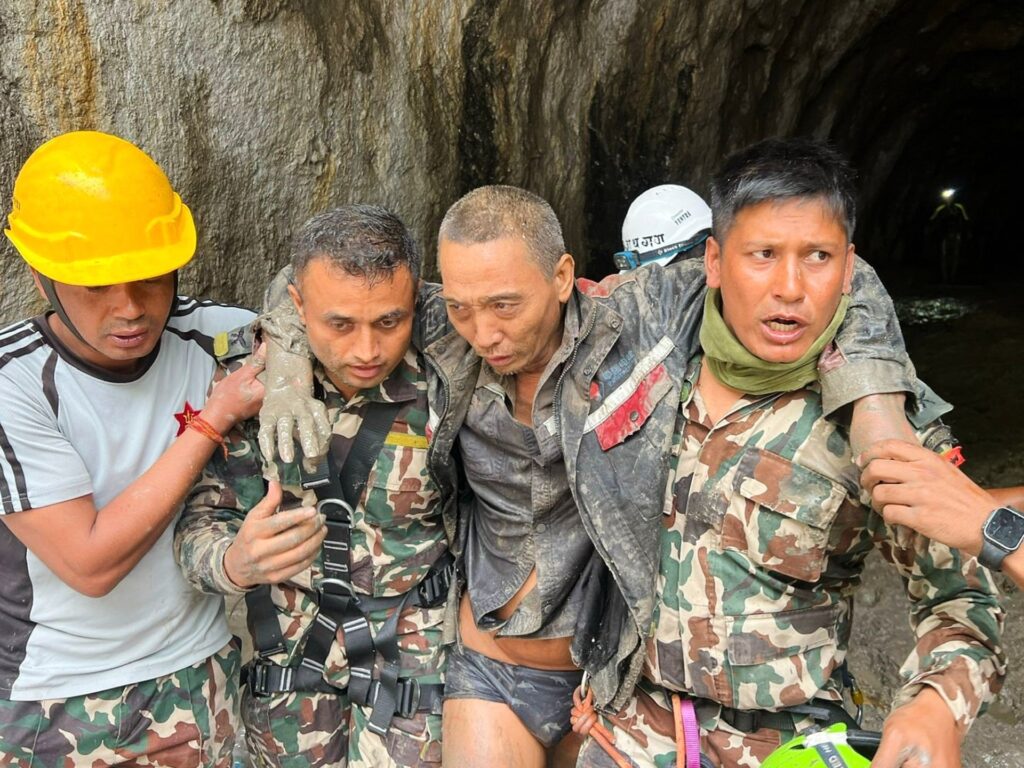
In a harrowing display of courage and swift action, rescuers have successfully pulled a Chinese worker and a Nepali woman alive from the wreckage caused by devastating floods in Nepal. These rescues have injected a wave of hope for more survivors’ recovery as the nation grapples with a rising death toll that has now surpassed 1,331.
The heavy monsoon rains have triggered severe flooding and landslides across Nepal, leaving a trail of destruction and despair. Thousands have been displaced, homes and infrastructure destroyed, and many remain missing on both sides of the affected regions. The search and rescue teams are working tirelessly, navigating treacherous conditions to find survivors who might still be trapped beneath the debris.
The Chinese worker and Nepali woman were found during extensive rescue operations in areas that had been hard hit by the floods. Their survival is a testament to the resilience and determination of the rescue personnel, as well as the indomitable spirit of the flood victims themselves.
Authorities continue to urge for a collective response to aid relief efforts, calling for international support to provide medical assistance, food supplies, and shelter for those displaced. The Nepalese government has mobilized the army, police, and specialized rescue teams to conduct continuous search missions despite the challenging weather conditions.
The death toll, unfortunately, is expected to rise, as many communities remain cut off, and rescue teams try to reach the most isolated villages. People are holding on to hope that more individuals could be found alive, inspired by the recent successful rescue operations.
Emergency response teams are also employing helicopters to access remote areas, delivering aid and evacuating injured individuals. Rescue dogs and specialized equipment are being used to detect signs of life under mud and debris.
The floods in Nepal serve as a stark reminder of the devastating power of natural disasters, particularly in mountainous and vulnerable regions. Climate experts cite increasingly unpredictable weather patterns as a factor contributing to the frequency and intensity of such events.
Communities are coming together to support each other, sharing resources and shelter, while local leaders coordinate efforts to manage the crisis. The outpouring of solidarity from both national and international communities highlights the universal human response to tragedy and the deep empathy felt across borders.
Relief organizations are calling for donations and volunteer efforts to bolster the ongoing response. They emphasize the importance of sustained support to aid not only in rescue but also in long-term rebuilding and rehabilitation.
As Nepal mourns its losses, the survival of the Chinese worker and Nepali woman symbolizes hope and perseverance. It galvanizes continued efforts and underscores the critical importance of preparedness and rapid response to natural disasters.
This tragic event not only impacts Nepal but also sends a global message about the urgent need for enhanced disaster management strategies and climate resilience initiatives. It is a call to action for governments, communities, and individuals worldwide to prioritize safety, environmental stewardship, and cooperative humanitarian assistance.
In the coming days, rescue missions will press onward with unwavering dedication, driven by the hope of finding more survivors amidst the flood wreckage. The resilience of humanity in the face of adversity shines brightly, inspiring all to contribute towards healing and recovery in Nepal and beyond.