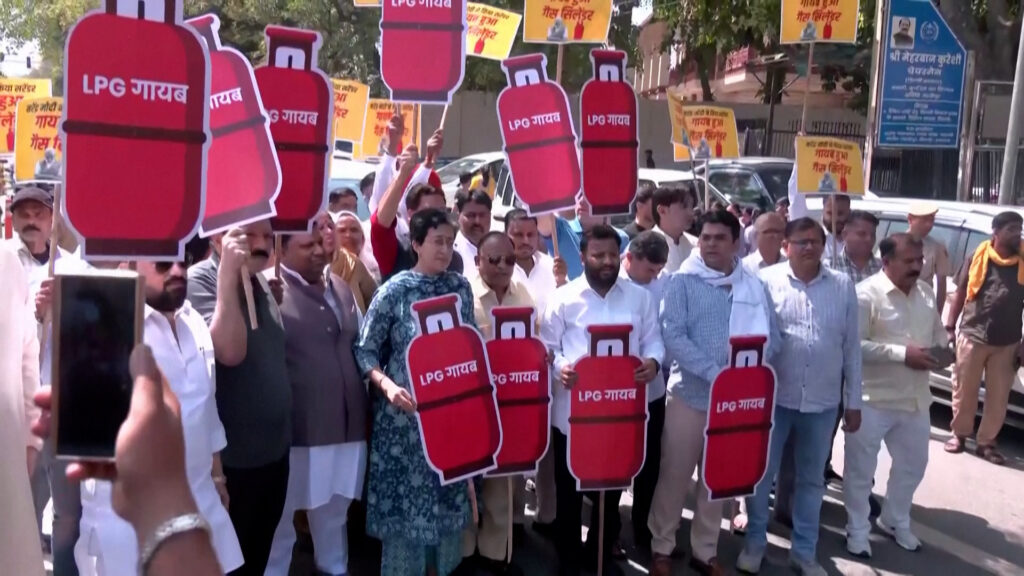
In India, a significant protest has emerged due to a shortage of cooking gas, a crisis largely attributed to the ongoing war in Iran. The shortage has affected millions of households across the country, sparking discontent and leading opposition parties to stage a public demonstration.
The conflict in Iran has disrupted the global supply chains for liquefied petroleum gas (LPG), a essential cooking fuel commonly used in Indian kitchens. Iran, being a major player in the global energy market, impacts prices and availability worldwide when its exports are compromised.
Indian households, especially in rural and semi-urban areas, rely heavily on LPG cylinders for daily cooking needs. The sudden reduction in supply has led to soaring prices, making it difficult for average families to afford this basic necessity.
Opposition parties in India have voiced their concerns about the government’s handling of the crisis. They argue that strategic reserves were insufficient and that lack of diversification in energy sources has made the country vulnerable to international conflicts affecting key suppliers like Iran.
During the protests, the opposition demanded immediate government intervention to stabilize LPG supplies and prices. Calls were also made for the acceleration of alternative energy projects to reduce dependency on volatile foreign imports.
Experts say that the situation highlights the interconnected nature of global energy markets and the ripple effects local populations experience during geopolitical turmoil. They suggest that India needs to invest heavily in domestic energy production and explore renewable energy to mitigate such crises in the future.
The government, meanwhile, has acknowledged the challenges but has assured that measures are underway to increase LPG imports from other countries and provide subsidies to vulnerable populations. Efforts to develop indigenous energy projects have also been prioritized to enhance long-term energy security.
The cooking gas crisis in India serves as a reminder of how international conflicts can have far-reaching consequences. It underscores the importance of sustainable energy policies and the need for resilience in supply chains.
As the situation unfolds, citizens, analysts, and politicians continue debating the best path forward to ensure stable, affordable energy access for all Indians, amidst an unpredictable global landscape.