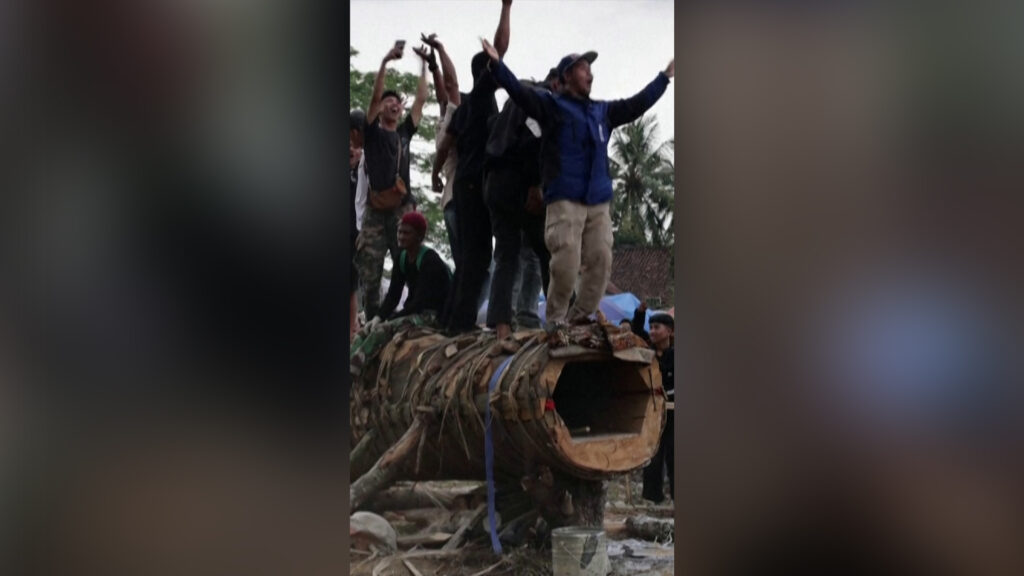
In the West Java province of Indonesia, two villages engage annually in a unique and colorful post-Eid celebration involving wooden cannons. This tradition, deeply rooted in local culture, features villagers firing these handcrafted wooden cannons in a friendly but spirited competition.
The ceremony takes place shortly after Eid al-Fitr, the important Islamic holiday that marks the end of Ramadan, the holy month of fasting. Following the solemnity of religious observance, the firing of wooden cannons serves as a lively expression of joy, community spirit, and cultural heritage.
Each village prepares its own wooden cannon, often elaborately crafted and decorated, reflecting the skill and artistry of the local craftsmen. These cannons, while non-lethal and symbolic, produce loud noises to represent the historic practice of cannon fire used in previous times to mark celebrations or signal important events.
The competition sees the two villages facing off, each trying to outdo the other in sound and spectacle. Villagers gather in large numbers to witness and participate, fostering a strong sense of camaraderie and mutual respect. The event also serves as an opportunity for younger generations to connect with their cultural roots and learn about the traditions passed down through generations.
Beyond entertainment, the wooden cannon firing is a symbolic act celebrating peace, prosperity, and the triumph of good over adversity following the fasting month. It reinforces social bonds and highlights the rich tapestry of Indonesia’s diverse cultural practices.
Tourists and cultural enthusiasts visiting West Java during this time are often captivated by the vivid display and the communal atmosphere this tradition creates. The event helps promote local tourism and encourages the preservation of unique cultural identities in Indonesia.
Overall, the wooden cannon firing in West Java represents more than just a festive activity; it is a meaningful tradition that encapsulates historical significance, artistic expression, community unity, and religious celebration. As Indonesia continues to modernize, such traditions remain vital in maintaining cultural diversity and fostering pride among local communities.